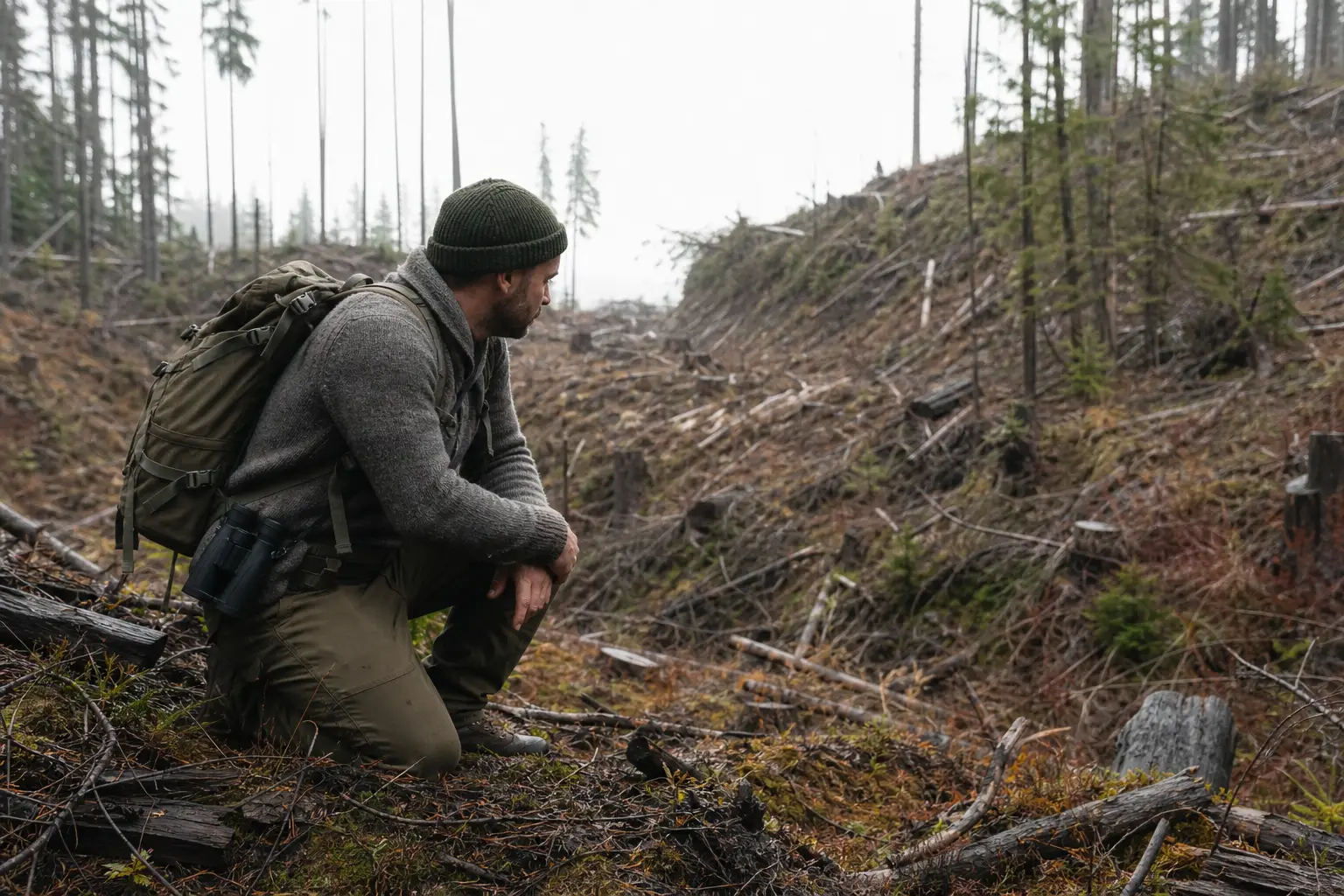
The bear did not die where I shot it. That was the first thing I got wrong, and I got a dozen more wrong before the sun came up.
I had hunted bears for three seasons and never put one down. I had watched them, passed on small ones, told myself I was being patient. This was going to be the year. I sat a clear-cut all October evening with a crosswind I had worked out weeks in advance, and an hour before dark a big-bodied cinnamon walked the edge of the slash at ninety yards. I put the crosshair behind the shoulder and squeezed. I watched the hit. I watched him fold, then stand, then take off hard into the worst looking ground in that whole drainage.
I found blood. A lot of it at first, bright and spraying across the ferns. That will send a man walking too fast. Then the blood thinned, and a hundred yards in it stopped like somebody shut off a faucet. The ground turned into blown-down timber piled over a creek bed, trunks jack-strawed three and four deep, and inside that maze the sign just ended.
I searched until my light died and my phone was a dead brick in my pocket. I walked in circles. I crawled under stuff, got my pack hung up, slapped at webs, told myself he was just over the next log. I was not tracking anymore. I was hoping, and hope is not a method. Somewhere in there a man decides he is not giving up on an animal, and a smarter man would have decided to stop and come back in daylight with help. I was not the smarter man.
The Part Nobody Talks About
You do not get to call a lost animal “a clean miss” and sleep fine. I had hit him. I saw the hit. The worst feeling in this whole sport is not a bad shot. It is the hit that you cannot find, because that one sits in your chest like a stone you have to carry out of the woods alone.
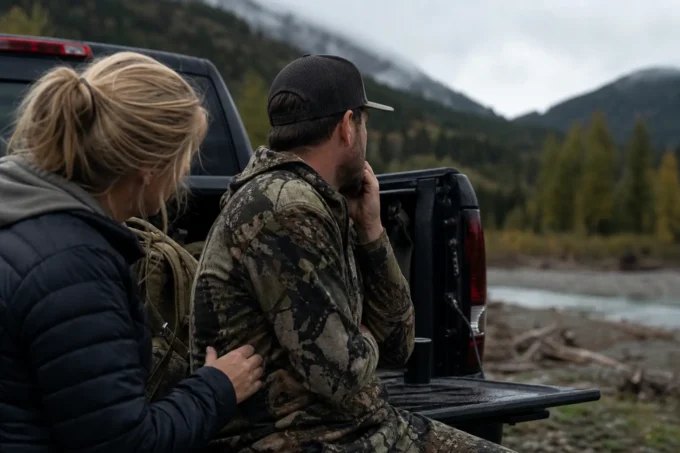
My wife met me at the truck. She is not a hunter but she has watched me be one for a decade, and she could see it on me before I said a word. I told her I lost him. She asked one question, the one that matters: are you sure he is dead or is he wounded somewhere waiting on you? I did not know. That was the honest answer, and it is the worst answer there is.
The Morning Sit a Stranger Taught Me
I did not sleep. Sometime before first light I posted in a hunting group, half out of words, because I did not know what else to do with the sick in my gut. A stranger wrote back and said the thing that reframed the whole search.
Set up at first light like a normal sit, he said. Do not crash back through the blowdown blind. Sit quiet and watch. Let the woods wake up. Birds and coyotes will do the tracking for you. Scavengers find a dead animal faster than a man ever will, and they do not hide what they are excited about. Watch the treetops for birds dipping. Listen for coyotes. Watch for a cloud of them over one spot.
So I did. I hiked back in before it was light, sat on a stump at the edge of the jack-straw, and I waited. I did not walk. I did not crawl. I sat and I watched, and inside an hour I saw a knot of crows and ravens going to work above a single fallen spruce about two hundred yards past where my blood trail had quit. I had crawled right past that log the night before in the dark and never knew it.
He had gone the way bears always go when they are hit. Beeline for the thickest, nastiest, most secret cover in the drainage, then crawl up under the heaviest thing he could find to die alone. A dead bear folds up small. In that tangle he might as well have been wearing a ghillie suit. My eyes had never stood a chance at night. I should never have even tried.

What I Owe the Animal
Here is the part I want a young hunter to actually hear, because I did not hear it for three seasons and it nearly cost me everything good about the sport.
The trigger pull is not the end of the hunt. It is the middle. The recovery is the other half, and it is a debt you owe to the animal you just killed. Conservation is not a poster with a logo on it. It is the discipline of not wasting a life because you got tired, or scared, or too proud to call a buddy. Every hunter who has ever lost an animal knows there are two ways to fail out there: you can make a bad shot, or you can make a good one and then quit looking too early. The second one is worse. The first is a mistake. The second is a choice.
I got lucky. The morning sit gave me back my bear. But I have thought about that night a hundred times since, and I know there are a few rules I will never break again. Bring a friend or a dog when the trail goes cold, even if all they do is sit at the truck with a radio. Get a blood-tracking dog if there is one anywhere near you. Stop searching alone in the dark in blowdown, because the animal is already doing its best to hide and you are doing your best to break an ankle a mile from anyone. And most of all: let the woods tell you where he went instead of guessing and stomping the sign to mud.
The scavengers are not your enemy in a lost-animal search. They are a search party that never got tired and never went home. Sit quiet and read them. They found my bear in an hour. I could not have found him in a day, and I had already proven I could not find him in a night.
That cinnamon fed my family till well into spring, and not a pound of it went to the coyotes, because a stranger online told me to sit still and let the birds lead me to him. I do not know who that man was. But I owe him, and I owe that bear more than I owe any man.
