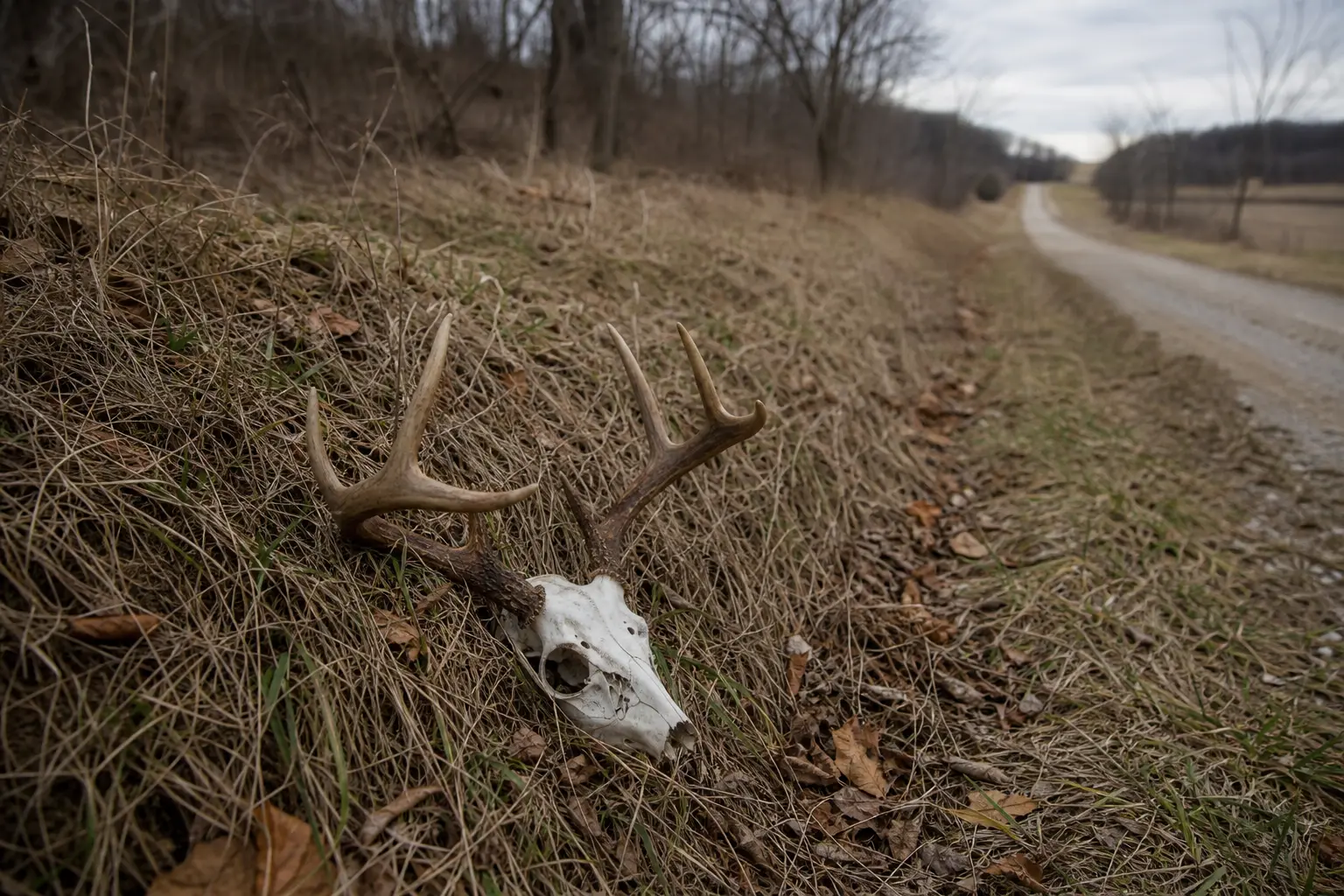
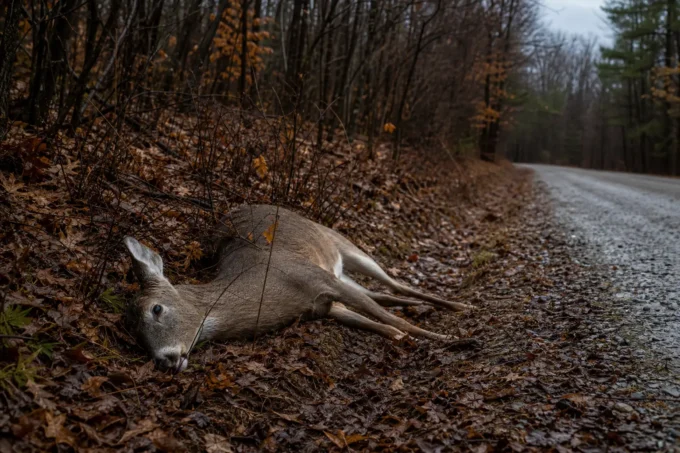
I was twenty-three the first time I shot a deer I didn’t eat. Not because I couldn’t. Because I didn’t want to. The rack was a nice little eight-pointer, and in my head that was the whole point of the season. I had already tagged a doe two weeks earlier and my freezer was full, so I cut the antlers off there in the ditch, took the head home to boil for a skull mount, and left the rest of him for the coyotes.
I told myself it was fine. Nothing goes to waste out there. The birds and the yotes and the beetles take care of it. That is the line every antler hunter tells himself right before he does the thing he knows is wrong.
Nothing Is Free Out There
Here is what I didn’t say that night, because saying it would have wrecked the story I liked about myself. That deer was a couple hundred pounds of clean, honest meat, the kind of food people drive an hour to the store to buy for a lot of money. He was a real animal with a real weight and a real season behind him. I killed him for his head and I called it hunting and I told myself the rest didn’t matter.
The line about nature not wasting anything is true, but it is not yours to hide behind. A deer rotting in a ditch does feed things, sure. The beetles clean the bones and the coyotes take the quarters and the buzzards work the rest. But the man who put him there doesn’t get credit for the coyote’s appetite. You kill an animal, you owe it more than a feast for beetles. You owe it a purpose, and “I wanted the rack on the wall” is a hollow one.
I was bad at this for a long time, and I want to be honest about why. It was not that I didn’t know better. It was that the antlers felt like the score, and the meat felt like homework. Every hunting magazine I read had a picture of some grinning man holding a head up to the camera, and that man never looked tired or cold or guilty. He just looked like a winner. I wanted to be the winner. Photographing a freezer full of wrapped venison never got the same applause as a skull on the wall, and I was young enough to care about applause.
The Man Who Said One Quiet Thing
I got away with it for years. Not just that deer. I was that guy. If the season was long and the tags were cheap, I’d take a shot I didn’t need because a buck was big enough to brag about and I’d already filled the freezer. I had friends who did the same thing, and we reinforced each other. We called it management. We did not call it what it was.
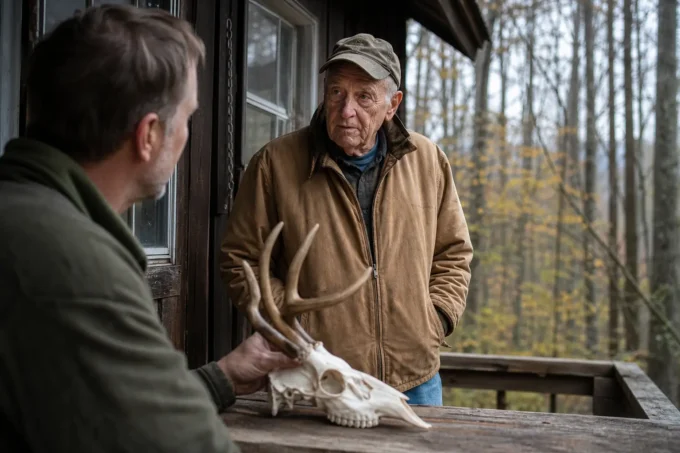
Then I was home one November, maybe seven or eight years later, and my neighbor Carl walked over while I was showing off a fresh skull I’d just finished whitening. Carl is eighty and there is a lifetime of work in his hands, and he doesn’t say much, which is why the one thing he said landed so hard. He looked at the mount, then at me, and said, “You gonna eat that next year too, or just the horns?” Then he turned and walked off toward his shop like he’d told me the time.
That was it. No lecture. No hunting ethics sermon out of a magazine. Just one old man pointing at the exact thing I had been pretending not to see for years, and walking away. I stood there holding that skull and felt the whole weight of it, and it wasn’t from the bone.
What Conservation Actually Is
I used to think conservation was something the game department did with my license money. Habitat programs, restocking, season dates, the radio collar studies. Somebody else’s job. I paid my fee and I followed the law, and that made me a good sportsman in my own book.
Conservation is not just the science and the funding. It is the hundred small decisions a hunter makes the moment the shot connects. Do I want this animal, or do I want what I can hang on the wall from it? Am I killing for food, or am I killing because a tag says I can and I’m bored? A buck left in a ditch because his head was pretty is the exact opposite of stewardship. It is taking something that was alive and turning it into garbage.
The law is a floor. It will let you shoot more than you can respect. Being legal and being right are not the same thing, and I spent most of my twenties confusing the two. I was the guy the wardens never bothered, because I never broke a rule on paper. That is the uncomfortable part. You can be completely legal and still be a lousy steward, and the law will never come for you over it. Only your own conscience will, and mine took its time showing up.
The Rule I Finally Kept
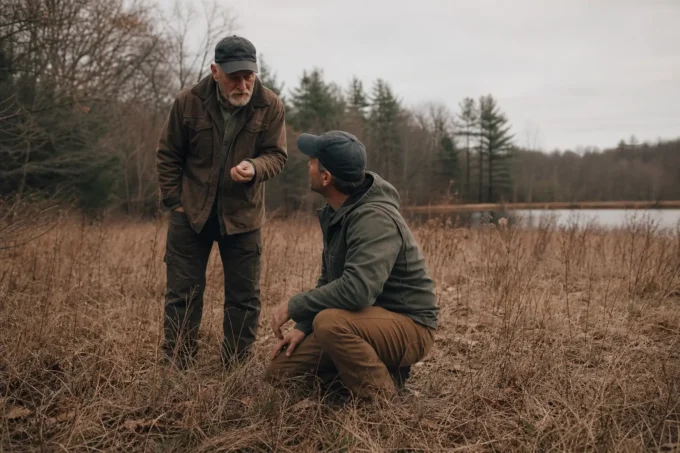
After Carl said his piece I made a rule and I have kept it ever since. I don’t pull the trigger on an animal I would not butcher and carry out and feed to my own family. The antlers are a bonus, never the reason. If the freezer is full, I hunt with a camera, or I take a doe someone in the community needs, or I don’t shoot at all. It is not that hard once you decide the point of the thing. It just took me dumping a half dozen animals into ditches before I decided it.
The funny thing is, I enjoy hunting more now than I did when I was that twenty-three-year-old chasing racks. There is less of that cheap, nervous wanting. When I do take a buck, it means something, because I earned the room for him and I am going to use every bit I can. The skull on my wall is a memory now, not a receipt for waste. It is a record of a clean harvest that fed my family, and the head just happened to come with the meat instead of in place of it.
If you’re a young hunter reading this, hear me on one thing. The animal you’re about to shoot is not a trophy cart. It is food, and it is a life, and the second you decide only the head matters, you step out of hunting and into something smaller. Coyotes will eat what you leave. That doesn’t make it right. It just means you found somebody else to finish a job you were too lazy to respect. Carl is still alive down the road, and every time I walk a buck out of the woods whole, I think about that one sentence he left in my yard. It cost him nothing. It cost me a whole lot of bad habits.