The First Fish Almost Never Counts
Late November on the same little tailwater I have fished for six years. The water was cold enough to slow my reel drag, and the brown trout were stacked in a single seam nobody else bothers with because the current folds back and the fly wraps around your leader. I fished it wrong for two seasons before I figured out the mend. I bought that run with two hundred lost flies and a short temper.
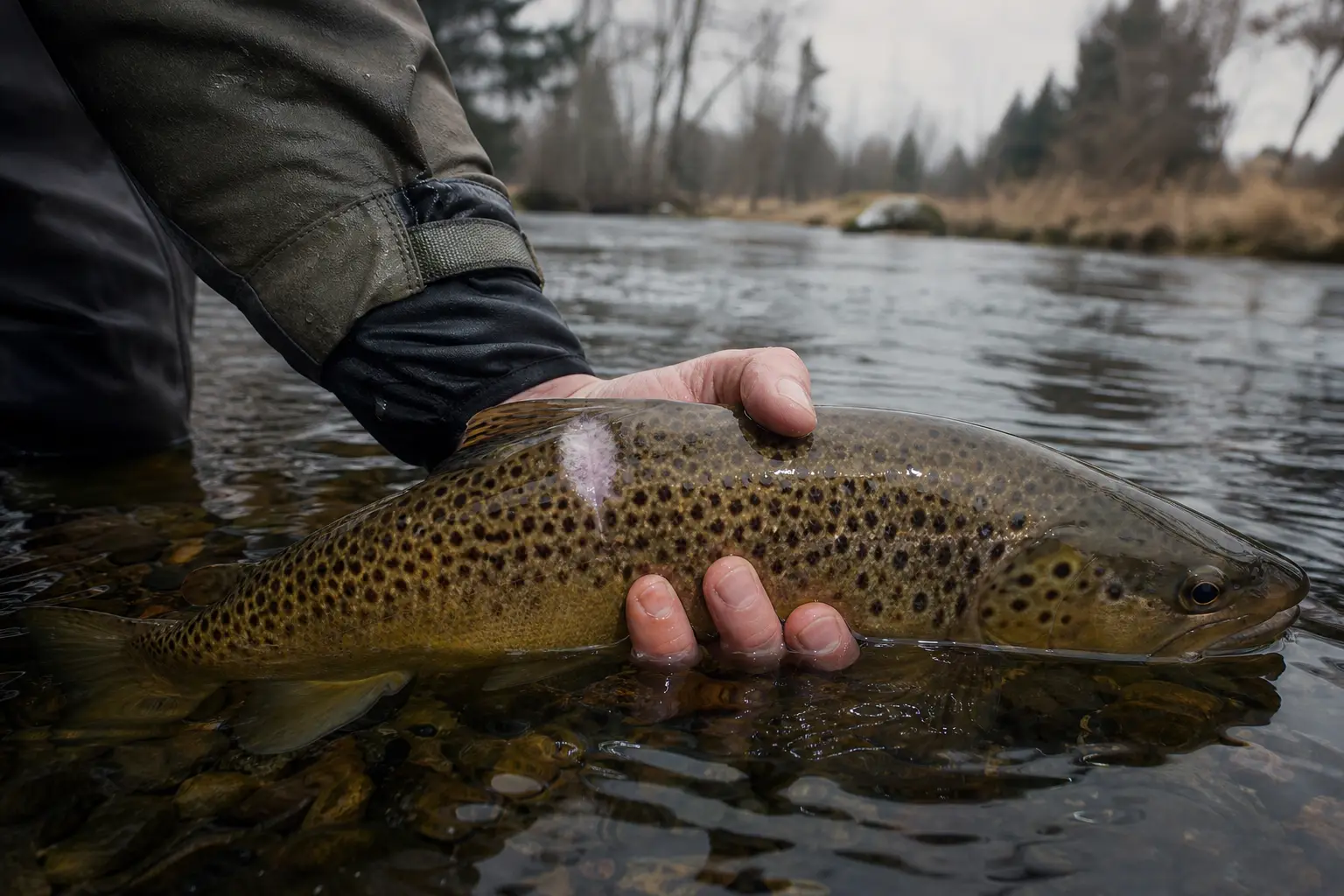
The fish hit a size 20 midge so small I could barely see it in the last light. He came up slow and deliberate, the way browns do, and when I set the hook he did not panic like a stocked fish. He just leaned into the current and let the river do the work. It took me fifteen minutes to get him in, and my hands were numb past the point where numb has a name. He was a little over twenty inches, fat from the fall feed, with a kype starting to curl. A fish you remember.
Here is where the idiot part starts. I carry a net, but I left it clipped to the wrong side of my pack trying to beat the dark home. So I held the fish by the tail in six inches of water, fumbling for my hemostats, and realized I had left my thermometer in the truck too. I told myself it was fine. The water was freezing, and any fish I put back was going to swim away fine, because that is what fish do in cold water. Right. I unhooked him, snapped one lousy photo, and slipped him back without letting him recover. He shot upstream like a coin out of a slot machine. Gone. I stood there feeling generous, the way you feel when you let a buck walk and then tell yourself it was a shooter.
Two Saturdays Later, the Same Seam
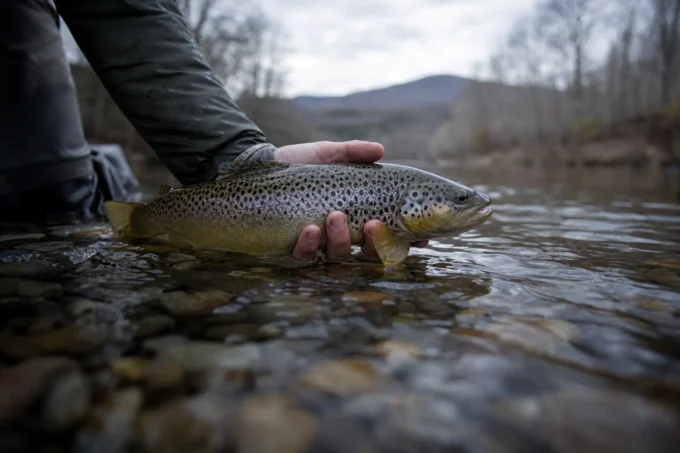
A week and a half of weather blew through, and the tailwater came up and muddied, then cleared again. I went back because the crowds were gone and the fish were supposed to be stupid this time of year. Same seam, same midge. First drift, a take, and I set into a fish that fought exactly like the one I remembered. You cannot see him, but you can feel the fight like the shape of a handshake.
When I got him close I saw the photo scar. High on the left flank, where my thumb had pressed a few scales loose during the tail hold, there was a small pale patch that had grown back flat and white. I had marked him in a way I did not mean to. He was the same fish. Twenty inches, same kype, same white patch, same refusal to run for cover, just leaning into the current and making me pay for every inch of line.
I caught the same trout twice. A catch and a release is supposed to be a clean transaction, a fish you touched for a minute and gave back. But there he was, wearing my thumbprint like a stamp, and I felt like he had come back to call me out. Dumb thing to feel about a fish. Trout do not hold grudges. They hold one seam and eat whatever drifts by. I was the one keeping score.
What Release Actually Costs a Fish
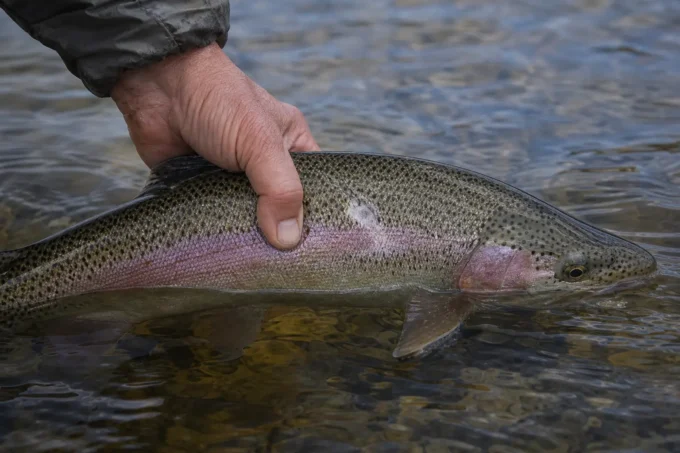
The part I had skipped for six years is the boring science part, and I skipped it on purpose because I liked believing I was one of the good ones. When you lip a fish out of cold water and hold it by the tail, you are doing a few quiet things to it. The slime coat, the thing that keeps fungus out, comes off on your dry hands. In freezing air, gills and fins can freeze in seconds while you fumble for a camera. And a fish that fights to exhaustion has burned through its oxygen and left an acid load that takes hours to clear, during which it is easy for a merganser to eat.
None of this was new to me. I had read the same brochure every trout fisherman reads and forgets the moment the fish is in hand. Seeing that pale patch where my thumb had been made the abstract real. It was barely a wound. But it was mine, and it would have been zero work to avoid it.
So the second time, I did the thing I should have done the first time. Wet hands before I touched him. Barbless hook, quick unhook while he lay in the net in the water. No photo, the light was gone and the phone stayed in my wader pocket. I pointed his head upstream and held the base of his tail loose, just waiting. He sat there breathing for almost a full minute before he decided he had enough. This time when he left, it was on his terms. I felt like I had barely gotten away with something.
The Mistake Is Treating It Like a Trophy Transaction
Here is the thing I keep having to learn the loud way. I spent years thinking of catch and release as a numbers game where the virtuous move was letting the fish go, full stop. Let him go and you are a good steward. But release is not a single decision. It is a whole second activity that starts the moment the net closes, and most of us are bad at it because nobody films that part. The careful unhook, wet hands, slow recovery, none of that makes the thumbnail.
The same trout twice taught me that the river keeps receipts. A fish you caught in October is still in the river in December, and if you did a sloppy job he is still carrying it in a way you might see up close one more time. Most fish you release you never see again, which makes it easy to believe the release always worked. The rare second meeting shows you the truth: I got away with a bad release because it was cold and the fish was strong, not because I did it right.
What a Good Release Looks Like
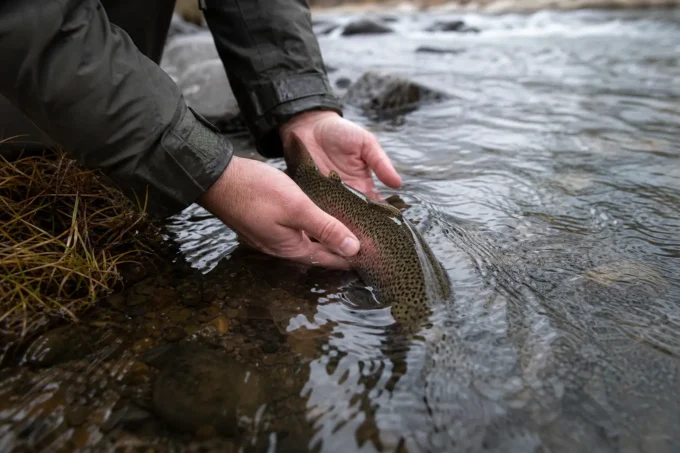
I am not going to dress this up like I invented anything. These steps are old news to anyone who has watched a decent guide, and I ignored them all until a fish made me feel it. Wet your hands before you touch a fish, every time, even in a rainstorm. Use a rubber net, or better yet leave the fish in the water and unhook him there. Get the hook out fast with hemostats ready instead of rooting through a pack while the fish flops on rocks. If you want a photo, have the camera out first and keep him over the water.
Then the recovery. Hold him upright in slow water, facing into the current, and do not let go the instant his gills move. A fish that has not recovered will take off hard and go belly up thirty feet downstream, and you will not see it because you already turned away feeling good. Let him hang there until he wants to go, and let him go on his own. It is thirty extra seconds that feels like an eternity with frozen hands, but it is the whole difference between a release and a lie.
The Second Fish Is Where It Counts
I have caught plenty of fish since then and released them all. The change is not in the catching. It is in the half minute after, where I used to rush and now I wait. Wet hands. No photo if the light is bad. The slow hold in the current, sometimes long enough that I start to feel ridiculous, and then the fish decides and he is gone. I let him leave.
The same trout taught me that catch and release is not a medal you wear. It is a skill with a success rate you almost never get to measure, because the measurement only happens when the river hands you the same fish back and asks if you did it right the first time. I got a mulligan on a fish most guys only ever meet once. Next time there might not be a next time, and the only thing between a clean release and one more scar with my thumb on it is thirty seconds of patience I used to think I did not have.
I still fish that seam. The big brown is still there, I am fairly sure, holding in the fold with the kype getting heavier every week. I have caught him one more time since, in early December, and I held him in the current until he was ready, and he left the way a fish should. No photo. I have the pale patch memorized, and I know exactly what it cost to earn it back.