The Thing That Sold Itself as Cozy
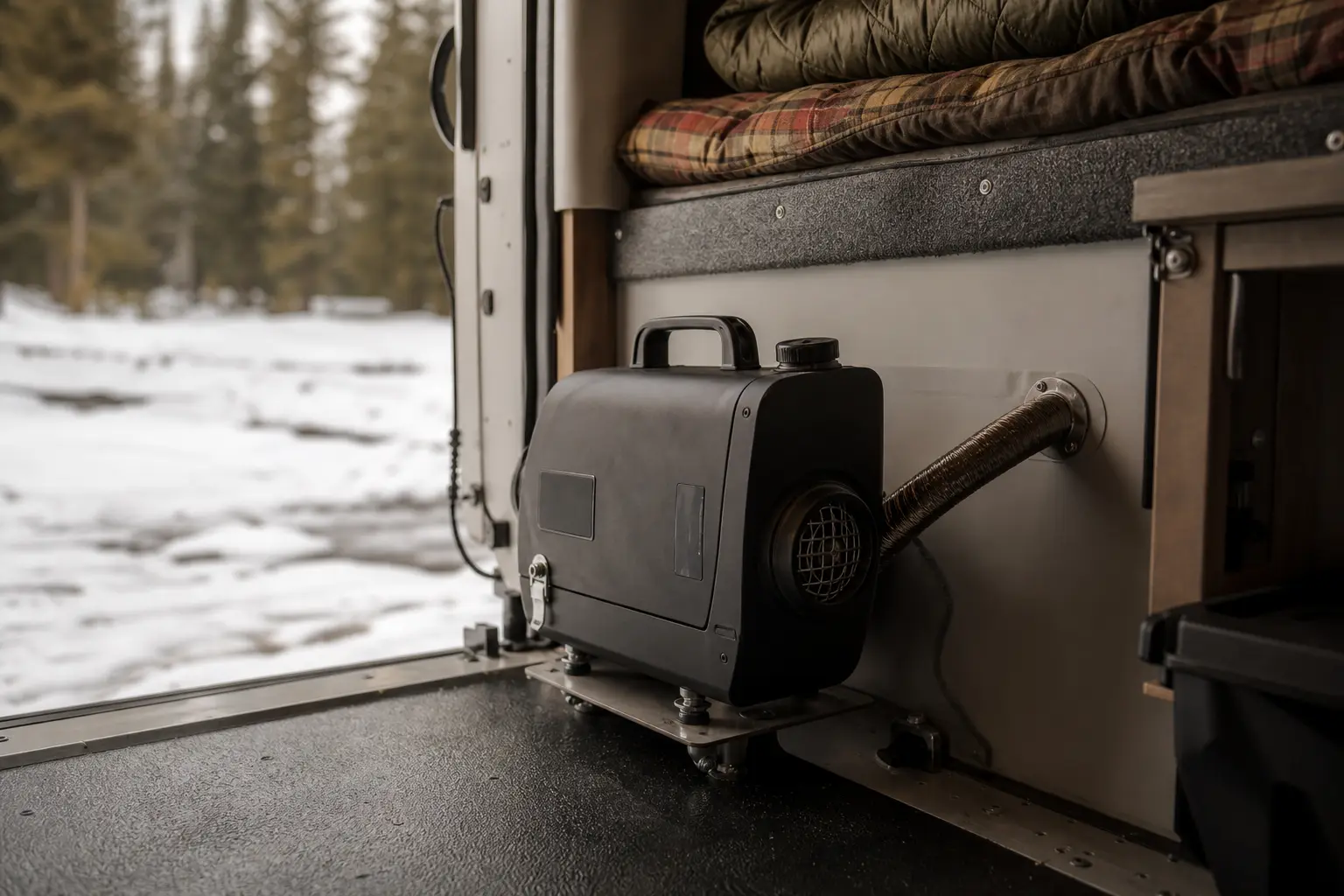
I bought the diesel heater because it was cheap and because November finally taught me what cold really means. Forty bucks, a plastic-looking shell that arrived in a box with no real instructions, just a folded sheet showing a hose going somewhere and a promise of twelve hours of warm air. Every overland guy on the internet swore by it. They called it a game changer, the way my grandfather talked about a good dog, like it had earned their loyalty through some test I had not watched it take.
The appeal was simple. A propane buddy heater makes the walls sweat and eats through little green bottles. A wood stove is work and smoke and a hole cut in a very expensive tent. The diesel heater just sipped fuel and pushed out dry, clean heat all night while I slept. That last part, the sleeping part, is where every one of those internet guys left out the only detail that mattered.
I wired it up to a battery, ran the exhaust pipe away from the tent, pointed the intake where I thought it should point, and told myself I had done the homework. I had not done the homework. I had done the part that comes with a video thumbnail and an affiliate link. The boring part, the part about the gas you cannot smell building up around your head while you dream, I skipped because it felt expensive and far away.
The Morning the Walls Felt Soft
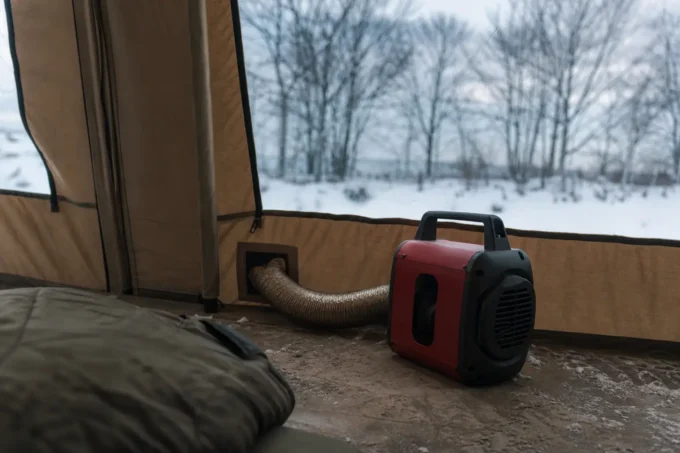
First night was perfect in every way that did not matter. The tent stayed warm, the fan hummed like a distant refrigerator, and I woke at six with a headache sitting behind my eyes. I blamed the cheap whiskey and the altitude and a week of bad sleep. Nobody blames the warm air. That is the whole trick of carbon monoxide. It hands you a headache and a little fog and lets you thank it.
The fog was the part I should have recognized. Carbon monoxide crawls into your blood and holds onto the oxygen spots two hundred times harder than oxygen does. Your body does not feel like it is choking because it is not short of breath. It is starving slowly, quietly, in a room it believes is fine. Your brain goes first, and a tired brain is the easiest thing in the world to explain away on a cold morning after a long drive.
I made coffee, sat in the truck, and told myself it was nothing. The headache faded by midmorning, the way a real alarm would, the way a real sign would not have wanted me to believe it could. I ran the heater again the second night. It was cold. The thing was cheap. That was the entire decision matrix, and looking back it is embarrassing how little else I asked of it.
The Friend Who Knew What a Colorless Gas Smell Like
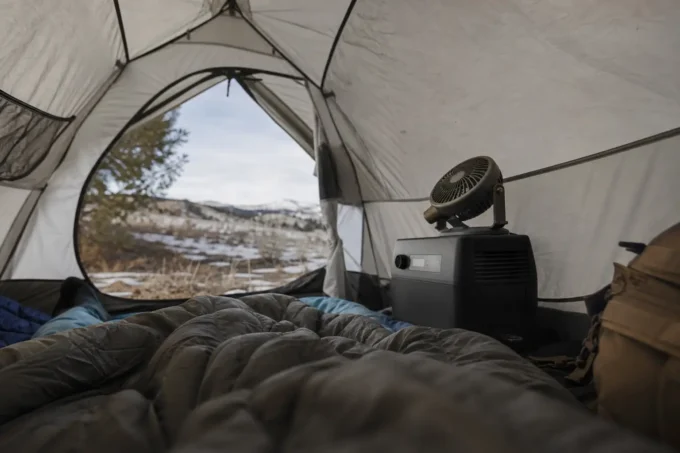
On the third morning a friend pulled in for coffee, took one look at me, and asked if the heater had been running all night. He said it like the question had been sitting in his mouth since the moment he smelled my tent. I told him about the headache and watched his face change.
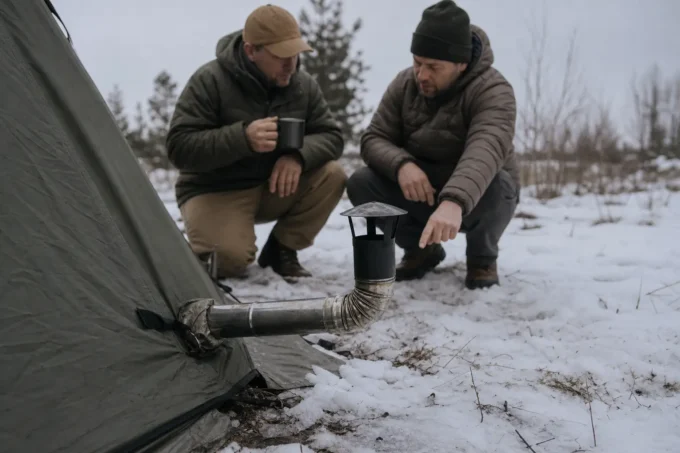
He pointed at my exhaust pipe first. The clamp was loose. It had backed off over rough road and left a gap the width of a fingernail where the hot, poison-laced exhaust was leaking right back toward the underside of the tent. Then he pointed at the seam where I had routed the pipe through the skirt and noticed the gap I had stuffed with a rag instead of sealing, because sealing felt like a detail for adults. Diesel heaters burn clean when they run right and bleed carbon monoxide out the back when they do not, and I had given mine two open doors into the only place I was breathing.
The shameful thing was that I knew carbon monoxide had no smell and could not be seen. I knew it the way a man knows a stop sign he drives past because the intersection has been empty his whole life. Knowing a thing and acting like it lives in the same room as you are two separate skills, and I only had the first one.
The Detector That Cost Less Than Dinner
My friend did not lecture me. He reached into his truck and came back with a small battery-powered carbon monoxide detector, the kind that runs fifteen dollars and takes two AA batteries and clips to the inside of a tent pole. He set it on my cot and told me it had saved him once already. It went off three minutes after he hung it next to his own heater the season before, and he had slept through the first silent hour before the beeping pulled him out of a dream that was not really a dream.
That little plastic box is the whole lesson and it fits in a pocket. Carbon monoxide is not something a man can outsmart with a careful setup or a good feeling about the wind. It settles low, it drifts, it comes through the tiniest gap when the fan is not pushing hard enough to flush the tent, and it does all of this while staying invisible. The only thing in the campsite that could tell me it was there was a fifteen-dollar alarm I had laughed off as overkill. Overkill is a funny word for a thing that keeps you from dying quietly in your sleep.
I hung the detector that night and bought my own the next day. I sealed the skirt seam properly. I tightened the clamp. I ran the exhaust pipe lower than the intake and farther out than the manufacturer’s optimistic diagram, because the diagram never once mentioned the wind that could curl that exhaust right back under the floor. I did the homework this time, and it took twenty minutes and cost almost nothing, which was its own kind of insult.
The Part Nobody Posts
The internet guys do not post pictures of their carbon monoxide detectors. They post the heater glowing, the frozen lake in the background, the caption about how this forty-dollar box changed winter camping forever. None of them post the clamp they re-tightened, or the seam they sealed, or the alarm they tested before every trip. Those photos are boring and they are supposed to be boring. The boring parts of gear are the only parts keeping you alive, and they never make the thumbnail.
I was the exact customer the whole gadget was built for. I wanted the reward without the check, the warmth without the risk, the twelve hours of heat without the four minutes of reading the safety sheet that came in the box and got thrown away. I treated a combustion device the way I treat a phone charger, which is to say I plugged it in, pointed it at the thing I wanted warm, and walked away. A diesel heater is not a phone charger. It is a little fire running in a box three feet from your head all night, and the only difference between it heating the tent and it poisoning the tent is a handful of details nobody writes about.
Warm Is a Responsibility, Not a Reward
Coming home, I read the manual. Not the folded sheet, the actual one, and it had been trying to tell me everything my friend said out loud while standing in my camp. Vent the exhaust away from any opening. Do not run it in an enclosed space without ventilation. Keep a detector. Replace the gasket when it cracks. It was all there, in small type, waiting for a man to read it before the cold made him skip it.
The heater still works. It is still cheap and it is still warm, and on a clear November night with the exhaust sealed and the detector clipped to the pole and the vent cracked just enough, it earns its forty dollars and then some. The difference is I no longer believe the machine is the thing keeping me safe. The machine does one job, and I do the other, and the second job does not come with a power button.
Cold weather camping is the best kind there is, and I will argue that with anyone, because there is not a summer night on earth that feels like a tent going warm against the frost. But warm is not a reward you are owed for spending a weekend outside. Warm is a responsibility, the same way a campfire is a responsibility, the same way a knife and a can of fuel and a rope are responsibilities I accepted the day I bought them. The diesel heater just made me admit that the next morning, with a headache I finally had the guts to name.