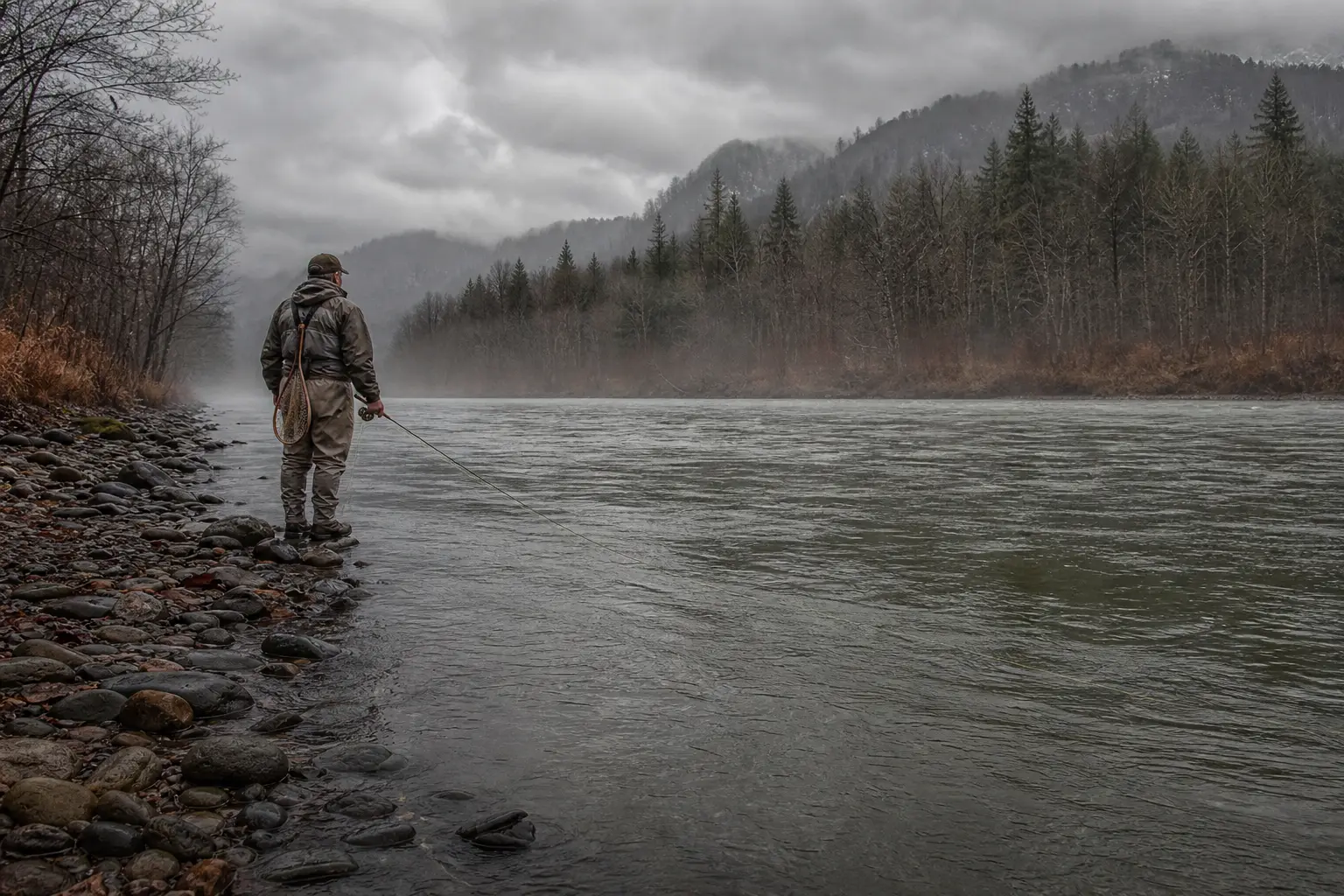
The Skunk Sets In Quietly
Nobody calls it a skunk the first time. The first time you drive home with an empty cooler, you call it conditions. The wind shifted, the barometer dropped, the river got blown out, the fish were holding deep where even a man who knows what he is doing would struggle. You did not get skunked. The river was having a day, and you were just decent enough to read it. That is what I told myself the first evening I went home without a fish, and I told myself the same thing for the next three evenings, and by the fourth I had stopped telling myself anything at all because the word was starting to form in the back of my skull anyway.
Skunk. A whole trip, a whole day, a whole weekend, a whole month with your hands never closing on a fish. It is a word fishermen say out loud as a joke and almost never say out loud when it is actually happening to them. While it is happening, you invent reasons. The real reason sat in the passenger seat of my truck the whole time, one ugly little fact I refused to name: I had forgotten how to catch fish.
The Expert Who Did Everything Right
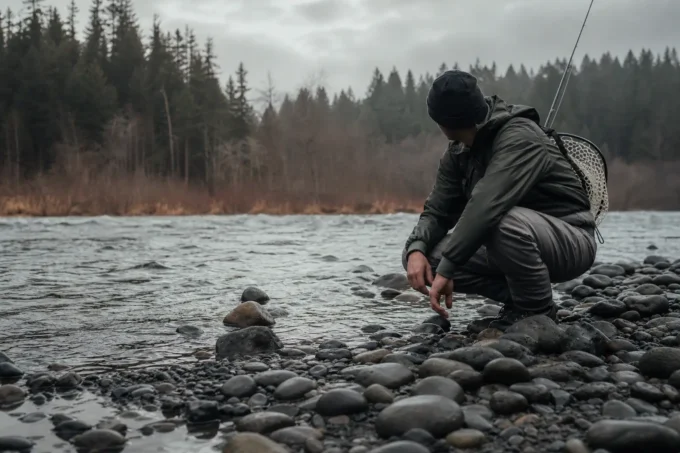
I am not new to this river. I have fished it for years, and I have caught plenty of fish out of it, enough to build a quiet little reputation with myself as a man who knows a seam from a sandbar. That reputation was the first thing the skunk ate. When you have caught fish before, a dry spell does not feel like bad luck. It feels like a verdict, like the river has looked you over and decided you are not worth the effort anymore, and the worst part is you are not entirely sure the river is wrong.
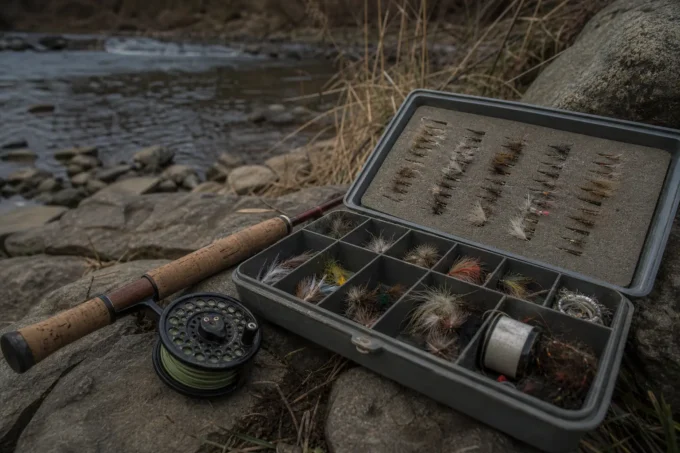
So I did what every fisherman with a bruised pride does. I bought things. New flies, a new line, a new leader, a fresh spool of tippet that cost more than dinner. I reorganized my tackle box until it looked like a display at the shop, and I told myself the problem was clearly my gear, because the alternative was the problem was me, and I was not ready for that conversation yet. The skunk does not care how organized your box is. The skunk just keeps on skunking.
Blaming the Weather, the Water, and God
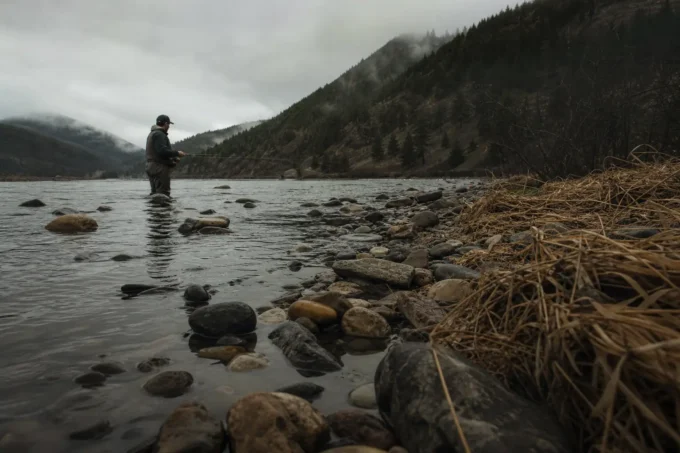
For three weekends I blamed everything except the man holding the rod. The river was too low. Then it was too high. The water was too clear, then too muddy, then somehow both in the same afternoon depending on what excuse I needed. I blamed the cold front, the moon, the time of day, the hatch that never came, the baitfish that moved on. A fisherman deep in a skunk becomes a weatherman and a hydrologist and a theologian all at once, because it is so much easier to find a reason the fish are not biting than to admit the fish are not biting because of you.
My buddy Mike does not do this. Mike catches fish when Mike wants to catch fish, and the difference between us was starting to make me ill. I would call him up and describe my week of misery in detail, and he would say something short like “they moved off the seam” or “your drift is dead” and I would nod like I already knew, which I did not. The skunk does a funny thing to a man’s ears. He stops hearing advice and starts hearing judgment. Every tip Mike gave me sounded like a vote that I had never known what I was doing, and I treated each one like a personal insult instead of a clue.
The Superstition Locker
Somewhere around week four the superstitions showed up, and I let them in like a fool. It was the hat. No, it was the lure color. No, it was the fact that I had told my wife what time I would be home, which is the surest way to guarantee nothing bites all day. I switched rods, switched spots, switched my lucky shirt for an unlucky one and then back again. I started arriving before sunrise and staying past dark, convinced that raw hours on the water were the same thing as effort, as if the river owed me a fish for attendance alone.
That is the delusion, right there. The river does not hand out participation trophies. Deserve is not a currency fish accept. But a man freezing in the dark with numb fingers and a burning need to prove he still had it will talk himself into believing almost anything, including that he is owed. I was owed, in my head, and the river kept not paying, and the whole thing curdled into a quiet kind of rage I directed at a body of water that had done nothing wrong.
The Fish That Finally Said Yes
It ended on a Tuesday, because of course it did. Not a weekend, not a day I had planned and prepared for. A random Tuesday with an hour of light left and nothing else to do, so I went down to the bridge pool with one rod and no expectations, which might be the only honest thing I brought all season. I fished like a man who had already accepted he was not going to catch anything, and that resignation did something to my cast. It went slack. It quit trying. The line landed soft and the drift actually drifted, the way it used to before I started strangling every cast with my own wanting.
The take came fast and hard, and for one dumb second I thought I had snagged a log. Then the rod bowed and the reel sang and my whole body remembered a thing it had been pretending to forget. I brought that fish in slow, not because I was being careful but because I did not want it to be over, and when I slid the net under a brown trout the size of my forearm I sat down on the gravel and laughed like a man caught cheating at his own test. Four weeks of misery, an entire curriculum of excuses, and the answer the whole time was that I had stopped fishing and started demanding.
What the Skunk Actually Was
It took me a while to be honest about what the skunk actually was, and I will say it plainly now because I have paid for the right to. The skunk was not the weather and not the gear and not the river. The skunk was my own pride wearing a fishing vest. I had gotten so good at fishing that I stopped fishing, stopped reading the water, stopped trusting my own instincts, and started performing the idea of a fisherman for an audience of one. Every cast was trying to prove something, and a fish can feel that desperation the same way you can feel a salesman pushing too hard. The river did not decide I was not worth the effort. I decided it, and the river just agreed with me.
There is a lesson in there that sounds too soft to be true, so I will dress it up in the only language a fisherman respects. Fish do not care how bad you need them. They care whether your fly drifts natural, whether your line lands quiet, whether you are actually paying attention to the water in front of you instead of the scoreboard in your head. You cannot muscle your way out of a skunk with more gear or more hours or more superstition. The only way out is to stop needing the catch so badly that you forget how to fish for it.
The River Keeps Its Own Score
I have not been skunked since, which is a dangerous thing to say and probably jinxes me by the time this gets read, but it is true, and it is true for a reason. I did not get better. I got quieter. I still go down to that river, still stand in water up to my knees, still love a cold morning even when the fish are not there. But I stopped keeping score like a job, and the score stopped keeping me.
That brown trout on the Tuesday of my undoing is still out there somewhere, or maybe he is somebody’s dinner, and I do not need him to be there to remember what he taught me. Four weeks of empty hands taught me more than a thousand fish ever did. The skunk was never the enemy. The skunk was the river knocking on my chest and asking if I was still in there. Turns out I was, I just had to stop yelling long enough to hear the question.