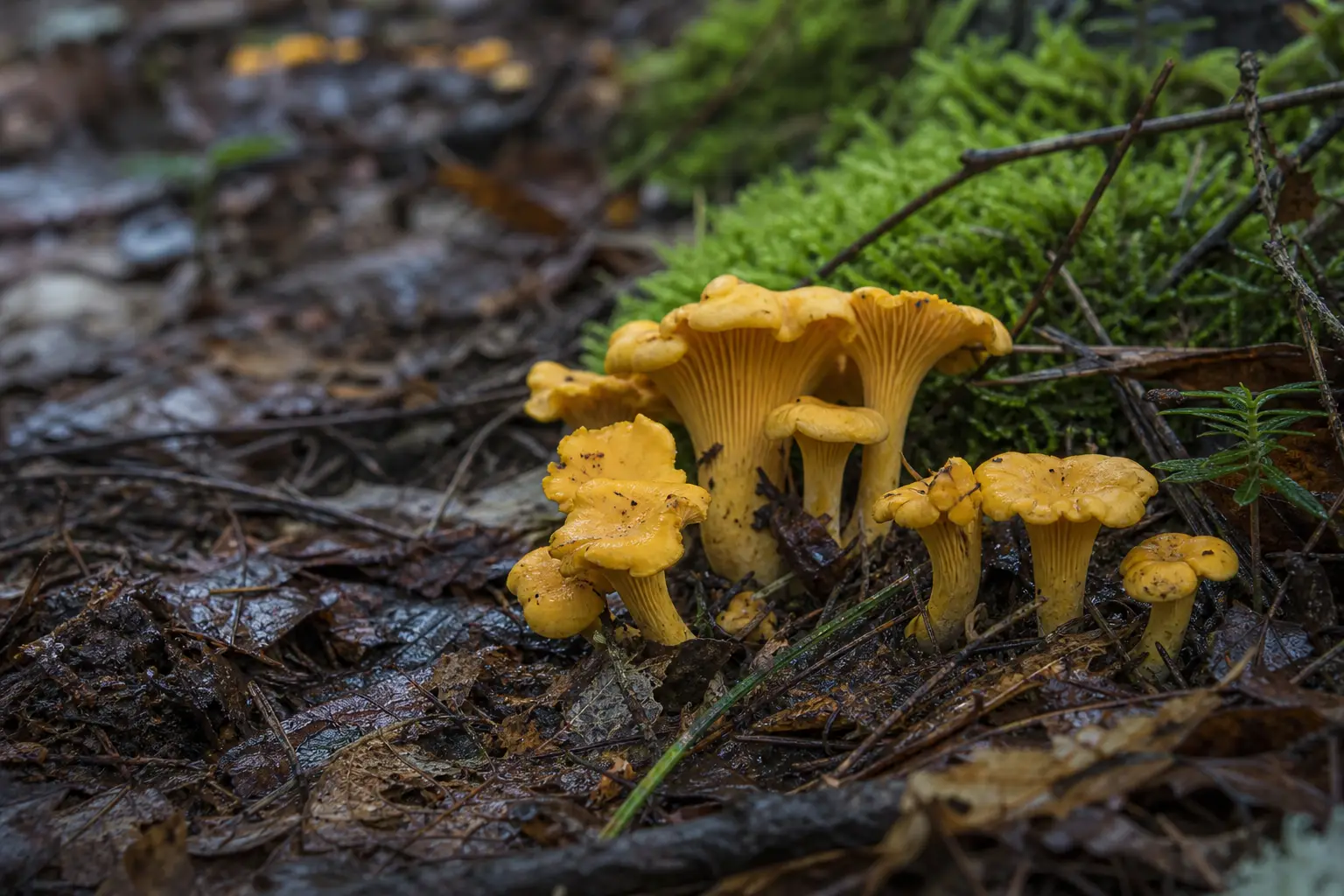
The Smell Everyone Swore Would Save Me
Every foraging book on the shelf told me the same thing about chanterelles. They smell like apricots. Not a hint of apricot. Not maybe apricot if you squint. Apricot, full stop, right there in the cap. It is the one identification trick that gets sold hardest to beginners, because it sounds foolproof, and because it makes the other five pages of fine print about gills and ridges and cap edges feel optional. I bought it completely. I told myself that if a mushroom smelled like apricot, I could not get it wrong. That was the first lie of the season, and it nearly put a false chanterelle in my frying pan.
I am the guy who learns by confidence. When I find a new edible, I skim the look-alike section instead of reading it, because I want the mushroom to be real more than I want to be careful. I have been this way since the first morel my uncle showed me when I was a kid. Every fall I make the same deal: cautious on the drive in, less cautious once the woods get me excited, and then a mushroom looks close enough that I start arguing with my own eyes.
The Patch That Showed Up Overnight
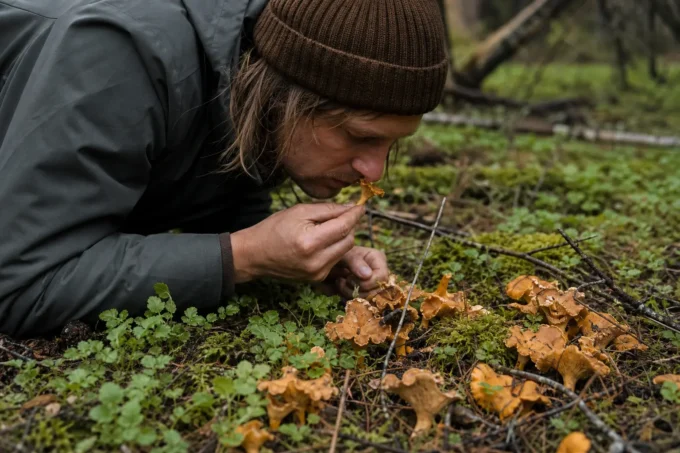
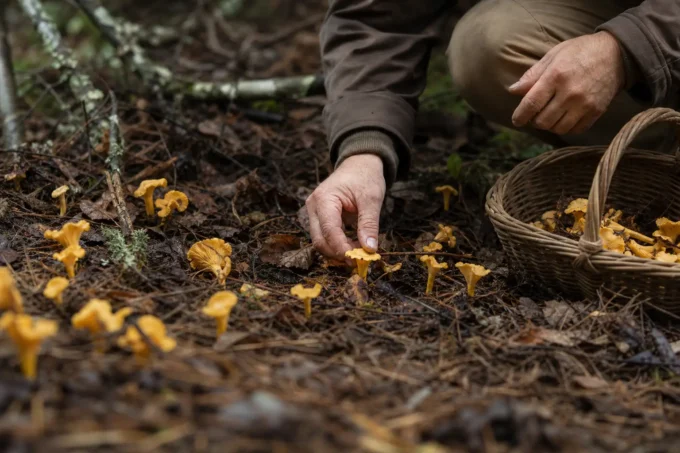
It was a wet, warm October, the kind that turns the forest floor soft and dark and makes mushrooms push up through the leaf litter. I had been out three weekends looking for chanterelles and found nothing but rotten stumps and one slug sitting on a puffball. Then one morning, walking a ridge I had walked a hundred times, I stepped off the trail and walked straight into a patch of little golden trumpets scattered under oak and pine. A dozen of them, then two dozen. I went from walking to squatting so fast I nearly dropped my phone in the duff.
I picked a handful and did the thing the books told me to do. I smelled them. And here is the part I keep replaying, because it is the part that should have kept me honest. They smelled good. Fruity, sweet, a little perfumey. Apricot, if I wanted it to be apricot. And I wanted it to be apricot. So I decided it was apricot, and I dropped the whole cheerful pile into my basket and headed home feeling like a man who had finally cracked the code.
The Fine Print I Skimmed
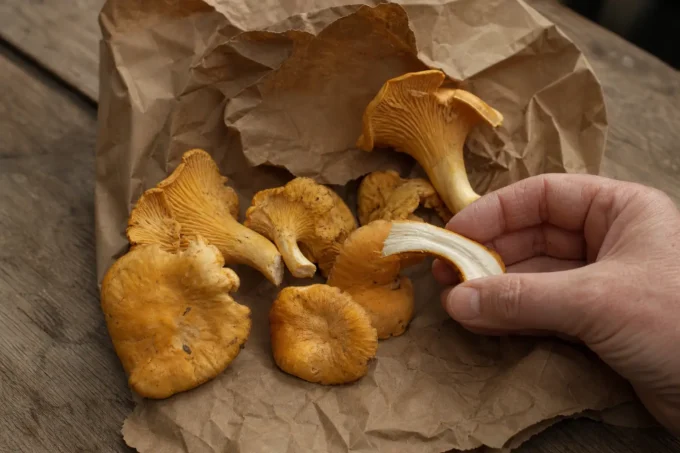
The thing about the apricot smell is that it is a crutch, and crutches only hold you up until they snap. Real chanterelles smell like apricot, sure. But the false chanterelle, the one everyone warns you about, sits in the same woods, wears the same gold, and can carry a faint fruity note too. It is not a clean bad guy with a skull on its hat. It looks close enough to fool a man in a hurry. The differences are in the details I had skimmed: real chanterelles have blunt, forked, decurrent ridges that run down the stem instead of true gills, and they do not have a separate cap and stem the way most mushrooms do. The false ones have sharper, thinner gills that fork repeatedly, and a cap that sags open and flattens. And the flesh, when you cut into it, is a different story.
They were sitting in a paper bag on my kitchen counter when my buddy Mike called. Mike knows mushrooms the way some people know birds from sound alone. He asked how the hunt went, and I started bragging, and I could hear him stop stirring whatever he was cooking on the other end. Send me a picture, he said. I did. The silence that followed was about four seconds long, which in mushroom years is a full day.
The Friend Who Saw What I Talked Myself Past
Those are probably false, Mike said. He said it calm, the way you say something you have said a hundred times to a hundred overconfident guys. He asked me to look at the gills. I held one up and actually looked for the first time, and the gills were thin and tight and flattened out into a proper cap, the way a bad mushroom is supposed to and I simply had not looked because the smell had already told me what I wanted to hear. The apricot trick had done exactly what I asked of it. It had let me skip the work.
Mike did not lecture. He never does. He just told me the rule that has lived in my head ever since, and I will put it here because it is probably the only thing from that whole season worth passing on. Smell is only one thread. It is never the whole rope. You do not identify a mushroom with one sense when three others are standing right there doing nothing. Cut it. Look at the stem. Look at the gills. Look at where it grows and what it grows on. Then, and only then, let the smell be the cherry on top instead of the whole dessert.
The Walk Back to the Woods
I went back the next morning with real attention this time, and the woods showed me exactly what I had missed. The patch I had stripped was half false and half true, and they were growing nearly touching. There were real chanterelles in there too, golden and solid, with those blunt ridges that fork and run down the stem like melted wax, and when I cut one open the flesh was white and dense and firm all the way through. The false ones cut pale and watery and smelled, now that I stopped trying so hard, like nothing much at all. The apricot note I had sworn I smelled was probably just the hope and the damp forest and a man wanting to be right.
It is a strange feeling, standing in a patch of mushrooms and realizing the dangerous ones were never hiding. They were right there in the open, same color, same ground, and the only thing standing between me and a rough night was a friend who asked for a picture and made me look twice. That is the part foraging books do not say plainly enough. The woods do not protect you from your own confidence. They will hand you a look-alike and wait to see if you argue with yourself or argue with the mushroom.
The Pan That Finally Earned Its Chanters
That night I cooked the real ones the way they deserved, and the way I had never been patient enough to do before. Dry pan first, because chanterelles carry water and you have to cook it off before the butter goes in, otherwise you get a sad gray puddle instead of a golden sear. They hissed and shrank and turned chewy and rich. A little butter, a little thyme, salt. They tasted like the woods smell, earthy and deep and faintly sweet, the apricot note now real instead of invented, a back note instead of a fanfare.
I ate them on toast at the kitchen table and thought about how close I had come to eating the wrong batch on the exact same toast. Not because I did not know better. Because knowing better only counts when you bother to use it. The knowledge was always there, three pages deep in a book I owned. What was missing was the willingness to slow down and be wrong on the front end instead of in the emergency room.
The Rule I Finally Stopped Skimming
There is a version of this story I have told at campfires that makes me look dumber than I am, and I tell it that way on purpose, because the dumb version is the useful one. The version where a man smelled apricot and nearly ate a false chanterelle because he wanted the shortcut to work. Everybody at the fire laughs, and then somebody asks how you actually tell them apart, and that is the part worth being there for. Slow down. Cut it open. Look at the gills. Match it to a book, not to a hope. And if you are not sure, do not argue with yourself. Ask somebody who knows, and send them a picture, and stand there looking at your own basket while they decide.
The woods will keep making golden mushrooms and false ones right next to each other, and they will keep smelling like whatever a hurried man needs them to smell like. The patch is still there, too. I go back every October now, and I smell them the same way, and I do not trust it for a second. That is the whole difference. The smell did not change. I did.