# I Pinched Every Barb on Every Lure I Own, and I’m a Better Fisherman for It
For about twenty years, I figured barbless hooks were for two kinds of people: fly fishermen who wore tweed hats, and guys who weren’t serious about actually landing a fish. I was a treble hook guy. A barbed hook guy. My tackle box was full of lures that looked like medieval torture devices, and I was proud of it. If a fish got hooked, it was *staying* hooked. That was the point, wasn’t it? I wasn’t out there to make friends.
I’d see guys in forums talking about pinching their barbs, and I’d roll my eyes. “Just keep the line tight,” I’d mutter to myself. “It’s not that hard.” I was the kind of fisherman who thought the fight was everything, and the condition of the fish afterward was just a footnote. I was, in short, an idiot. And it took one beautiful, beat-to-hell brown trout to finally prove it to me.
It was a crisp afternoon last October. The leaves were turning, and the air had that perfect pre-winter bite. I was throwing a crankbait—a lure with two big, sticky-sharp treble hooks—along a deep-cut bank on a river I’ve fished since I was a kid. The takedown was violent. The fish didn’t just bite; it tried to murder the lure. I knew right away this was a good one.
The fight was spectacular. The fish bulldogged deep, then came up and thrashed on the surface. My rod was bent double, and the drag was singing that sweet, sweet song. After a solid five minutes, I finally got it to the net. It was a monster brown trout, maybe 24 inches, with a deep, golden belly and a kype jaw that meant it was an old, mean survivor. And I had absolutely mangled it.
One treble hook was buried in the corner of its mouth, which was fine. But the other one… the other one was a nightmare. In the thrashing, it had swung around and buried two of its three points deep in the fish’s gills. Bright red blood was starting to well up around the hook. The fish was still kicking, but it was a tired, weak kick.
I felt a pit open up in my stomach. This magnificent fish, a creature that had probably survived herons, eagles, and bigger fish for a decade, was now bleeding out in my net because of my damn lure.
I went to work with my pliers, trying to be gentle, but there was no gentle way to do it. The barbs were doing exactly what they were designed to do: not let go. I had to push the hook point through the delicate gill tissue, crush the barb, and then back it out. It was a gruesome, clumsy surgery, and my hands were shaking. The whole time, the fish was looking at me with that blank, ancient eye, and I felt like the biggest, cruelest son of a bitch on the river.
After what felt like an eternity, I got the hook out. I held the trout in the cold water, trying to revive it, gently moving it back and forth. It kicked a few times, then went limp. I tried for another ten minutes, but it was no good. I had won the fight and killed the fish, a fish I had no intention of keeping. I watched it drift away, belly up, in the current.
I sat on the bank for a long time after that. The pride of the fight was gone, replaced by a thick, heavy shame. I’d been so focused on not losing the fish that I’d never stopped to think about what winning looked like. This wasn’t it.
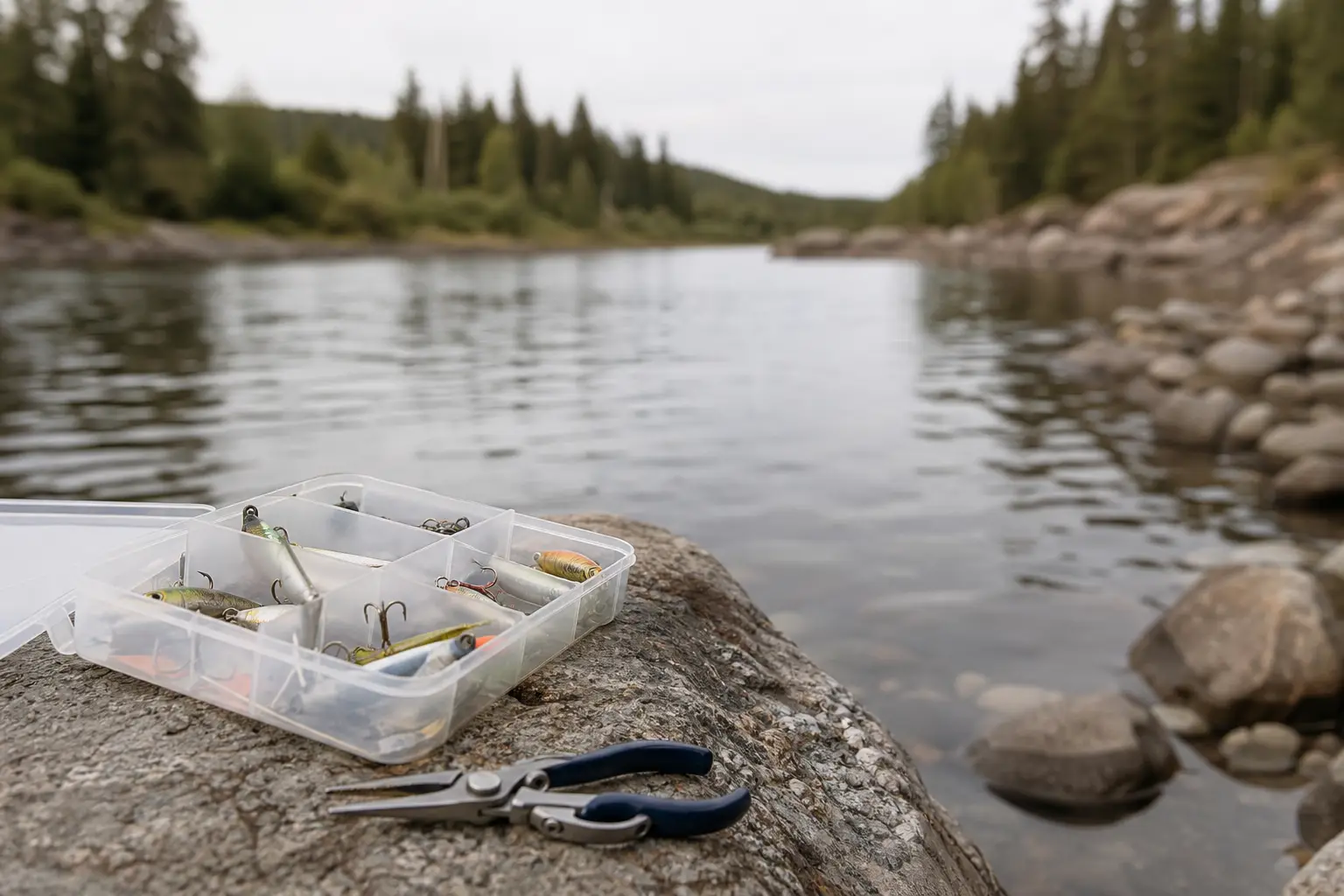
That winter, I didn’t go ice fishing. Instead, I spent a few cold evenings in my garage with a pair of needle-nose pliers and my tackle boxes. I took every single lure I owned, from the cheapest spoons to the most expensive jerkbaits, and I pinched down every single barb. Hundreds of them. It felt wrong at first, like I was intentionally sabotaging myself. My twenty years of “git ‘er done” fishing experience screamed at me that I was making a huge mistake.
But with every flattened barb, I felt a little bit of that shame lift. I was trading a little bit of holding power for a lot of peace of mind. I also took the time to swap out some of the bigger trebles for single hooks. It was a tedious process, but it felt like penance.
The first time out the next spring, I was a nervous wreck. I had a new rule: if I wasn’t willing to lose the fish, I shouldn’t be fishing. The first bite of the day was a decent largemouth. It jumped, it thrashed, and my heart was in my throat. I kept the line tight, kept the rod bent, and brought it to the boat. The hook, a single barbless point, was neatly set in the corner of its mouth. It practically fell out when I turned it over. The fish gave a strong kick and was gone.
I let out a breath I didn’t realize I’d been holding. I’ve lost a couple of fish since then, sure. But it’s not the epidemic I thought it would be. And the ones I land come off clean and healthy. I’m a better fisherman for it, not because I land more fish, but because I’ve finally learned that the fight isn’t the only thing that matters. It took me twenty years to figure it out, but I’m never going back. The fish, and my conscience, are better off for it.