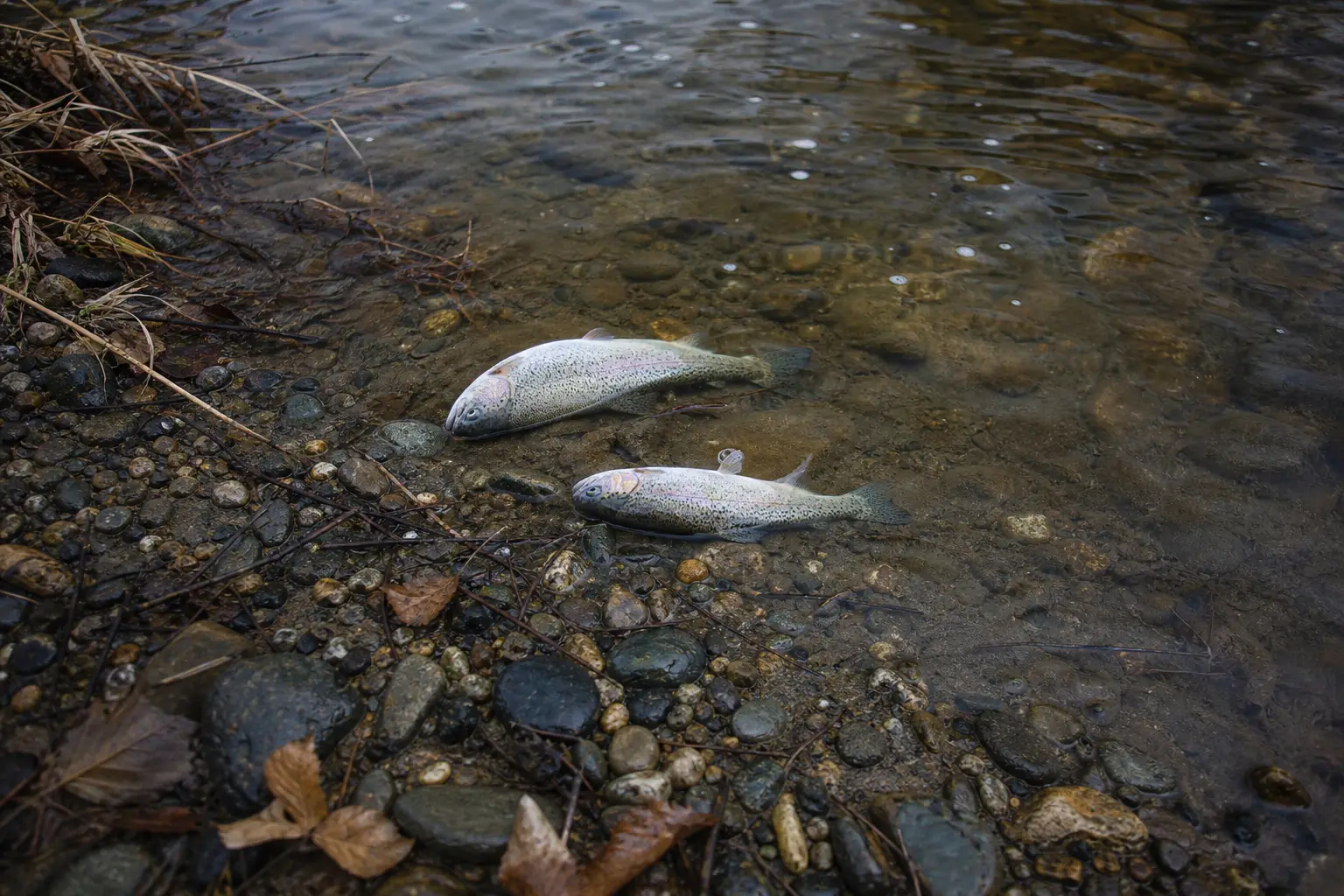
Two dead rainbow trout on a stringer I wasn’t even supposed to have. That’s how my Tuesday after work ended, standing on the bank of a stocked creek with two fish floating belly-up that I never planned to kill, in a stretch of water where the season doesn’t open for eating until March.
I’m new to fishing. Not new like I’ve handled a rod at my uncle’s pond once. New like I bought my first license this spring and learned most of what I know from three YouTube channels and a guy named Dell at the bait shop who has opinions about everything and patience for almost nothing. I wanted fish for the freezer. Catch and release sounded like a formality, a rule you nod at and then do whatever anyway.
It isn’t a formality. It turns out catch and release is a skill, and I had none of it.
The Fish Barely Moved All Day
Here’s the part that confused me before it made me feel like garbage. I got to the creek around five, right after work, and the trout were stacked maybe forty feet from where the truck dropped them. I figured stocked fish would spread out, run upstream, act like they’d been there forever. Instead they sat in a loose cloud like they were still deciding whether the creek was real.
That should have told me something. These are hatchery fish. They’ve never dodged a heron, never fought a current, never had to earn a meal. A friend who’s been at this a lot longer than me told me later that stocked rainbows are dainty little flowers who don’t take kindly to being handled. He wasn’t being cute. They’re soft. Their whole life was a concrete raceway and a pellet feeder.
I caught two. Both took a little spinner. Both swallowed it deeper than I’d have liked. I did what I’d seen in the videos: grabbed them, worked the hook out, held them up for a second to look at the shine on their sides, then tossed them back. They swam off. I thought that meant fine.
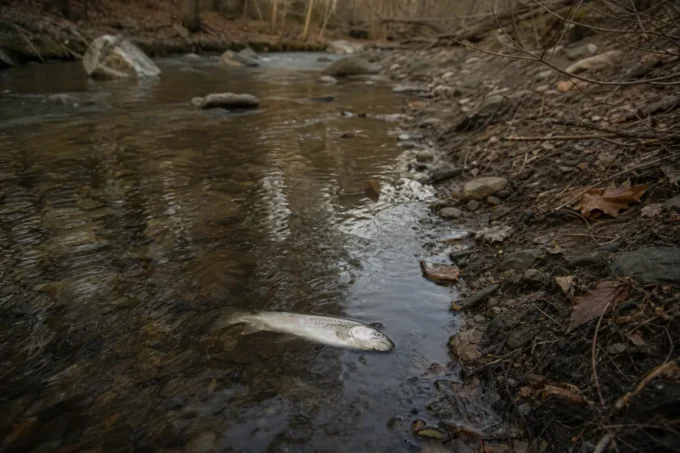
Twenty minutes later one of them was floating sideways in an eddy. The other one followed it down the bank like it was tired in a way sleep wouldn’t fix.
What I Actually Did Wrong (All of It)
I went home and read until my eyes hurt, and then I sat with what I found. None of it was complicated. All of it was my fault.
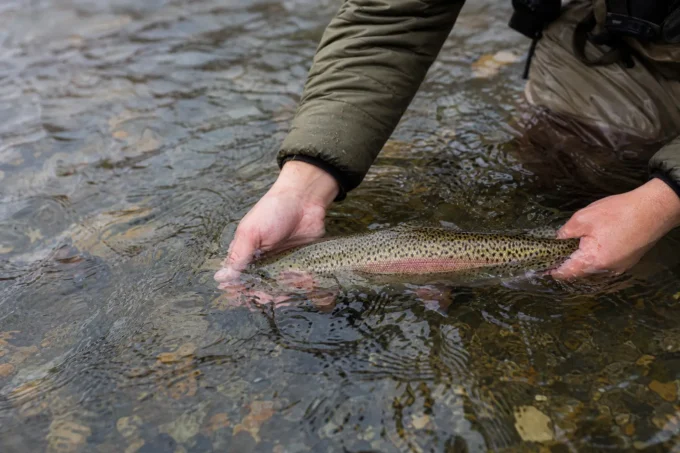
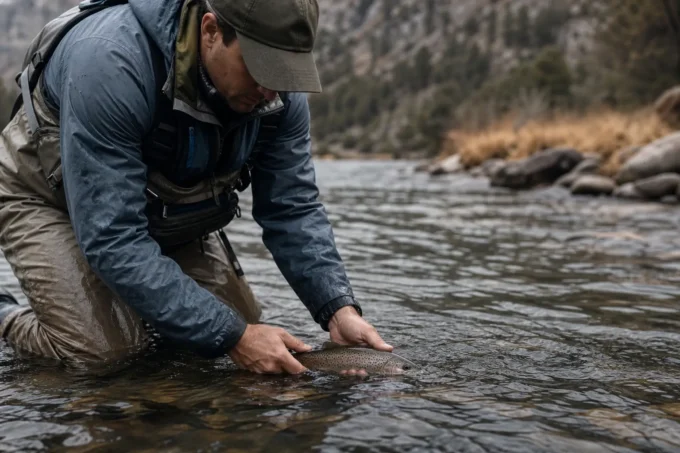
- I held them out of the water. Trout, especially fresh stockers, need to stay in the water the entire time you’re working a hook loose. Air is the enemy. Every second a fish is up in your dry hands is a second it’s suffocating and losing its slime coat.
- My hands were dry. That protective slime layer is the fish’s immune system, and dry hands strip it right off. Wet your hands first. Always. A cheap wet glove is even better because you drop them less and poke yourself on the fins less.
- I used barbed hooks on fish I intended to release. Barbless hooks come out cleaner, faster, and with less torn tissue. Pinch the barbs down before you ever tie on. It costs you almost nothing in hookup and saves the fish.
- I set the hook like I was trying to ring a church bell. You don’t need to. Enough tension to keep the line snug and the hook seated is enough. A violent hookset drives the hook deeper and does more damage than the fight ever does.
- I fumbled around trying to admire the fish. Don’t. Keep it in the water, get the hook out, let it go. The look at the colors isn’t worth the risk.
The one piece of advice that stuck with me hardest was this: if the hook is set deep and you can’t get it out quickly, just cut the line as close to the hook as you can reach and let the fish keep it. A hook rusts out or passes. A fish you’ve mauled trying to dig a hook out of its throat does not.
The Rule I Almost Broke Out of Guilt
Here’s where I nearly made it worse. My first instinct with two dead fish was to keep them. I’d killed them, so the least I could do was eat them, right? Don’t waste the animal. That logic felt honorable in the moment.
It’s a trap. If the season is catch and release where you are, a dead fish in your cooler is a dead fish in your cooler to the game warden. Nobody cares that it died on its own. You wanted to do the right thing and wound up with a citation for it. If a fish dies during a catch and release season, it goes back in the water. Something down there eats it. The river doesn’t waste anything, even if it stings to watch it happen.
That’s a bitter pill when you’re already feeling like a jerk. But the alternative is turning one mistake into a fine.
What I Changed the Next Time
I still want to eat what I catch. I’m not out there for sport, I’m out there for the pan, and I’m not going to pretend otherwise. So I made a decision: I don’t fish for trout I can’t keep during a season I can’t keep them. It’s not worth rolling the dice on a soft hatchery fish that might not survive me.
When I do fish catch and release, it looks different now. Single barbless hooks. Wet hands, or a wet glove. The fish never leaves the water. If it’s hooked deep, the line gets cut and I eat the cost of the hook. I don’t hold fish up for photos and I don’t take my time.
I’ll lose more fish doing it this way. Less aggressive hooks, gentler hooksets, fish rolling off at the bank before I can land them. That’s fine with me. Dell told me the same thing he tells everybody, that a fish that swims away on its own is a better outcome than one you forced onto the bank for a picture.
Nobody taught me any of this because nobody expected a grown man with a new license to need it spelled out. That’s on me. The rainbows in that creek earned better than what I gave them.
If you’re new and you’re reading this with a rod in the corner of the room, learn to release a fish before you learn to catch one. It’s not the boring part. It’s the whole point.