The Trout That Showed Up When the Line Was Old
I had been fishing the same six pound fluorocarbon for three weeks. That is a confession, not a boast. Any angler who thinks that is a boast is telling themselves the same lie I told myself, which was that the line was still good because it had not broken yet, and the moment before it would have broken was a problem for a later version of me who would handle it perfectly. The later version of me showed up at the river that Saturday, and he did not handle anything at all.
A River That Had Been Waiting
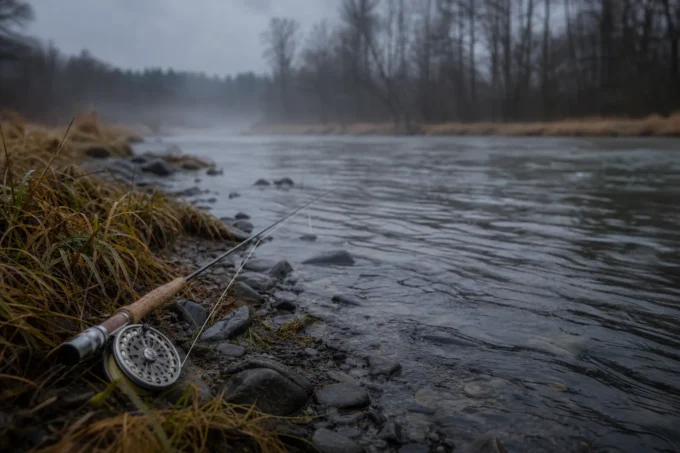
The morning was one of those gray still days that smell like wet gravel and fish. I got to my favorite bend before first light, which almost never happens, because getting up early is exactly the kind of small thing I plan for and then quietly skip when the alarm does its job. This time I didn’t skip it, and I took that as a sign the day was special. The river treated it as ordinary. Water moved through the run the way it always did, patient and completely uninterested in my good mood.
I tied on a small black nymph with a knot I had been tying for twenty years, which means I tied it with my eyes half closed and my mind already twenty cast ahead. Knots are the only part of fishing nobody brags about, so nobody practices them. You practice the cast, you study the hatch, you memorize the color of a mayfly wing, and then you trust a knot a child could tie badly to hold every fish you actually care about. It held fine on cast after cast, which is the whole trick. A bad knot does not announce itself. It feels exactly like a good knot right up until the moment it stops existing.
The Take That Felt Like a Snag
The current was moving good, and I worked the seam for an hour with nothing. A few soft bumps that could have been anything, so I chose to believe they were nothing. Confidence is cheaper than attention, and I was spending confidence like a man who had plenty. Then the line went tight in a way it hadn’t all morning, steady and heavy, no rod-tip bounce. For half a second my brain filed it under snag, because that is what a big fish does before it moves. It sits there and lets you think you are wrong about it.
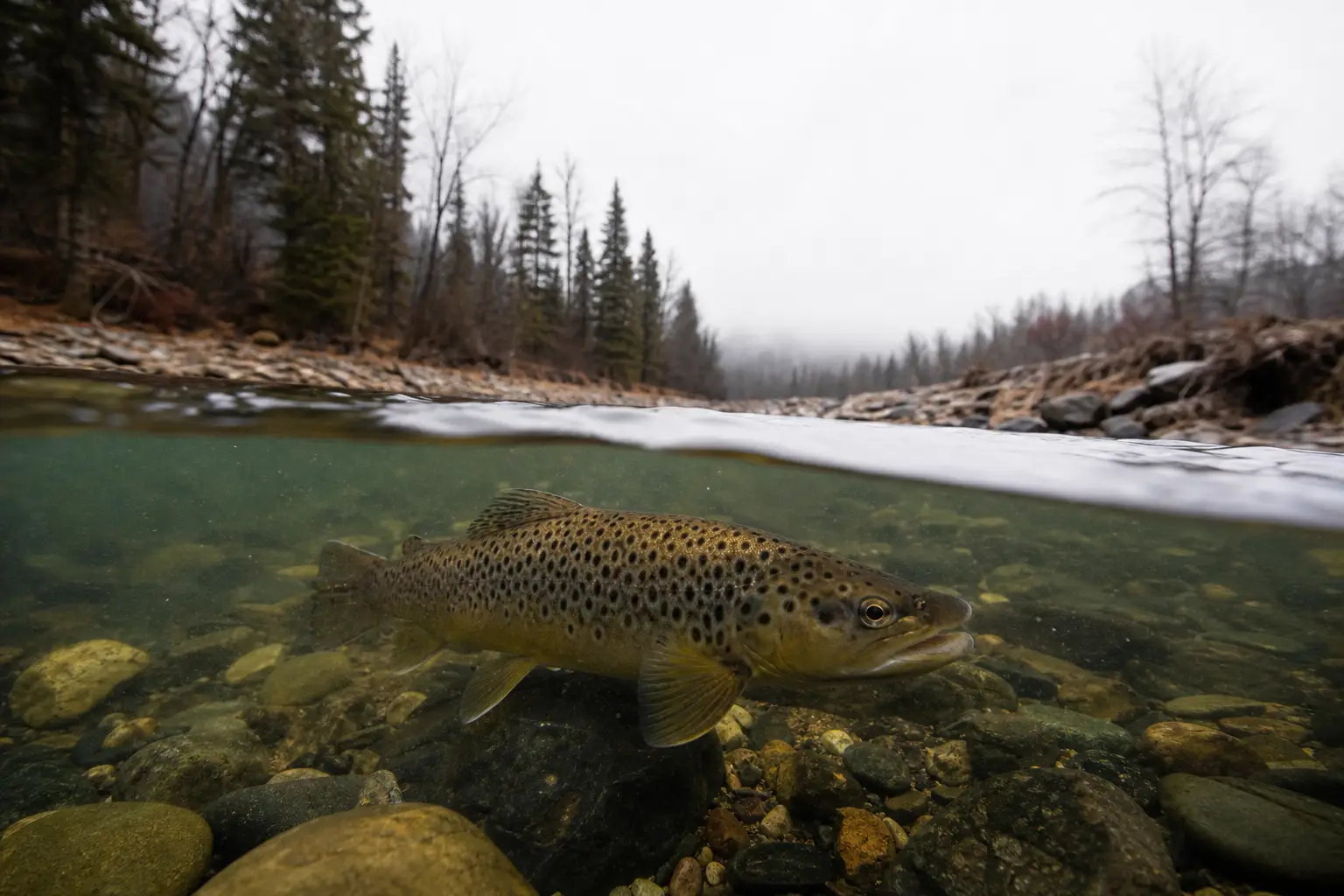
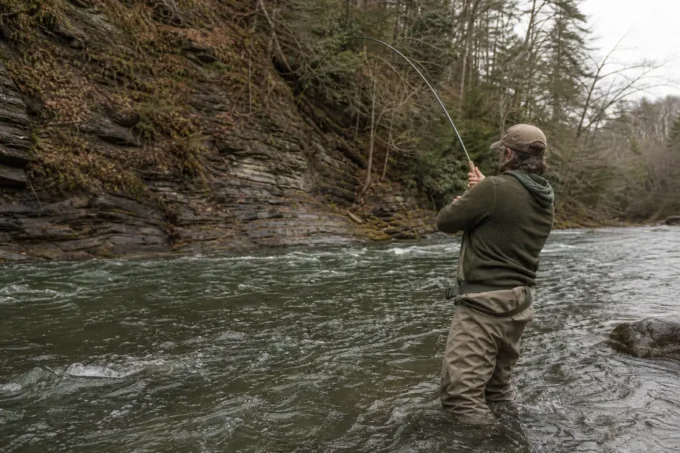
Then it moved. The rod bowed over in a way I have replayed ever since, deep and alive, and the reel sang a note I had never heard that reel sing. This was not a stocker. This was a brown that had been in that run longer than I had been coming to it, the fish every regular on that stretch talks about in the parking lot with that particular tone people use when they mean the fish is real but they have never actually seen it. I was about to see it. I was sure of that the way a man is sure of a lottery ticket the night before the drawing.
Where Men Go Wrong Is the Part They Skim
Here is what an honest angler would have done in the next ten seconds. He would have kept the rod low, let the fish run against the drag instead of his pride, and trusted the gear that had gotten him that far. He would have taken his time, because the whole point of catching a fish like that is that it does not care how long you take. He would have remembered that the line was three weeks old and sun-faded and knicked from a hundred river rocks, and he would have reacted to that fact by being gentle.
I did the opposite of every single one of those things. The second I felt real weight, every lesson I have ever absorbed left my head, replaced by a single dumb urgent thought: get it in now, before it gets away. That thought is the wrecking ball of fishing. It arrives fully formed and completely wrong, and it feels like wisdom while it is busy losing you the fish. I clamped down on the drag. I pointed the rod tip where it should never go. I pulled when I should have let it run, because some tiny vain part of me wanted the win more than the fish, and that part of me has never once made a good decision on the water.
The Silence After the Line Goes Slack
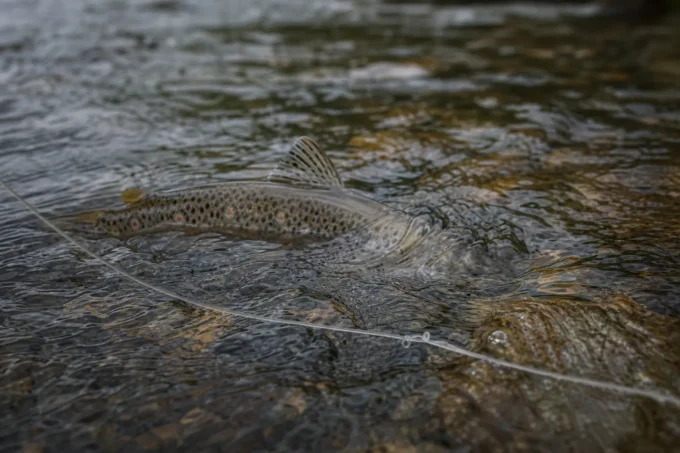
When it broke, it did not snap with a bang. The line just went slack, the way it does when something is truly gone and not coming back, and the rod straightened out in my hands like a divining rod that had found water and then forgotten why. I stood there in the quiet, breathing hard for no reason at all, holding a stick with a piece of expensive nothing tied to the end of it. The river did not care. The fish was somewhere in the run, probably a few feet from where it had been, already forgetting me the way big fish always forget the men who almost had them.
My first move was to blame the line. Old line, cheap line, sun damage, bad batch, the knot slipped, anything but the truth, which was that I had set the hook of my own impatience clean through the one thing I was supposed to protect. Blame is a warm coat, and I put it on immediately. It kept me comfortable all the way back to the truck, which is exactly what blame is for. It does not catch you the fish back. It just makes the drive home feel less like an invoice and more like a story you get to edit.
The Old Man Who Sold Me a Sentence
There is an old timer at the bait shop down the road who watched me retie the whole rig in the parking lot that afternoon, because he watches everyone, and he waited until I was done being busy to say the thing that has stuck with me longer than any knot I know. He said a good fish does not come on the line you trust. It comes on the line you checked. Then he told me the rule he has told ten thousand times, which is that line older than a week in the sun and the river is already half done, and a knot you tie without looking is a knot you never tied at all. He said it flat, no lecture in it, like a man reciting grain prices. I nodded and pretended I already knew it, which is the other thing I do instead of listening.
But the sentence came home with me and would not leave. All the soft bumps I had been ignoring, all the times I chose confidence instead of attention, all the mornings I skipped, they assembled themselves into a single boring truth: the fish was never the thing I should have been afraid of losing. It was the habit. The big brown did not break my line because the line was old. It broke my line because I had spent three weeks treating the gear like the fish’s problem instead of mine, and the river had finally sent a fish big enough to make me notice.
What the River Costs to Teach It Twice
I went back to that run every Saturday for the rest of the season, with new line and new knots I could tie in the dark, and I never saw that fish again. Maybe it was never there. Maybe it was there every single time, holding in the deepest seem, watching me cast, the way old fish watch men. I caught smaller ones, and I retied before every single one of them like it might be the big brown myself. That is the part nobody photographs. The retying, the checking, the slow boring half of fishing that happens when your hands are cold and your coffee is gone and the fish are not cooperating. It is the part that decides everything, and it is the part I had skipped my whole life until the river made me pay for it.
The knot that held all season until it mattered is gone now, buried in the gut of a brown trout I will see in parking lot stories for the rest of my life, told by other men in that same tone. I know it was real. I felt it. And I know now that the line that breaks is not the thing that lost the fish. The man who could not wait five more seconds is the thing that lost the fish. The river has been trying to tell me that for twenty years, and it finally sent a fish worth listening to.