My old man only ever said one thing about getting ready for a hunt, and he said it every single time, right before we backed the truck down the drive. “You got your gun?” Not “you got your rounds,” not “you got your tag,” not “you got the cooler.” Just the gun. I spent twenty years thinking it was a dumb old man question, the way you’d ask a kid if he put his shoes on. Then November before last I proved him right, and I proved it so clean that I still can’t tell the story without somebody at camp asking me to tell it again so they can laugh at me to my face.
It was the first real cold snap of the season, a hard frost the night before and that thin blue kind of morning where your breath hangs and the deer move all day because the does are up grazing to stay warm. My buddy Terry and I had been after one particular buck for two years, a heavy eight point we had pictures of from September through the first week of November. The cameras had gone quiet on him after the rut started, which any halfway smart hunter will tell you doesn’t mean he’s gone, it means he’s doing something none of our three cameras could see. But we had a plan, and the plan was the south fence line where the old pasture butts up against a line of scrub cedar, and we were going to sit it all day if we had to.
I was up at four-thirty, made a pot of coffee, laid my rifle out on the kitchen table while I pulled on my layers, and loaded the truck. Cooler, chair, pack, thermos, rangefinder, spare socks, the little dry bag with my phone and a power bank, a bag of jerky the size of a small dog. I stood in the drive with the tailgate open and patted every pocket twice, the way you do, and told myself I was ready. It was a lie, and the only reason I don’t still feel sick about it is that what happened after ended up being funnier than it had any right to be.
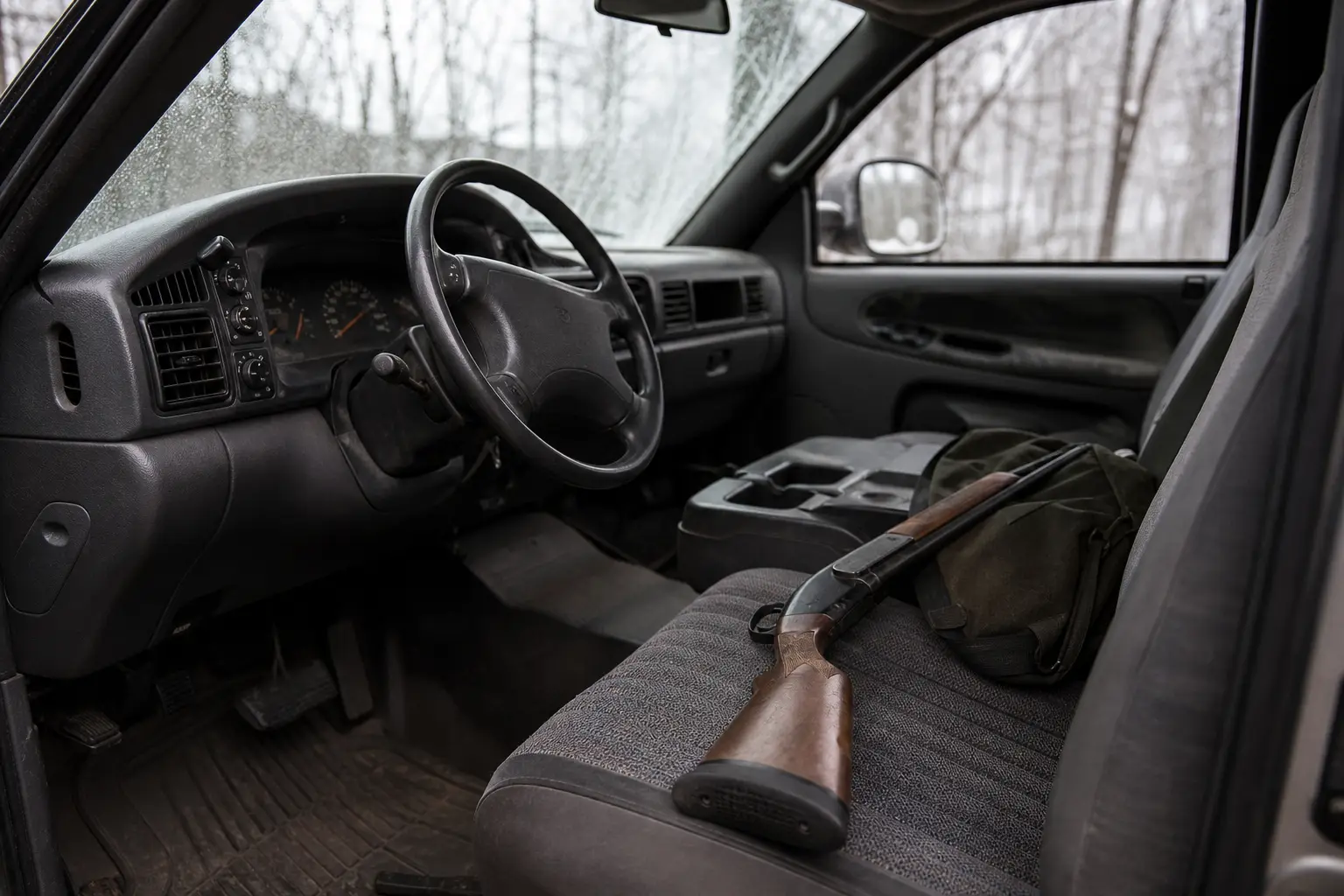
It’s an hour and twenty minutes out to Terry’s lease in good weather, and that morning it was forty minutes of highway out of town, then thirty-five of two-lane blacktop, then the last stretch of gravel that rattles your teeth out and always makes me want to stop and check that the tailgate’s still latched. I pulled into the gate, saw Terry’s truck already there with the headlights off, and that’s when I reached over to the passenger seat. There was a cooler there. There was a pack there. There was no rifle there.
The rifle was on the kitchen table. Fourteen inches from the coffee cup I’d left in the sink. I have a very clear memory of looking at it and thinking “don’t forget that,” which is the detail that makes this whole thing hurt, because I looked right at the thing I was forgetting and then forgot it anyway, like the gun was just part of the furniture.
So I did the dumb thing, and then I did the dumber thing. I called Terry and told him the truth, and instead of just sitting in the truck on the edge of the field and glassing from there, or borrowing his spare, or going home and sleeping, I turned around and drove all the way back. An hour and twenty minutes back to the house to get a rifle, and an hour and twenty back out. Three hours of my own day, handed to nothing, because I couldn’t stand the idea of Terry finding that buck by himself after we’d hunted him together for two seasons. Pride is a hell of a quartermaster, and it makes you spend your whole morning on gasoline.
Terry was real nice about it when I finally rolled up again, which is to say he didn’t say a single word and just pointed at the gate like he’d been waiting on the most expensive Uber of his life. We got into the stand around ten, three hours late, and sat. And sat. At about three in the afternoon, with the sun going low and the frost starting to come back, Terry nudged me and nodded. There he was. The eight point, stepping out of the cedar line about a hundred and forty yards out, quartering toward us, big and slow and so close to being in the clear that my heart was already counting him.
He stopped behind a clump of yucca and I can’t tell you what spooked him. Maybe the truck, maybe the front I’d put off all morning, maybe just one of those things where an old buck has enough years on him to know when the woods don’t feel right. Whatever it was, he didn’t give me the quartering shot. He turned broadside for one breath, and I took too long lining him up because I was still mad at myself, still running the morning’s three wasted hours through my head instead of running my crosshairs, and he took two steps and melted back into the cedar before I ever got the safety off. First good buck we’d laid eyes on there in years, and I watched him walk because I was too busy being embarrassed to shoot.
Terry didn’t say anything for a long time. Then he said, “Least the gun made it.” And that is somehow the worst thing anybody has ever said to me that made me laugh.
The Setup Checklist That Would Have Saved Me
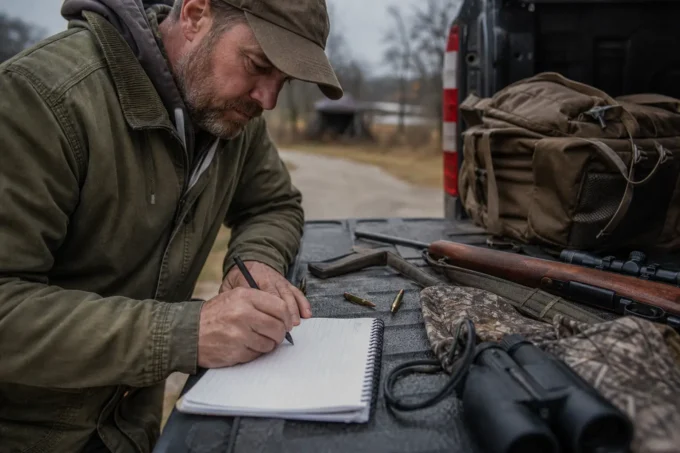
I tell this story now because it’s the cheapest lesson I ever bought with three hours of gas and one unloaded buck, and because every single year somebody at camp forgets something and thinks he’s the first man in history to do it. He isn’t. The only difference between the guy who forgets his gun and the guy who doesn’t is the guy who doesn’t wrote it down. So here’s the list I keep now, and it’s saved my hide more than once.
- Rifle or bow, checked physically in the truck, bolt or quiver in hand, before the engine turns over
- Ammunition or arrows, and at least a handful more than you think you’ll shoot
- License, tags, and the landowner permission slip where it applies
- Cooler with ice, because a deer at ten in the morning in a warm truck turns fast
- Knife, gloves, and a drag rope or game cart, and a headlamp with fresh batteries
- Water, a real snack, and whatever meds you can’t skip
I keep the rifle and the keys in the same hand. You can’t start a truck while you’re holding a rifle, and you can’t leave a rifle on the table if it’s already in your fist. That’s the whole trick, and it sounds so small that you’ll ignore it, same as I did for twenty years while my old man’s question rolled right off me.
What “Ready” Actually Looks Like
Ready isn’t a feeling. It’s a stack of things in one place, touched with your hands. The morning I forgot the gun, I felt more ready than I ever had, because I’d laid out more gear than I’d ever laid out. But I’d never once put a hand on the one thing that mattered. Feelings lie. A checklist doesn’t, because a checklist doesn’t care how confident you are, it just wants to know if the box is empty or full.
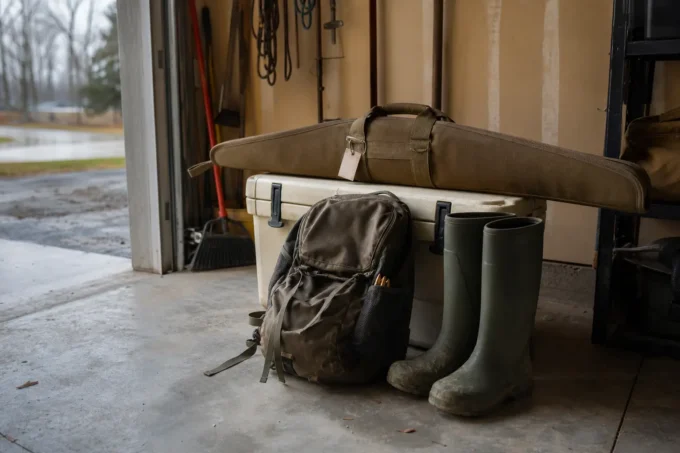
Now I load the truck the night before, or I don’t load it at all. Everything goes in one corner of the garage in the order I’ll want it. Gun case on top of the cooler, rounds in the side pocket of the pack, tag clipped to the gun case handle where I have to feel it to move the case. When I’m done, I stand in the drive and I say his line out loud, the way you’d tap your pockets. “You got your gun?” And I don’t put the truck in gear until I’ve answered it.
He never once forgot a rifle in his life, and I spent two decades rolling my eyes at the reason he didn’t. The old man wasn’t asking because he was forgetful. He was asking because he knew exactly what his son would turn into the one morning the son was sure he had it handled. Turns out the son turned into that man anyway. It just cost him three hours and an eight point to finally hear the question.