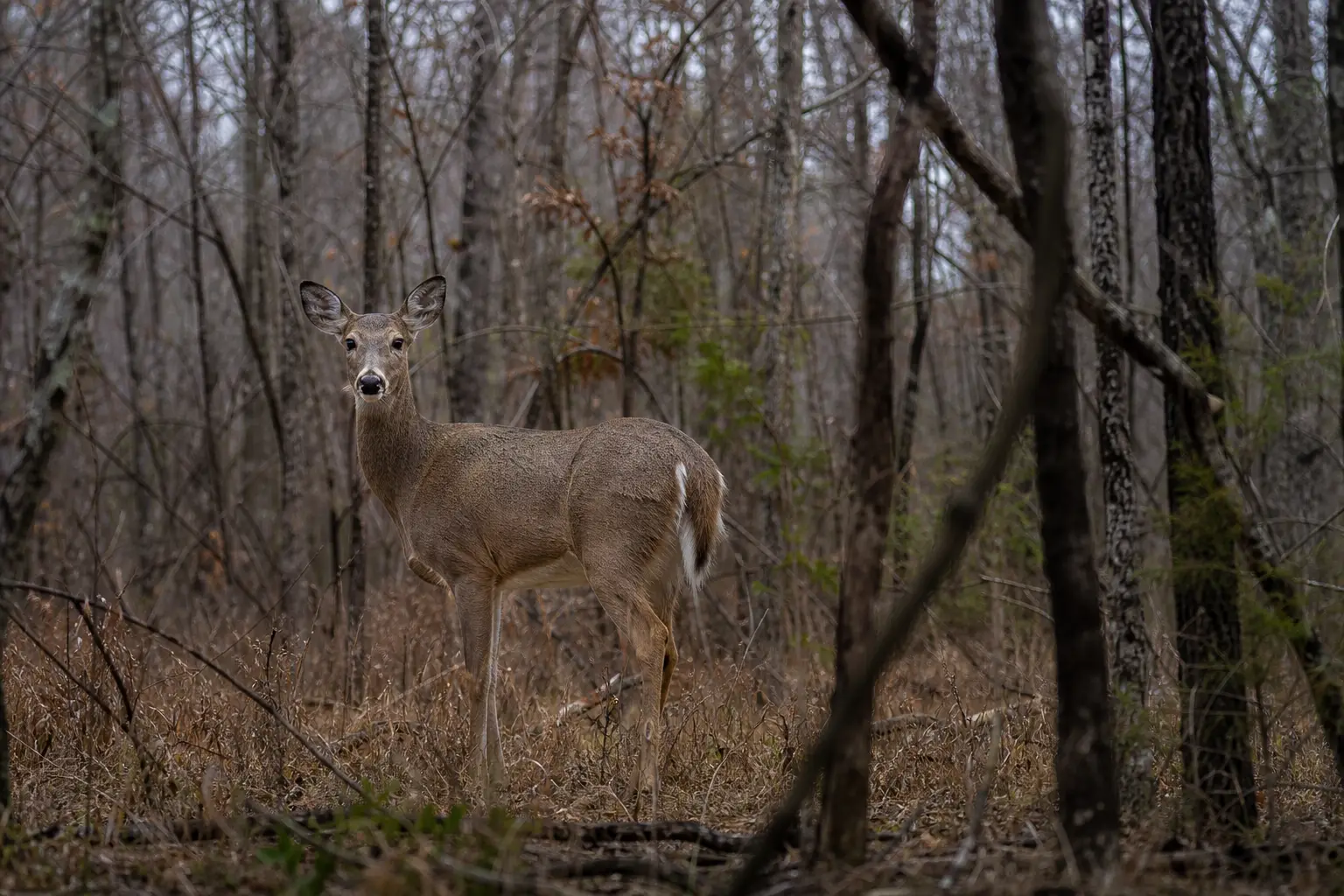
I was thirty-one before I shot a doe on purpose, and I stood over her for a long time wondering if I had done something wrong. Nobody had ever told me I was allowed to. Every fall I had grown up chasing antlers, and somewhere along the way I decided a deer without a rack was a deer you let walk. That rule lived in my head like it came from God, and I never once stopped to ask where I got it.
The Rule I Never Questioned
Here is the honest version of how a lot of guys think, me included. A buck on the ground means you beat something. A doe on the ground means you settled. You waited all season for horns, and a doe is what shows up when the horns do not, and so you watch her walk past and tell yourself you are being a real hunter because you held out for the trophy.
My dad hunted that way. So did his dad. Nobody ever said it out loud, but the message got through anyway. Antlers were the scoreboard. Does were the weather, just something moving in the background while you waited for the thing you actually came for.
I carried that for years without ever looking at it. Then I moved to a piece of country where the deer were thick as ticks and the biologist kept saying the same thing in every public meeting: shoot more does. The herd was out of balance. The browse was chewed to dirt. The fawns were undersized. And me, I kept passing every doe that walked under my stand because my grandfather’s voice was still in my ear telling me a doe was not worth a bullet.
The Night I Argued With an Old Man
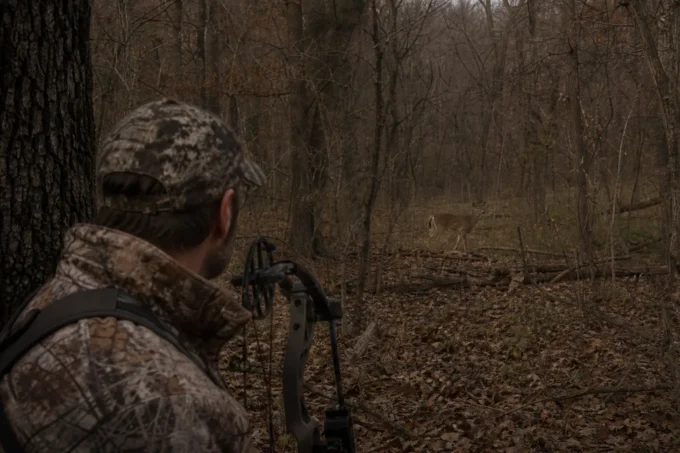
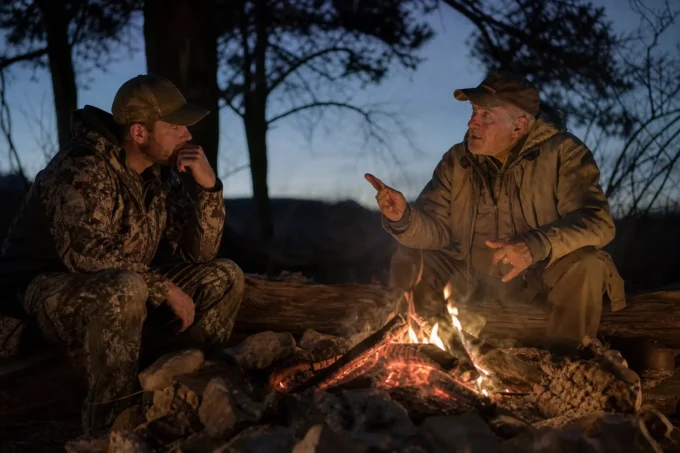
The old man at the lease finally got tired of hearing me talk. He was in his seventies, missing a finger on his left hand, and he had killed more deer than I had seen in my whole life. One night over the fire I made some crack about “management does” like it was a made-up chore, and he looked at me the way you look at a dog that’s about to do something stupid on the rug.
“You think the herd manages itself because you were too proud to pull the trigger,” he said. “You passed eight does this season. Congratulations. The coyotes didn’t pass them.”
I opened my mouth to argue and he just kept going. He told me about the winters he remembered, the deer packed into the cedar thickets starving, ribs showing through, eating bark off the scrub until the browse line looked like somebody had run a mower at deer height. He said a balanced herd was not a nice idea, it was the difference between fat healthy deer and a bunch of skeletons that died slow in March.
I didn’t have a good answer for that. So I did what stubborn men do. I shut up and kept passing does for the rest of that season, and I told myself I’d think about it next year.
The First Doe I Took on Purpose
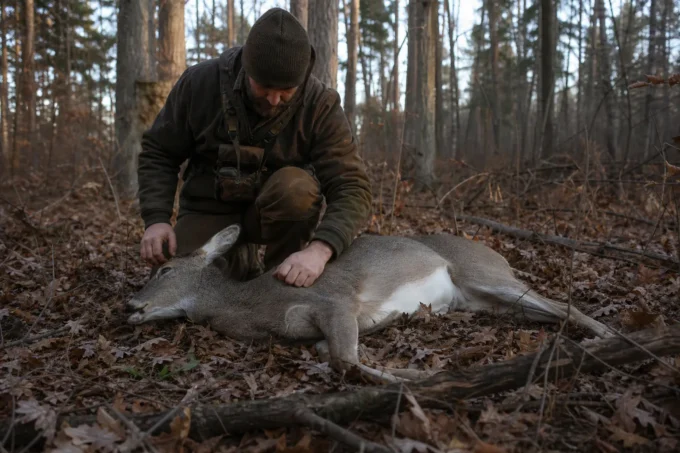
Next fall I shot one. She came out right at last light, a big old girl with scarred ears, and she stopped broadside at forty yards and gave me a perfect shot. I put one right through the boiler room and she dropped inside of thirty yards, which is about as clean as it gets. And then I climbed down and stood there looking at her, and I waited for the wrongness to show up.
It didn’t. What showed up instead was something quieter, and it took me a minute to name it. I had just killed a deer, by myself, cleanly, on purpose, and I was going to eat every bit of her. The meat was the whole point. There was no rack to measure, no score to brag about, nothing to hang on the wall. Just an animal I was going to feed my family with, and a herd that was a little bit healthier because of the tag I filled.
That’s when I finally understood what “management” meant, and it had nothing to do with a chore. It meant looking at the land and the deer and deciding, every single season, what the herd actually needed. Sometimes what it needs is for a grown man to stop being vain about antlers and take a doe.
Why the Antlers Got in the Way
I wasted a lot of years thinking conservation was something other people handled. The state, the biologist, the guy in the truck with the tag. I thought my only job was to show up, shoot a buck, and not do anything illegal. That’s a comfortable way to think, and it’s a wrong one, because it turns me into a customer of the woods instead of somebody who takes care of them.
The antlers were the whole problem, and I don’t say that against buck hunting. I still get excited when a good one steps out, same as anybody. There’s a reason we chase the big ones, and it’s a real reason. The trouble is that somewhere along the way I let a rack become the only reason I was out there, and once that happens you start passing animals the land needs you to take.
Does are the engine of a deer herd. That’s not a clever line, it’s just biology. Too many does and not enough food means smaller fawns, smaller deer overall, more late-winter die-off. In a lot of states the whole antlerless season exists because leaving the herd alone does not actually take care of it. It just means the balance gets handled for you, by starvation and predators and disease, and none of those are gentle.
The Harder Version of the Same Lesson
Here is the ugly part I don’t like writing. For years I used “I only hunt for meat” and “I’m waiting for a legal buck” as a way to sound noble while doing the lazy thing. Passing a doe felt like virtue, when half the time it was just an excuse to keep my tag empty and my ego clean. Real conservation requires a decision, and a decision means you might get it wrong, and neither of those feels as good as sitting in a tree feeling superior.
The old man put it better than I can. “Anybody can shoot a buck and pat himself on the back,” he said. “It takes a little bit of paying attention to shoot what the land actually needs.” That stung, because it was aimed right at me, and because he was right.
What Changed After That Doe
I won’t pretend I became some kind of saint. I still want a good buck. But that first doe changed the arithmetic in my head. Now when I buy a tag I read the actual antlerless rules, I look at what the state is asking for, and I make my choice based on the herd and my freezer instead of just my wall. Some years that means dropping a doe. Some years it means letting her walk because the balance is fine and the freezer is already full.
The point isn’t the doe. The point is that I finally started making the decision on purpose instead of inheriting it. That doe taught me the thing I’d been missing for fifteen years, which is that a hunter who only ever takes antlers is not a conservationist. He’s a customer. And the woods don’t need more customers. They need more stewards, and a steward is somebody who asks what the land needs and then acts on the answer, even when the answer doesn’t have a rack on it.
If you had asked me at twenty-five what conservation meant, I’d have given you some speech about clean kills and following the law and leaving the place better than I found it. All true, all easy. What I know now is that the hard half of conservation is the part that happens before you ever draw a bead, in the quiet moment when you decide what the herd actually needs from you this year, and whether you’re man enough to do it.