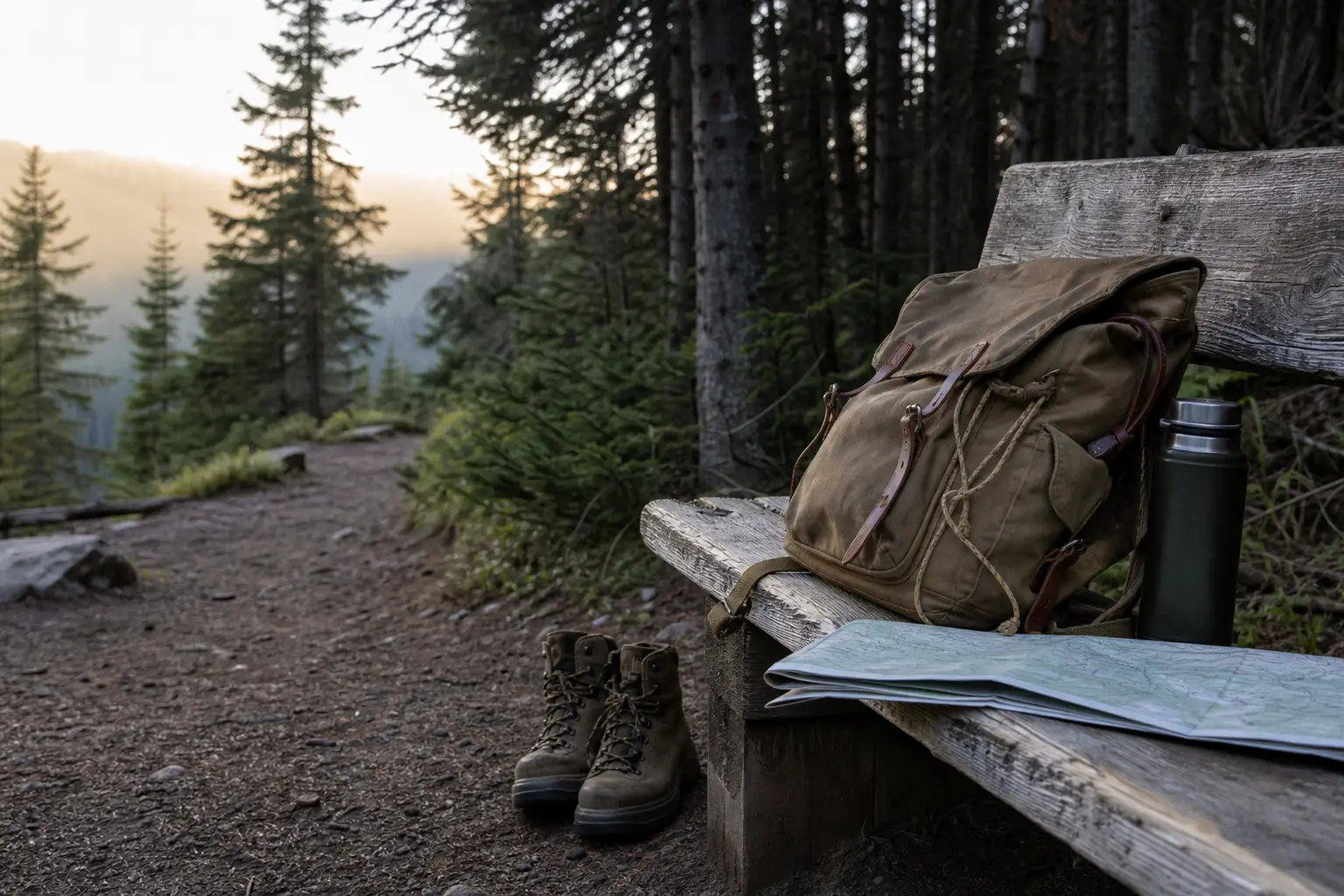
The first year I hunted, my pack weighed 38 pounds. I know this because I weigh everything now. Back then I didn’t, and that was part of the problem.
Thirty-eight pounds for a four-hour morning sit in a box blind my buddy built out of scrap plywood and hope. The blind was maybe 300 yards from the truck. Three hundred yards. I could have walked it in flip-flops with a rifle and a bottle of water. Instead I looked like I was heading out for a week in the Brooks Range.
I had a framed pack with a waist belt rated for 80 pounds of elk quarters. Inside: three knives (skinning, boning, gut-hook), a folding saw, a hatchet, two flashlights and a headlamp, a first-aid kit the size of a lunchbox, paracord, a space blanket, a rain jacket, an extra fleece, four bottles of water, a Jetboil with a fuel canister and a dehydrated meal, a range finder, binoculars, a grunt call, a bleat can, a doe decoy that smelled like burnt plastic, and 20 rounds of .30-06 in a leather cartridge holder because I thought the plastic box looked cheap. Twenty rounds. For a morning sit where I might see six deer and shoot at one.
I also carried a sidearm. A full-size .357 with a six-inch barrel. In Ohio. Where I was hunting whitetail over a cornfield. With a rifle.
I am not proud of any of this.
The walk to the blind took 12 minutes. By the time I got there, my shirt was soaked through under the shoulder straps. I climbed into the blind, dropped the pack at my feet, and sat there for four hours in November wetness, getting cold because I’d sweat through my base layer and now the wind was cutting through the plywood cracks. I saw three does. Didn’t shoot. Walked back to the truck, threw the pack in the bed, drove to McDonald’s.
I used exactly four things from that pack during the whole hunt: the binoculars, the water bottle, the range finder, and a granola bar I’d forgotten was in the side pocket. Everything else was ballast. Expensive, carefully researched, heavily marketed ballast.
Year Two: The Correction
The next season I tried to get smart. I read forum threads. I watched YouTube videos titled things like “My Minimalist Whitetail Kit” and “What’s Actually In My Day Pack.” I took notes. Then I went the other direction entirely.
I cut too much. Dumped the range finder because “I know what 100 yards looks like.” Left the water at the truck because “I’m only going out for a few hours.” Ditched the extra layer because the weather report said 45 and sunny. The weather report lied. It was 35 and drizzling by 8 AM. I sat there shivering with no range finder when a buck stepped out at what I told myself was 150 yards but was probably closer to 200. I guessed the holdover. Missed clean. The buck trotted off. I found the bullet strike three feet low in the dirt behind where he’d been standing.
So that wasn’t the answer either. Going full survival minimalist works if you’re actually good at hunting. I was not actually good at hunting. I was a guy who’d watched too many videos and confused enthusiasm with competence.
Year Five: What’s Actually In The Pack
It took about five years of carrying dumb stuff, leaving behind smart stuff, and losing deer because of both before I settled into something that works. Here’s what made the cut, and why.
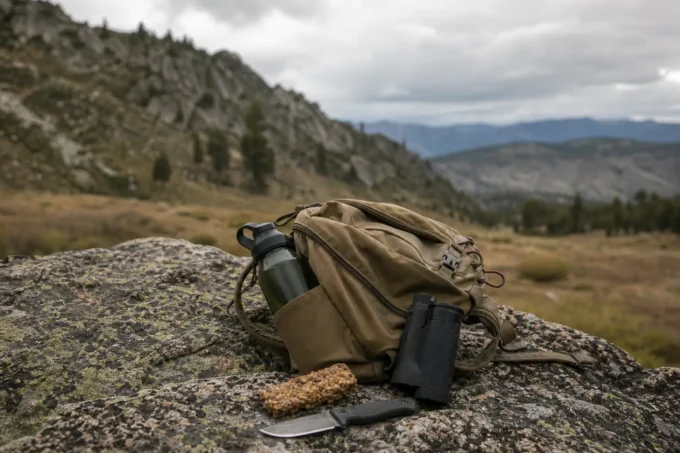
The pack itself. I run a small lumbar pack now. No frame, no waist belt rated for packing out elk. I weigh 180 pounds. I’m not packing out elk. The pack is just big enough for a water bottle, a rangefinder, a kill kit, and a puffy jacket. If I shoot something, I walk back to the truck and get the game cart. This took me an embarrassingly long time to figure out.
One knife. A fixed blade with a 3.5-inch drop point. That’s it. I gut, skin, and quarter with the same knife. I used to carry a gut hook because I watched a guy on TV use one and it looked professional. You know what else opens a deer? A knife. The gut hook sat in my pack for three seasons. I used it once to open a package of beef jerky.
A real range finder. Not the cheap one that fogged up when I breathed on it. After the Year Two miss, I bought a Vortex Ranger 1800. I dropped it out of a treestand the second year I owned it. Slipped out of my hand while I was trying to range a buck and juggle a grunt call at the same time. It hit a log and bounced into the leaves. Still works. The glass is scratched to hell on the housing but the reticle is clear and the numbers don’t lie. I don’t baby it anymore. It lives in the side pocket, gets rained on, gets dusty, and it runs. That’s all I need from gear now.
Water and a snack. One liter. A couple granola bars. I don’t pack a stove and a dehydrated meal for a morning hunt. I’m not Bear Grylls. I’m a guy who wants to shoot a deer and be home by lunch.
Clothing layers. I stopped trying to predict the weather. I carry a lightweight puffy jacket and a thin rain shell, even when the forecast is clear. They compress to nothing and they’ve saved more hunts than any piece of equipment I own. Being cold makes you stupid. Being stupid makes you miss. I proved that in Year Two.
What I left behind. The sidearm. The hatchet. The folding saw. The Jetboil. The decoy. Three of my four knives. The 20-round cartridge holder. The space blanket. The paracord. I’m not building a shelter 300 yards from my truck, what was I thinking.
What I added and kept. A small roll of flagging tape. It weighs nothing. When you shoot something in thick cover at dusk and it runs, you will forget which direction the blood trail starts. The tape marks your shot location. Ask me how I know.
The Lesson I Didn’t Learn From YouTube
Nobody makes money telling you to carry less gear. Every hunting show, every magazine, every YouTube channel has sponsors. The answer to any question is always another piece of equipment. “What do I need for whitetail?” A tree saddle, a dozen carbon arrows, a cellular trail camera subscription, scent-eliminating laundry detergent, ozone generator, a bow with a 32-inch stabilizer, and a pack that costs more than my first rifle.
The real answer, for most of us hunting private land or accessible public land, is a whole lot less than you think. Figure out what you actually use in three consecutive hunts, then leave everything else in the truck. If you discover you need it later, add it back. But I’ll bet you won’t add much.
I still have that first heavy pack hanging in the garage. My son is 12 now and asked me last year why I kept it. I told him it was a museum exhibit. Exhibit A in the case study of a man who thought you could buy competence at Cabela’s.
He starts hunting next year. He’ll carry his own pack. It’s going to be light as hell.