The Cart Full of Warmth
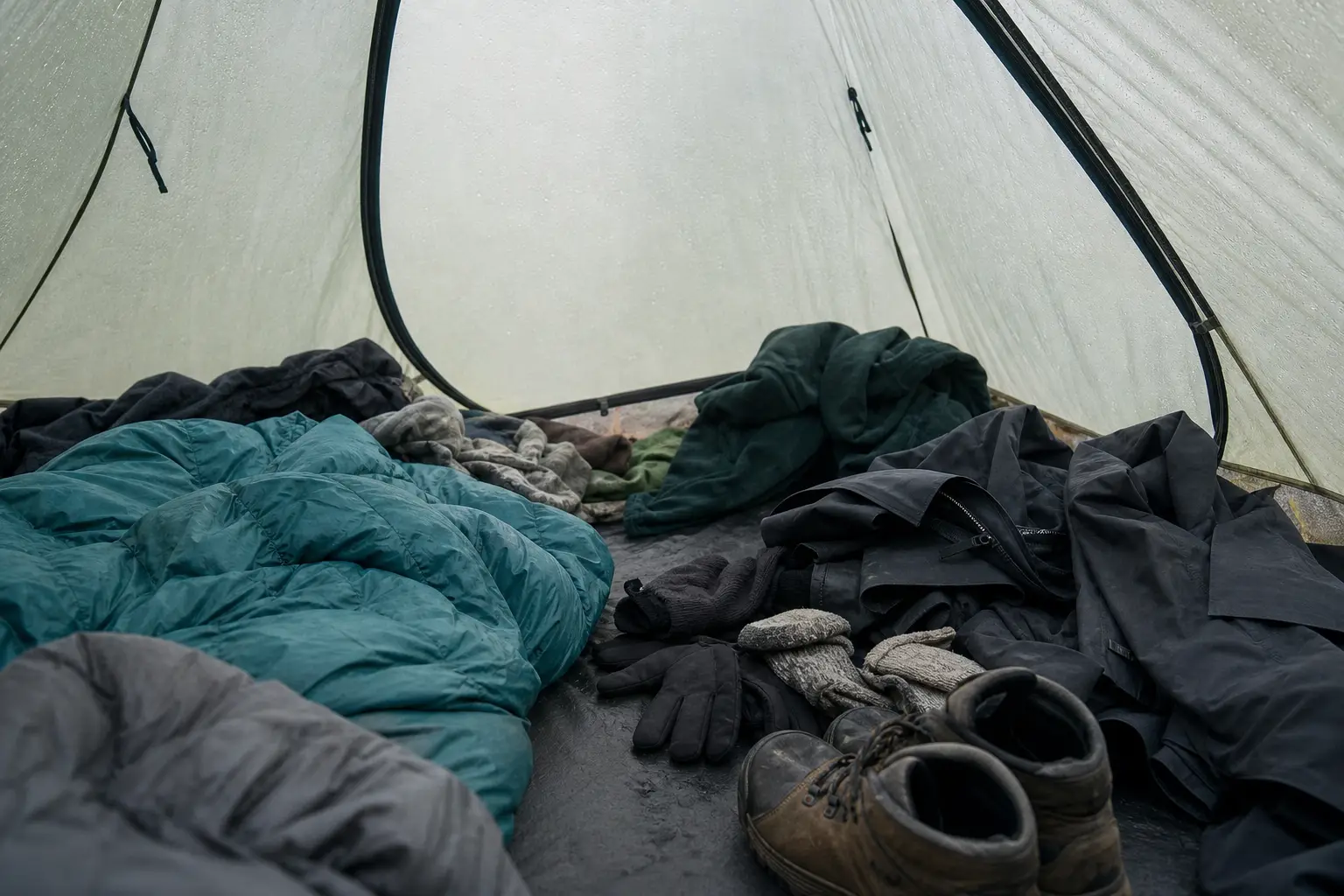
I did what any freezing man does. I solved my problem the way I solve everything, which is with money and a browser tab. One bad November night, shaking in a tent that had no business being slept in, I opened a gear site and bought my way out of the cold. SmartWool thermals. Darn Tough socks with silk liners. A neck gaiter. Gloves. A pair of 686 shell pants. Felt-lined boots. Then I put every single one of those things on over the clothes I already had, crawled back into the same sleeping bag on the same ground, and shivered harder than I had before any of it arrived.
That is the part I did not see coming. I laid a hundred and fifty dollars of new fabric across my body and got colder. I checked the tags, like the tags would explain it. Wool was supposed to be the answer. That word had been repeated back to me so many times, wool keeps you warm, wool wicks, wool this, wool that. I believed wool the way a kid believes a seatbelt, which is to say I believed it without ever knowing what it was actually doing in there.
What the Layers Were Actually For
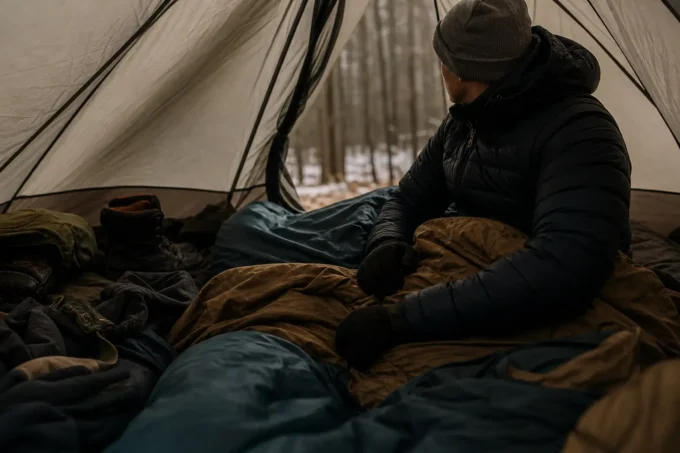
Here is what nobody bothered to tell me, or more likely here is what I scrolled past a hundred times because it was written in the boring language I skip. Layering is a system, not a pile. Base layer next to skin, insulation in the middle, shell on the outside. Each one has a job. The wool base layer is not there to make you warm. It is there to move sweat off your skin. That is its entire job. The shell is there to stop wind and water. That is its job. Neither of them insulates anything.
The warmth lives in the middle layer you did not buy. Down, or thick fleece. The puffy thing. The quilt-grade stuff that traps a layer of dead air against your body and keeps your heat there. I had somehow assembled an entire outfit out of the two layers that do everything except keep you warm, and I had called it done.
Worse than that, I had made myself colder by adding all of it at once. All that new fabric stacked tight under my shell tightened everything up. My boots, which fit fine in the store at a warm forty degrees, had no room left once I doubled up on thick socks. My toes went numb because I had squeezed the blood out of my own feet. The blood is the heating system. I had strapped so much stuff on that I had shut off the radiators and then blamed the radiators for being cheap.
Compression Is a Quiet Thief
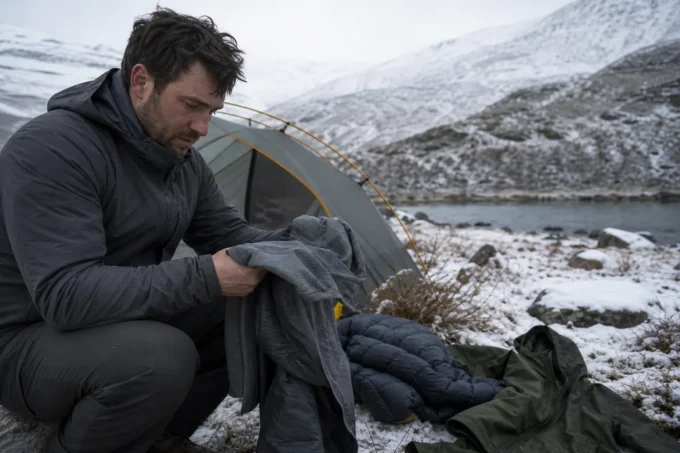
There was a word for this the whole time, and I even sort of knew it from sleeping bags. Loft. A sleeping bag keeps you warm because the fill is puffed up, full of little pockets of air that heat up and stay. Sit on it, crush it, soak it, and the loft is gone and the warmth goes with it. Down does not do anything special. It makes space. That is the whole magic trick.
I was crushing that space everywhere I could. Tight base layers mashed against a too-small puffy, or rather against the puffy I did not actually own. Boots so full of sock that the loft in the sock was gone flat against leather. Sleeping bag pressed down by my own weight onto a ground pad that was basically a yoga mat, which is a thing designed to keep your elbows comfortable in a studio, not to stop frozen earth from pulling every degree out of your back all night.
The ground is the part I refused to look at. I was sleeping directly on cold, hard dirt through a thin pad, convinced my problem was the clothes on top of me. Meanwhile the ground underneath me was conducting heat out of my body all night like a drain in the floor. You can wear a thousand dollars of down and still freeze if the ground is stealing from under you. The pad is not a luxury. It is the layer between your body heat and a planet that is very happy to take it.
Too Many Layers Make You Colder
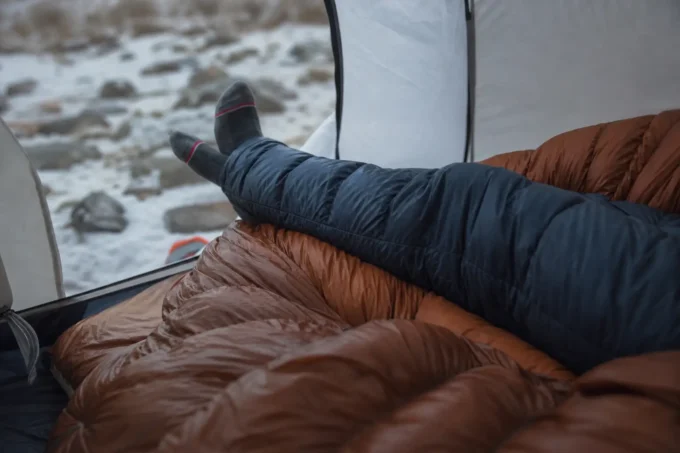
This was the line that finally went off in my head, the one that felt backwards and turned out to be the entire truth. Too many layers make you colder if they are tight and restricting blood flow. I had always assumed more clothes meant more warm, full stop, the way more food means more full. But clothing works on circulation and air pockets, and if you cinch it all down until nothing moves and nothing puffs, you have built yourself a fancy straitjacket that happens to be wool.
My hands were the proof. I bought gloves and my hands got colder. Because the gloves were snug and my core was cold, so my body was already routing blood away from my fingertips to protect my heart and brain, a thing your body does long before you notice. No glove on earth fixes cold hands if the trunk is cold. The answer to cold hands is a warm torso. I was firing all my money at my extremities while the furnace itself, my chest and my back, sat there with no insulation layer at all.
The Fix Was Boring and Cheap
What actually worked was so unglamorous I almost did not want it to be the answer. A down vest, found for nothing. A thick synthetic fleece top. Boots a half size up, so the sock could actually puff up and hold air instead of being crushed flat. A wool blanket laid over my ground pad, because the blanket over the pad between my bag and the cold earth did more for me than any jacket I owned. Separate dry clothes to sleep in, because sleeping in the same base layer you sweated in all day is the same as getting into bed already wet.
None of it is the stuff they put in the thumbnail. There is no photo of a man re-lacing boots a half size bigger. Nobody posts a picture of the wool blanket under a sleeping pad. The gear that actually saved me is the gear that does not photograph. It is the loose fit, the dead air, the dry socks, the food in my stomach that my body burned for warmth. I was underfed half the season and cold half the season and never once connected the two until a stranger pointed out that staying warm is a furnace and a furnace needs fuel.
What I Still Get Wrong
I will be honest about the part that still sits wrong with me. The real lesson was not glamorous, and part of me keeps waiting for a grander one. I keep wanting the answer to be a better purchase, a colder-rated tag, a higher number on a bag. Because buying is the thing I know how to do. It feels like work. It gives me a receipt I can point to when I am cold, as if the receipt should be enough.
But the cold does not read receipts. It does not care what the wool cost or that the tag said merino. It cares about whether there is air trapped near your skin, whether blood is reaching your fingers, whether the ground is pulling heat out of your back, and whether your body has anything left to burn. Those are not gear questions. Those are questions about how the system fits together, which is a much more boring thing to learn than how to spend money fast.
I still have all that expensive stuff. It was not wasted. It just was not the answer by itself, in a pile, cinched down tight. Once I put it in the right order, loose where it needed to be loose, with an actual middle layer doing the actual middle job, it worked fine. The wool moved the sweat, the fleece held the heat, the shell blocked the wind, and the blanket kept the earth off my back. Every piece finally doing its one job instead of all of them trying to do mine.
The man who thinks wool is magic and boots are a sock container is colder than the man who understands the dumb machine of it. I was the first man for a long time, adding more and more on top and wondering why the cold kept coming up from below. The whole system comes down to a handful of unphotographed truths. Air needs puffs, not pressure. Blood needs room, not decoration. The ground always takes, and a pad is the only thing standing in its way. And you cannot buy your way warm at all if you show up with an empty stomach and wet clothes and call it an equipment problem.