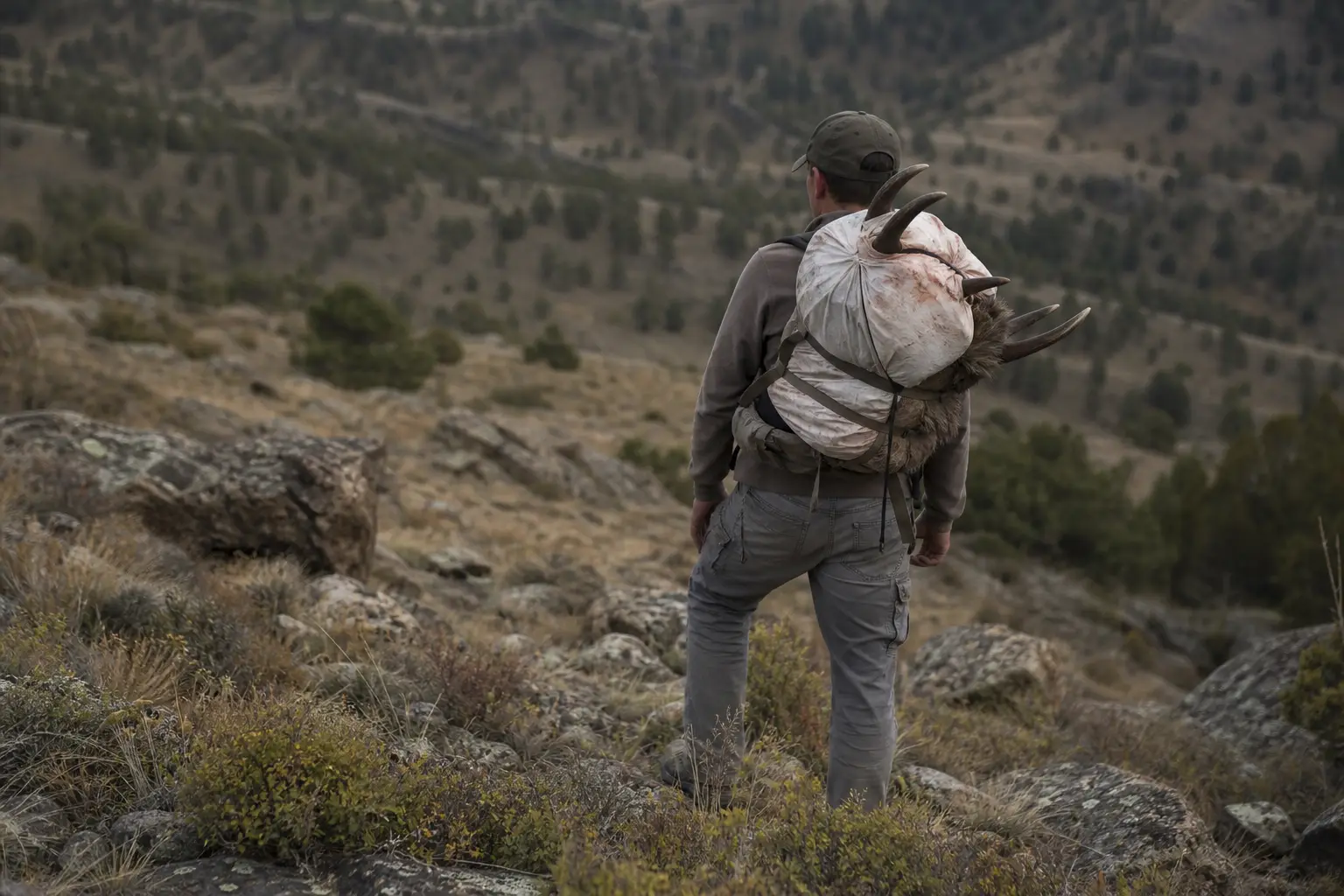
Everybody dreams about the moment the animal falls. The shot, the thump, the walk over. Nobody dreams about the mile and a half after that, because that part has no glory in it. It has sweat and a knife and a pack that suddenly weighs more than it should.
I learned this the hard way on my first elk. Not on the shot. The shot was fine. The shot was the only part of that whole trip that went the way I pictured it.
We’d hiked in before light, my buddy Dean and me, up a drainage that looked reasonable on the map and unreasonable on my legs. Two miles in, we glassed a bull on the far ridge. One shot from my .30-06 did the job. He dropped where he stood, rolled once, and stayed there. Dean looked at me and said the words every hunter wants to hear and every hunter is not ready for.
“Hell of a shot. Now the work starts.”
I was thirty years old and I had never packed an animal out of anywhere. Deer had always come out on a drag, or in the winter when there was snow to slide them on, or close enough to the truck that the walk back felt like a formality. I understood, in a vague way, that elk are bigger. But “bigger” on the ground, two miles into dark timber, with the light going, is a different education than “bigger” in a magazine.
The First Thing I Got Wrong Was Standing There
We walked up to the bull and I just stood over him, admiring him. Big six-by-six. I’d waited years for that. Dean, bless him, let me have about ninety seconds. Then he handed me a knife and started talking.
“Light’s burning. Two miles out. Get to work or we’re doing this in the dark.”
Here’s what I actually knew about field dressing an elk that size: the same thing I knew about a whitetail, but bigger. Which is like saying you know how to drive because you’ve ridden a bicycle. The quarters alone were each heavier than a whole deer. And I found out quick that on something that big, you don’t muscle it around. You work it in place, roll it with leverage, and cut what the terrain gives you to cut.
The Pack I Did Not Bring
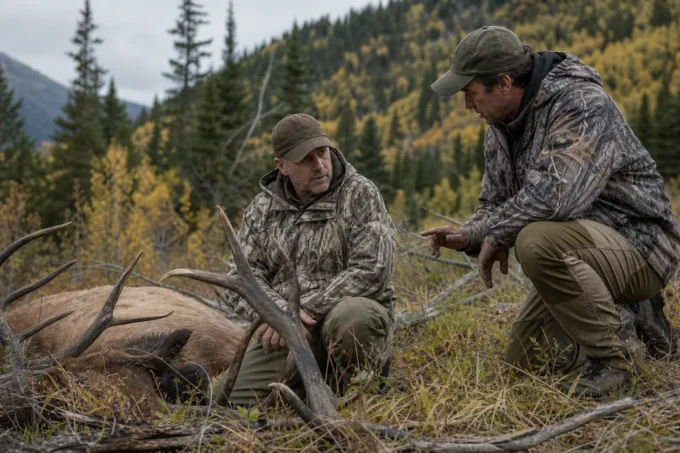
We had a frame pack. One. It belonged to Dean. On the walk in that morning I’d left my day pack in the truck, because I figured we’d glass, maybe shoot, and figure out the rest from there. I had a pack with water and a sandwich and a little folding saw and a knife. Dean had the frame. I did not think about what that meant until the bull was on the ground and Dean asked me where my hauling rig was.
I said the truck.
He looked at me for a long second, the way a man looks at you when he’s deciding whether to be mad or just tired.
“You carried water in. You’re carrying elk out. Guess we’ll get creative.”
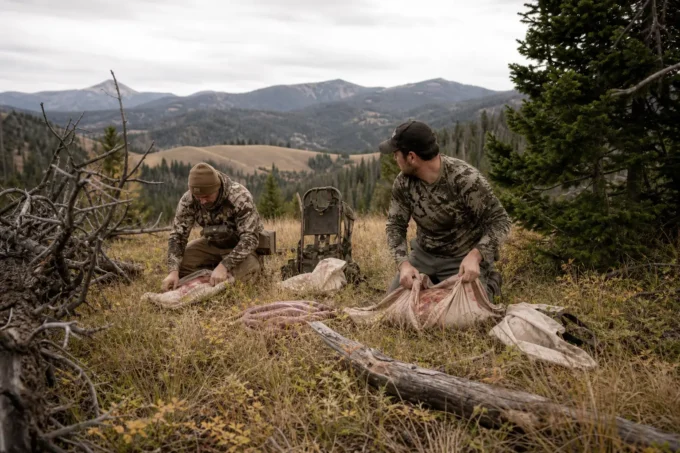
We butchered the bull into quarters, plus backstraps and tenderloins, and hung the first load in game bags under some timber for the coyotes we hoped would not find it. Then Dean loaded his frame with the two hind quarters and pointed downhill. I got the front quarters.
No frame. No proper straps. Just me, a knife, some paracord, and a front quarter of bull that outweighed a cinderblock.
Two Miles With a Bull on My Shoulders
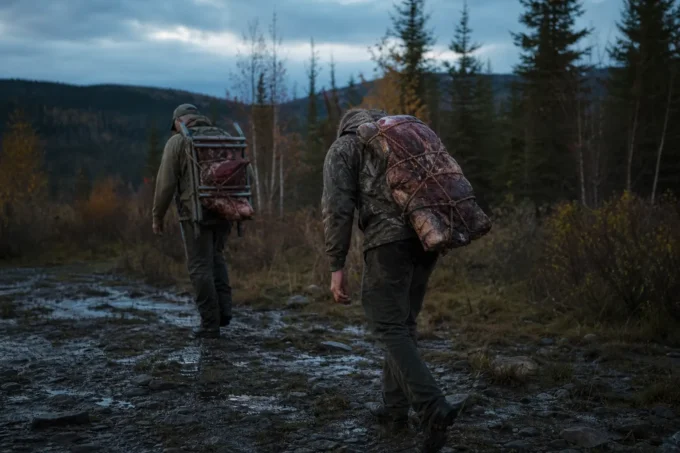
I would like to tell you I carried it out like a man in an old photograph, stoic and strong. What actually happened is I tied the quarter to my back so badly that the weight shifted on every step, the paracord bit into my palms, and I stopped six times in the first four hundred yards.
Dean, ahead of me with both hind quarters in a real frame, made it look easy. He moved with that steady rocking gait you get when the load is balanced on your hips, not hanging off your shoulders. I moved like a man smuggling a small piano through a swamp.
By the time we hit the truck it was full dark. My legs were shaking. My hands had paracord grooves in them like rope burn. I sat on the tailgate and drank water warm from the cab and it was the best-tasting thing I’ve ever had, and I don’t even like warm water.
Then Dean said the thing I did not want to hear.
“Two more quarters up there. We do it again.”
We went back the next morning, loaded his frame again with the last hind, and I carried the last front quarter the way I should have carried the first one. Slower at the start, better tied, the weight low and close. It still nearly killed me. But by that second trip I had stopped fighting the load and started working with it, and that is a distinction you cannot be taught in your living room.
What That Bull Cost Me to Learn
I shot my first elk and I was proud of the shot for maybe an hour. Then I was humbled for about two days. And the lesson was not about marksmanship. It was about the part of hunting that happens after the picture, the part nobody posts.
Here’s what I carry now, every single trip, even the ones where I fully intend to shoot nothing:
- A real frame pack, or at least load-rated straps, every time. The day you leave gear in the truck is the day the animal drops the farthest from it. This is not superstition. This is just how it seems to always go.
- Paracord and a couple of game bags. They weigh nothing. They turn a disaster into a heavy walk instead of a panic.
- A headlamp with fresh batteries. You will finish in the dark. Plan for it like you plan for rain.
- Water and calories for after. Packing out burns more than the hike in ever did. Your body quits before the terrain does.
And maybe the biggest one: I stopped thinking of the shot as the point of the hunt. The shot is a step. The point is getting that animal from where it died to where it feeds people, without ruining the meat and without ruining yourself. That is a skill, same as calling, same as stalking, same as shooting. It deserves practice and respect.
The next year I shot a small cow elk closer to camp, and I packed her out with a frame I bought used for sixty dollars. It was not glamorous. But it was honest work, and I did it without once standing over the animal wondering how I was going to move her.
You want to test what kind of hunter you are? Put an elk on the ground two miles in and see how you feel about it. The shot proves you can shoot. The pack out proves you meant it.