
The .308 That Felt Right in the Truck
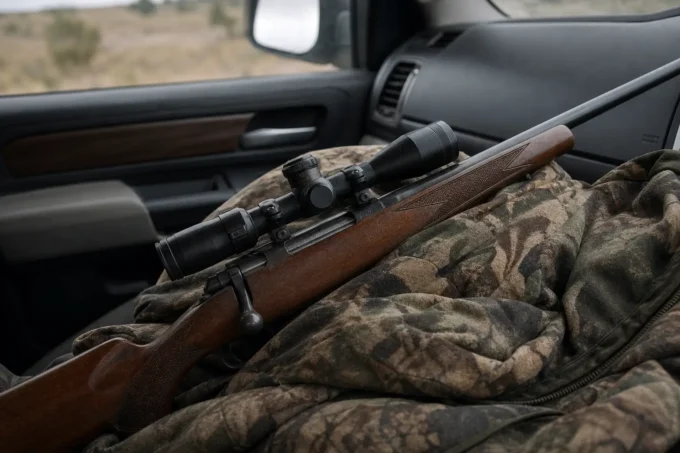
Two years ago I put together a .308 for deer and antelope out west. Nothing fancy. A rifle I could afford, a scope I saved for, and a box of shells I told myself I’d see fifty rounds out of before the season. The whole time I was building the thing, one decision sat in the back of my head and never moved. A sling. I did not want one.
My reasoning was solid, I thought. I was not going to climb much. I was not going to drag a buck out of a canyon on a line. A sling was one more strap to snag on oak brush and barbed wire and every goddamn thing that grows in Wyoming. It was something to tangle up in when I had two seconds to get the gun up. So I left it off. Just carried the rifle in my hand, barrel up, like a man on a mission.
The Ground Was Fine Until It Was Not
Season rolled around and the walking was no problem for the first three days, because I was mostly sitting. Leaning against a pine. Glassing timber. Then I found a stretch of country that looked too good to leave, which meant three more miles of walking a day than I had planned, and that is when carrying a rifle in your hand stops being a choice and starts being a chore.
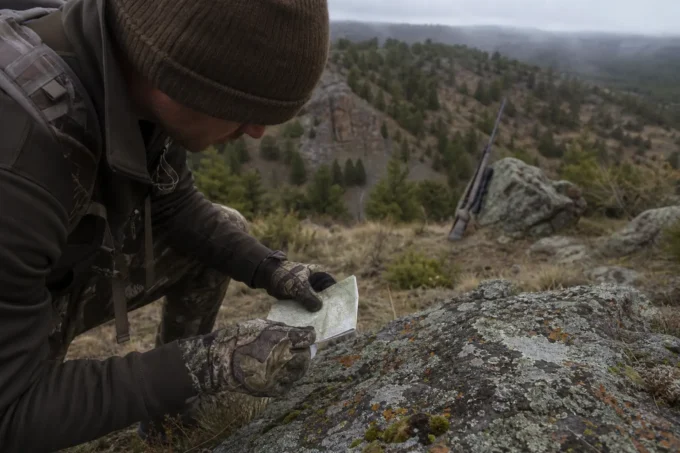
You can’t pee without setting the gun down. You can’t eat without setting it down. You can’t pull your glove off to check a map or blow your nose or open a water bottle without setting it down. Every single time I set it down, I looked up and the rifle was leaning against a rock twenty feet behind me, and I had to go back and get it. That is how a man spends his whole hunt walking in little double loops.
The Buck and the Two Full Hands
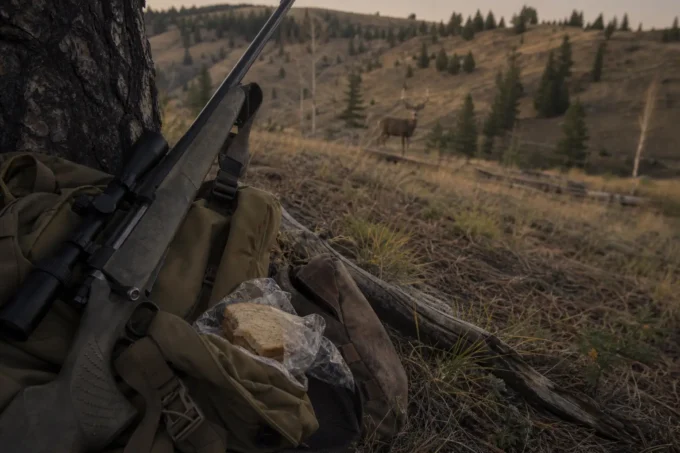
Fifth day, right at last light. There was a buck at two hundred and forty yards, standing broadside enough that I could count the points in the scope before I even had him ready. My problem was not the shot. My problem was that I was holding a sandwich in one hand and my pack strap in the other, and the rifle was not in either hand. It was behind me, because I had set it down to eat.
I got to it. Slowly, the way you move in bad wind. Got the crosshair on him. And then I watched my front sling swivel, the one I never screwed a sling into, because there was no sling, and I watched my own arms tremble from carrying that rifle ten miles a day for five days straight. I will swear until the day I die that the shot was good. It was not good. I hit a sapling six inches in front of his chest and he was gone before the sound finished rolling up the draw.
The worst part was not that I missed. It was that I knew better. A sling is not a strap. It is arms. That old timer saying everyone pretends is a joke is the whole truth: you spend weeks carrying the thing and about three seconds shooting it. I had spent the whole week carrying it wrong and then asked my tired arms to do a benchrest job in the field.
What a Sling Actually Does
I went home and bought a cotton military sling, the kind grandpas used, and learned the three things it gives you that a bare gun never will.
First, it holds the rifle when you are not. I cannot tell you how many little jobs a two-handed hunt needs that you never think about until the gun is propped somewhere behind you. A sling frees both hands and the gun stays on you. That alone would have saved me ten miles of backtracking.
Second, a sling is a shooting aid, not a strap. Wrap it around your support arm the old way and it pulls the rifle steady against your body. I shot better offhand with a twenty dollar cotton sling than I ever did free-handed, and it was not close.
Third, it saves your arms for the one moment that matters. You do not notice the difference on mile one. You notice it on mile ten, at last light, when a buck is standing there and your forearms have spent all day doing the work the sling should have done. That is the exact moment mine quit on me.
Quick Detach Was the Answer to My Snag Worry
The one fear I had turned out to have a name and a fix. Quick detach sockets. You screw little QD cups into the stock, snap the sling on and off in a second, and if you are going through brush thick enough to grab it, you pop it off and stuff it in your pack. Best of both worlds, and I had been sitting on the couch arguing against a problem somebody solved forty years ago.
It stings a little to admit the whole thing. I am a grown man and I lost a buck because I was too stubborn to spend twenty five bucks on a piece of nylon. The rifle sat in the truck that first season wearing no sling, and the only thing hanging off it was my pride. Now every rifle I own has one, and I have not carried a gun in my hand across a single field since.
The One Thing They Never Put in the Brochure
Nobody sells you a sling at the counter. They sell you rifles and scopes and boots and a thousand dollars of stuff that lives in a safe all year. The sling is the last thing on the list and somehow it is the one that shows up on every single day of the hunt. It is cheap, it is ugly, and it is the difference between being ready when the buck steps out and being ten miles deep in the woods with tired arms and a rifle propped against a rock.
If you are building a gun right now and having the same little argument I had, do yourself a favor. Put a sling on it. Even if you think you never climb. Even if you think your hands are never full. The buck that costs you won’t care how sure you were.