The Discount Tent That Waited All Summer to Fail
The tent was forty dollars. That was the whole problem, and I did not want to see it at the time. Forty dollars bought me a two-person dome with a rain fly that felt like a shower curtain and poles that weighed as much as small dogs. I stood in the big box store aisle, held the rolled-up sack in one hand, and did the math on all the money I was saving. A real tent ran three hundred dollars or more. A real tent was what serious outdoorsmen bought, the kind of men who owned maps and water filters and spoke quietly about base layers. I was not that man yet, but I was certain I would become him eventually, and forty dollars felt like a smart first step.
The first trip was July. The tent went up fine in the backyard, and I zipped myself inside it like a kid in a blanket fort, proud of my bargain. The mesh was thin enough to see the stars through, which I told myself was a feature instead of a warning. Nothing fell on me that night. The world was warm and dry and forgiving, and I decided the expensive tents were a scam. Why would a man pay three hundred dollars for fabric when forty dollars did the same job? I did not know yet that a tent does not earn its price on the nights when the weather behaves. It earns its price on exactly one night, the night you do not get to choose.
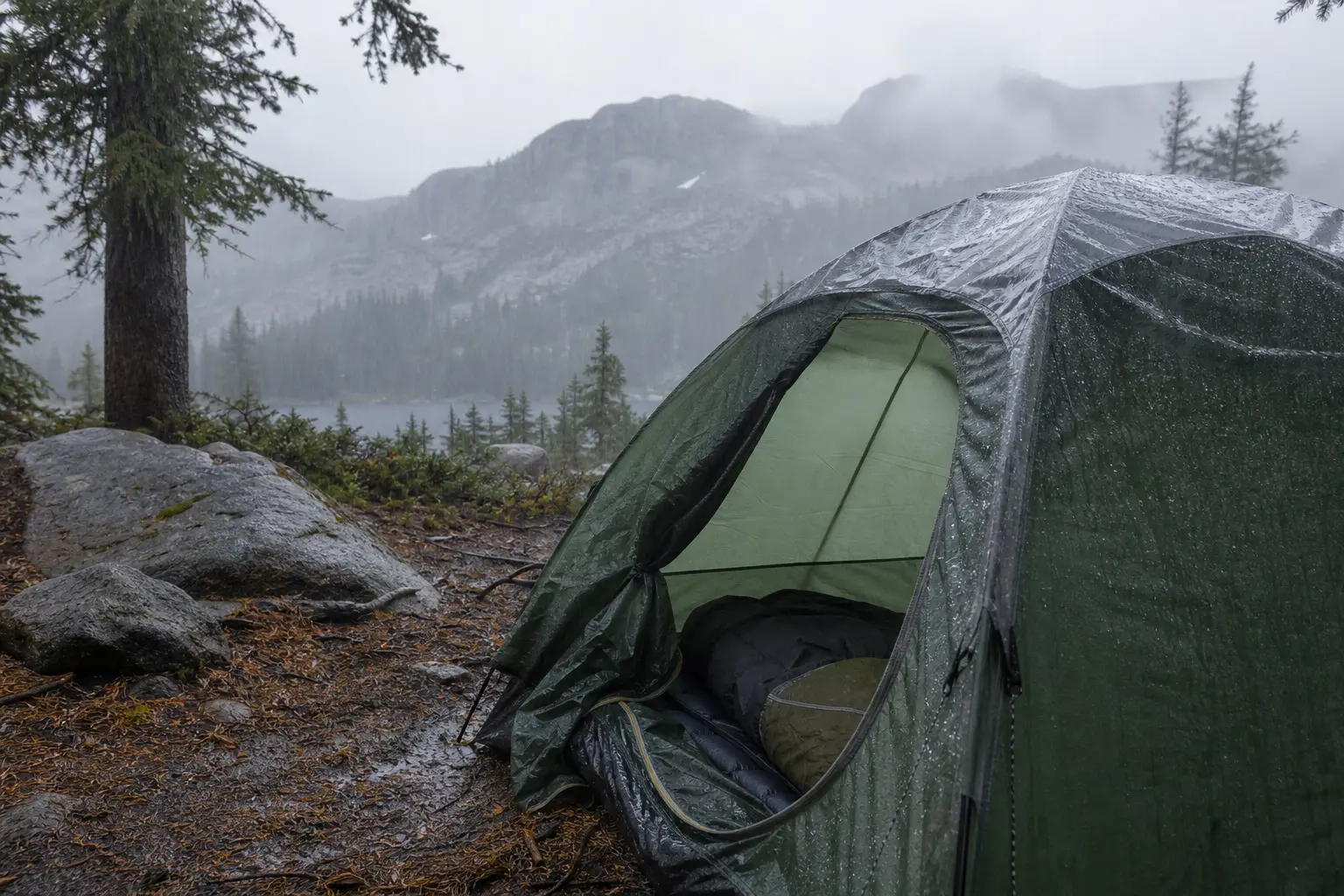
That night came in October. I had driven three hours into the mountains alone, full of the confidence of a man who had slept outside twice. The forecast was clear when I left home, which meant nothing, because I had not checked it again from the trailhead and the sky had other plans. By the time I found a flat spot among the pines it was already dark, and the first drops hit the back of my hand while I was still swearing at the pole that would not seat. I told myself it would pass. Rain never lasts. I was not going to pack up and walk three hours back to the truck in the dark over a little weather. A real man pushes through. A real man, I had decided, sleeps in the rain.
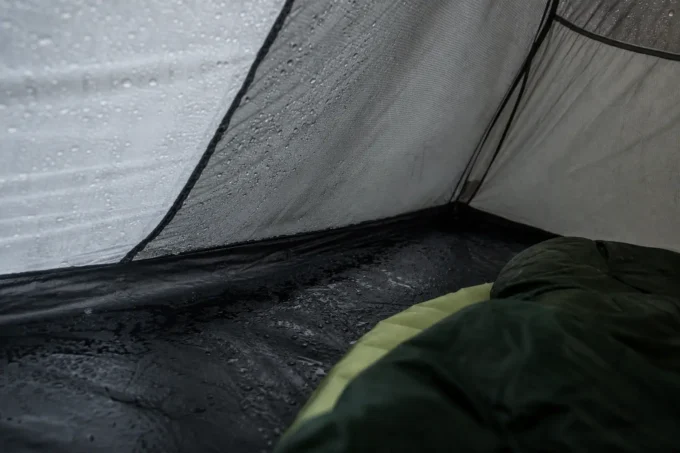
The tent went up wrong because I was in a hurry, and a cheap tent goes up wrong even when you are careful. The fly sagged against the body in one corner, leaving a damp seam pressed right where my bag would lie. The floor was already beading with water before I even unrolled my pad, condensation and rain mixing into a film that would ruin the night. I crawled in, zipped the door, and lay there listening to the storm build like it had been saving up all summer for this exact moment. The fly flapped and rattled and then, sometime around midnight, it started to leak for real.
It leaked in the way cheap tents always leak, not in one dramatic gush but in a slow, patient soak. First a cold spot at my shoulder where the seam gave up. Then a rivulet running down the inside of the fly and dripping onto my forehead. Then the floor, which had promised to keep the wet ground separate from me, began to seep, and I understood that the tent was not a shelter anymore. It was a bag I was trapped in while the sky slowly emptied onto me. My sleeping bag drank the water like it owed the rain money, and by two in the morning I was lying in a cold puddle, fully dressed, teeth chattering, wide awake, doing the thing every man does in that situation.
I started bargaining with my own decisions. I told myself the leak was my fault for pitching it wrong. I told myself any tent would fail in a storm this bad. I told myself I was tough, that this was the kind of story you tell later, that suffering overnight made a man out of you. I told myself every lie that let me avoid the one true sentence, which was that I had bought a forty dollar tent because I was cheap and called it wisdom. The tent was not the one who had failed. The tent was doing exactly what forty dollars of fabric and weak seams and a shower curtain fly is designed to do. It was me who had failed, and I had known it the whole time, in the aisle, holding the sack and feeling clever.
The rain let up before dawn, which was when I finally understood what the real cost of a bad tent is. It is not the money. It is the night of sleep you do not get, the warmth that drains out of you drop by drop, the cold that settles into your bones and does not leave for two days, and the quiet, humiliating knowledge that you did this to yourself. A good tent is boring. It does its job so completely that you never think about it, and that is the entire point. You pay a few hundred dollars to forget the tent exists so you can actually exist in the woods instead of lying in a puddle bargaining with your pride. I had paid forty dollars to be reminded of the tent every single second of the night.
I packed up at first light, wet and cold and done. The tent went back in its sack soggy, and I carried it out knowing I would throw it away the moment I got home. On the drive back, shivering with the heat on full, I made a quiet promise to the mountains and to myself. The next tent would be the boring one. The heavy one. The one with the taped seams and the fly that pitches tight and the floor thick enough to keep honest water where it belongs. It would cost more than I wanted to spend, and I would spend it anyway, because I finally understood that the money you save on gear is just a loan you take out against a future night you cannot predict.
The expensive tent has never leaked on me. It has never flapped itself loose, never sagged against my bag, never turned my floor into a shallow pond. And here is the strange part. I do not love it the way I loved that forty dollar bargain in the aisle. I do not think about it at all. That is the difference between cheap gear and good gear. Cheap gear needs you to believe in it. Good gear lets you forget it is even there, so you can be cold nowhere, wet nowhere, and awake nowhere, sleeping through the storm instead of negotiating with it.