The Sound You Try to Unhear
The arrow made a sound I had never heard a bow make before, and I would spend the next four hours trying to convince myself it was fine. There was the usual thump, the hollow wet knock of a broadhead finding ribs. But underneath it there was something else, a softer crackle like a branch snapping underwater, and the deer bolted with her tail down and her back humped in a way I told myself was just a running deer running.
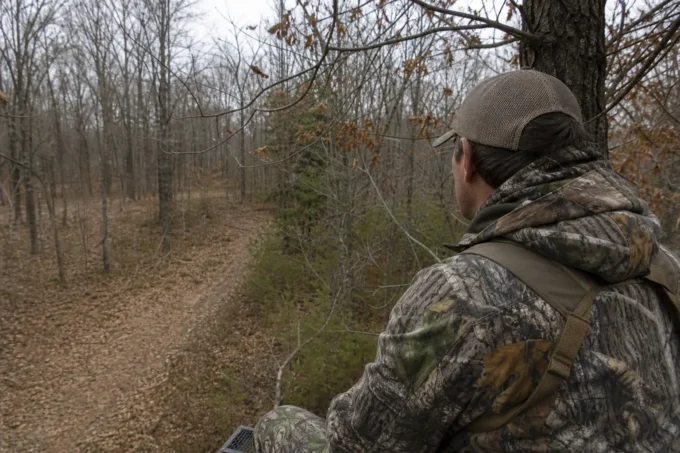
I sat in the stand for twenty minutes like the rules say, replaying the shot and piling up reasons it was good while my gut handed me a one word answer I did not want to read. I waited the twenty minutes, then ten more out of raw stubbornness, and then I got down and walked to where she had been standing and looked at the ground.
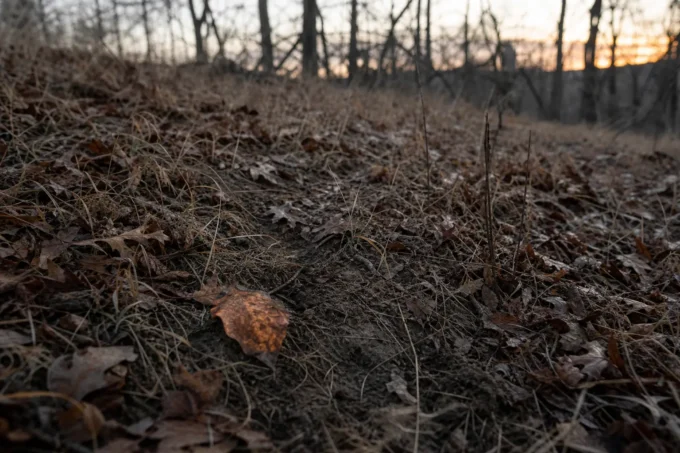
There was blood. There is always eventually blood, and it is always the same bad deal. You stand over a few drops and feel relief because you are not crazy, something did happen, and then the cold follows it, because a few drops is not what a clean deer leaves. A clean deer leaves a highway. This was a whisper.
The First Mistake Took Ten Yards
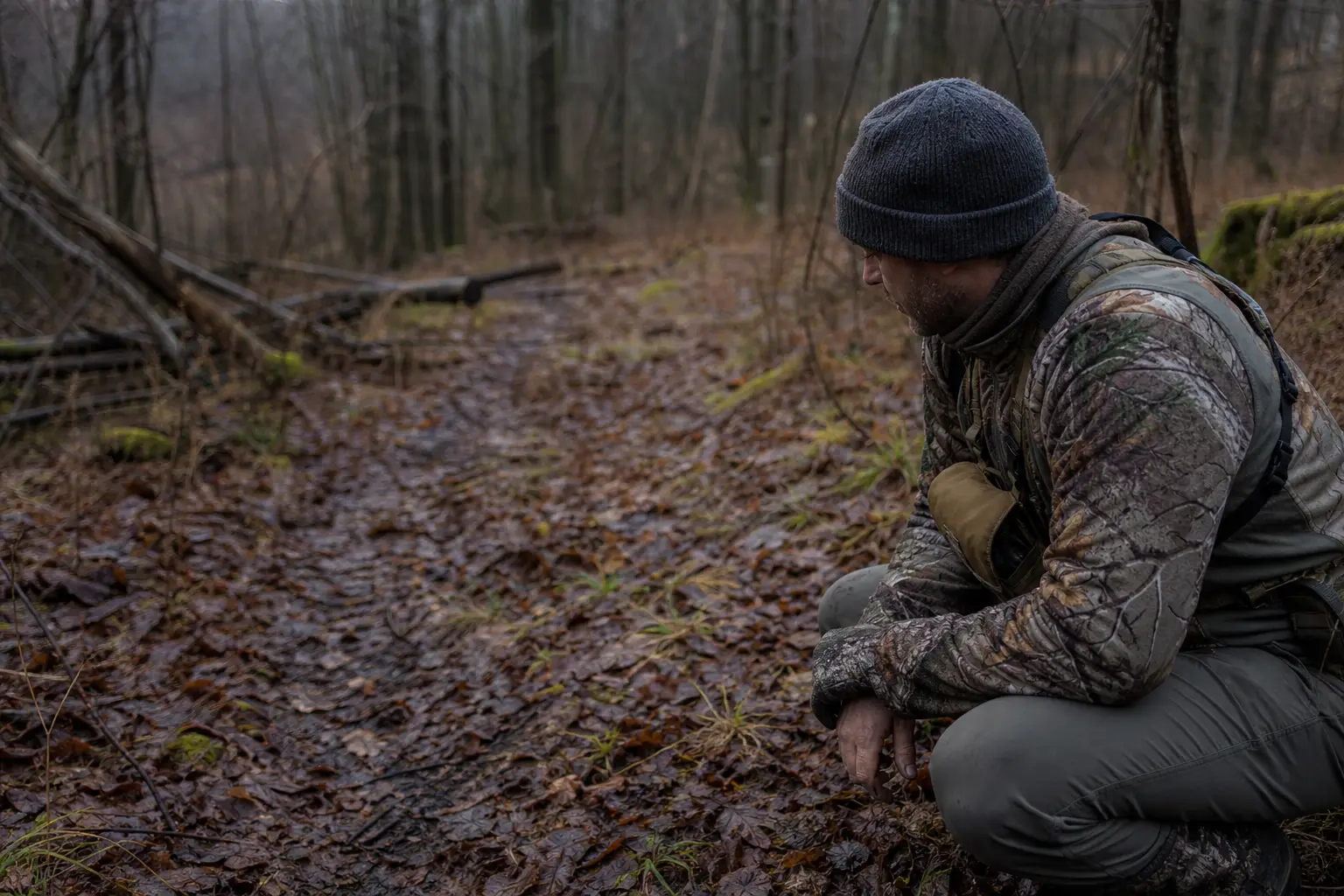
The drops were high and dark and sparse, the kind that tell you more about a muscle than a lung, and I did the thing every new hunter does and has to unlearn. I leaned down close to the ground and I started following the smallest hint I could find, moving fast, eyes three feet ahead of me, wanting the trail to be over so I could have the deer instead of the mystery. That is how you lose a trail. That is how you walk right past the spot where a wounded animal doubled back, because you were already three feet past wondering when it would end.
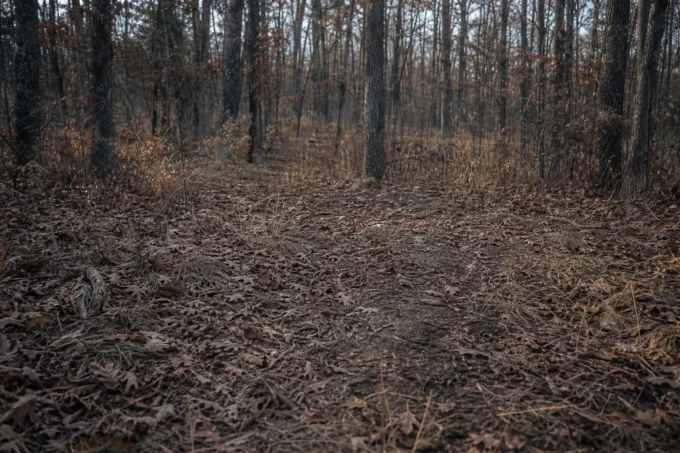
Fifty yards in, the blood thinned to nothing. I mean actual nothing, dry leaves and dirt and the kind of silence that feels like a held breath. I did the second thing every new hunter does, which is assume the deer ran a beeline through the timber and start walking the line I thought she should have taken. I walked two hundred yards in a straight shot, found exactly zero, and came back to my last drop of blood.
That was the moment I should have stopped, marked the spot, gone for help or waited for a dog. The old-timers say the first drag of your boot is the most expensive step you take all season. Instead I did the third thing. I kept going.
Pride Walks Like a Man on a Clock
What nobody tells you about a wounded deer is how fast the sun starts moving. You head in with a whole afternoon and somewhere in the second hour you look up and the light is already orange and you have not eaten since before dawn and your hands are shaking and you realize you have been searching the same draw twice because every blown-down oak looks identical at noon and again at dusk. Time does not just pass out there. It drains.
I found the trail again by accident, a single smeared leaf forty yards to the left of where I had been walking, and the feeling was not relief, it was vindication, like the deer had been hiding from me and I had finally caught it. I followed the new sign with fresh confidence, moving fast again because I had just proven the track could not outrun me, and that is exactly the mental state in which you push a wounded animal off its bed. Which is what I did.
She crashed out of a blowdown not twenty yards from me, tail up, and was gone through the brush before I could think about a second shot. For three seconds I could hear her making distance, and then the woods swallowed it all, and I was standing there holding a bow I had no business shooting at a running deer, in the middle of the worst mistake of my season, and it was only Tuesday.
The Longest Short Walk
I called my buddy from the last bar of signal I could find, and when he picked up he knew before I said four words. There is a tone you get when a grown man calls you from the woods at golden hour and it is not to invite you to dinner. He did not lecture me. He asked two things, which is the whole craft of a good hunting partner, and they are the only two questions that matter: where exactly did the deer bed, and how long since I had pushed her. Then he said the thing I already knew and refused to hear. Go home, come back at first light, and do not take a step past the bed until the sun is up and you can see a pin drop on a leaf. A wounded deer that is not pushed will almost always bed down again and stay. A wounded deer that is pushed keeps running until its legs give out, and then it dies someplace you will never find.
I did not want to go home. You stand out there in the dark and going home feels like abandoning her, like the deer is a person you left in the cold, and the honest truth is your pride has dressed the whole thing up as responsibility. Going home felt like failing. It was also the only correct call I made all day.
What the Blood Tells You If You Listen
Back at the truck, after dark, I finally thought about the shot itself instead of the sound it made. High, back, behind the shoulder but too far back. Liver or paunch, the two slow bleeders, the two shots that have nothing to do with how sharp your broadhead is and everything to do with how fast you got greedy for a result. A deer hit there does not drop. It runs, and it beds, and it can stay alive for hours, and the whole time your only job is patience, the one thing I had spent the entire afternoon spending.
The blood I saw made sense now. Dark, sparse, no bubbles. Fifty years of the same advice boiled down to one line my granddad used to mutter and I always nodded at like a man who understood: when in doubt, back out. I had understood it the way you understand a foreign language, which is to say I could repeat it and not speak it. Out in the field, under the falling light, I spoke exactly none of it.
The next morning I went back with my buddy, we found her bed, then the second bed, and we read the trail like a sentence instead of a sprint. Two hundred and forty yards from where I pushed her, in a cedar thicket, she had laid down and not gotten up. The track ended clean. No buzzards, no coyote sign, no waste. I got lucky because I finally sat still long enough to let the woods do its job, and because the deer did not have to pay for my afternoon with her life in a ditch somewhere.
The Bill Comes Due Anyway
We field dressed her there and I remember being careful in a way that felt like something was watching me, and maybe it was. The meat was fine. The shot, as the post I never wrote would have said, was not perfect, but the track ended up short because I had help and because I waited. What the picture would not have shown anyone is how close I came to losing her by moving when I should have froze, and how the shortest track of my life was only short because I almost made it a month long.
I hung the meat and drove home thinking about the sound under the thump, the branch snapping underwater, and how I had heard exactly what I needed to hear and chosen not to. Bows do not lie. Deer do not hide from you out of spite. The ground reads like a book if you will stop walking fast enough to read it, and the first rule of that book is printed on the first page where most of us skip it.
Wait. Mark the boot heel you just stepped out of. And when you push a deer once by being in a hurry, let the clock teach you something instead of teaching the deer where to run. The next one I shot, I stood up, looked at the ground, and made myself count to three hundred before I put one boot in front of the other. It felt like the longest three hundred seconds of my life. It was also the first track I ever took that did not turn into a rescue mission for my own conscience.