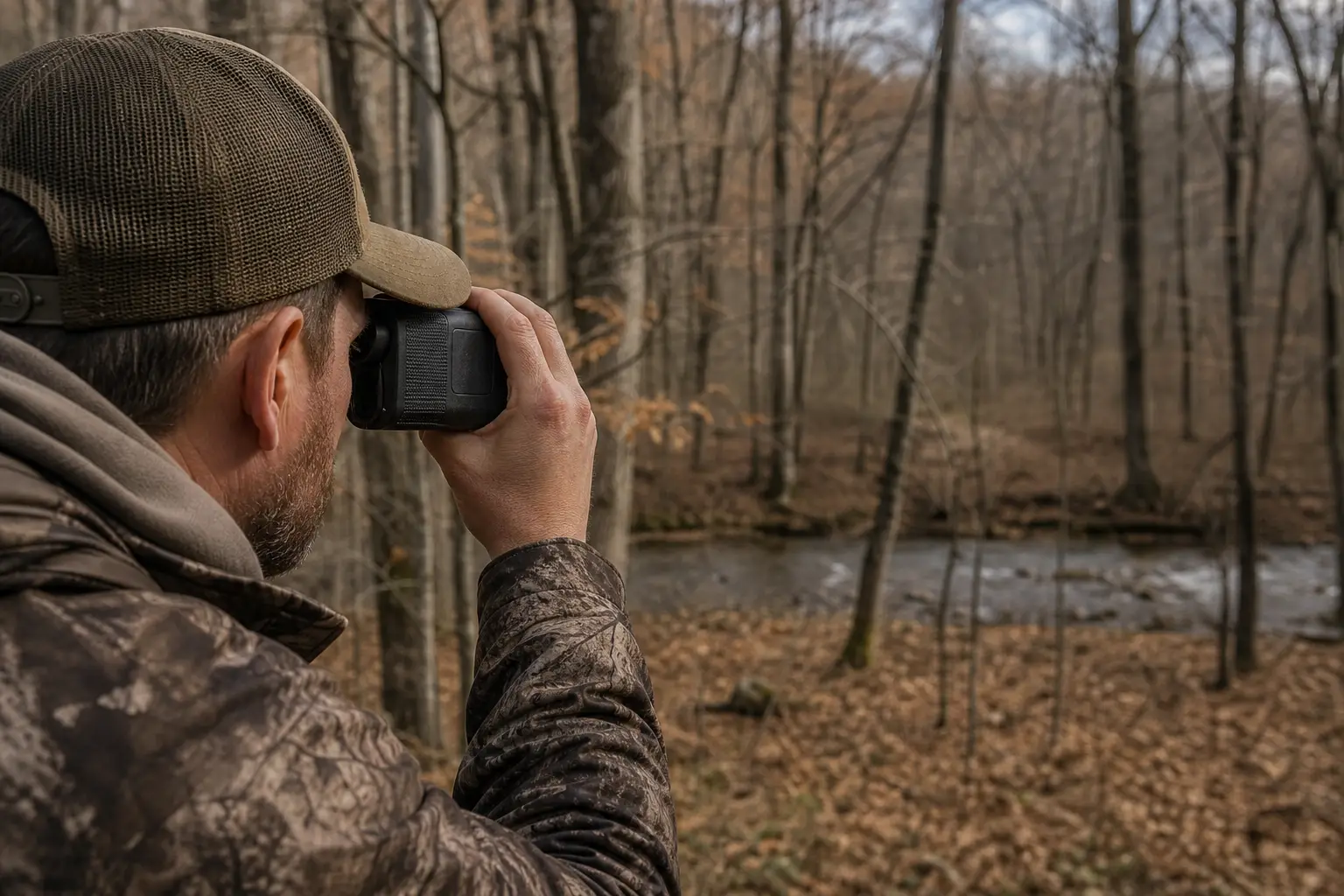
I used to think a rangefinder was a luxury item. Something for bowhunters who needed exact yardage, or long-range guys doping wind at 800 yards. I was a woods hunter — my shots were under 150, almost all of them. I figured my eyes were good enough. I’d look at a tree, guess the distance, and send it.
Turns out my eyes were not good enough.
The Experiment That Humbled Me
A couple years ago, a buddy handed me his rangefinder during a slow afternoon sit. “Here,” he said. “Range that big oak by the creek.”
I looked at it. “Hundred and forty yards. Easy.”
I hit the button. Two hundred and twelve yards.
I didn’t believe it. I ranged three more trees. I was off by 40, 60, 70 yards on every single one. In the woods, with no open fields for reference, my depth perception was garbage. And I’d been hunting like that for years — guessing, hoping, and probably missing shots I never even knew I missed because I assumed it was me, not the distance.
Why Your Brain Lies to You in the Woods
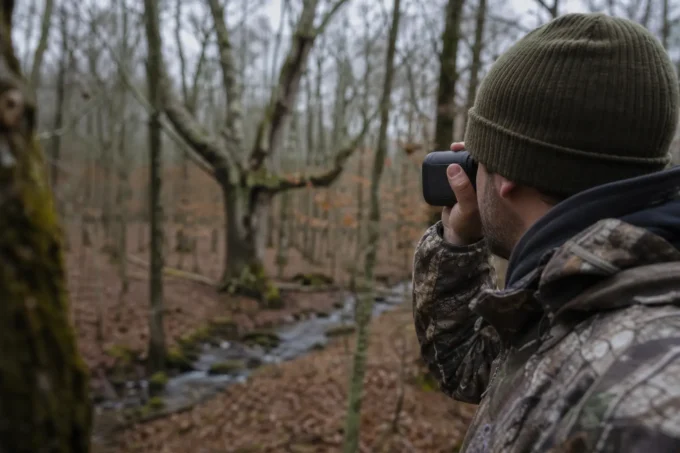
Here’s the thing about judging distance in timber: it’s not the same as judging distance on a football field or a golf course. Trees mess with your reference points. A deer in an opening looks closer than a deer in thick cover. A downhill shot feels shorter. An uphill shot feels longer. Light conditions change everything — that buck at dawn looks a hundred yards closer than the same buck at noon.
And when you add adrenaline? Forget it. Your brain isn’t doing math. Your brain is screaming THERE HE IS and your depth perception has left the building.
The 40-Yard Difference That Matters
Let’s say you’re shooting a .308 zeroed at 100 yards. At 150 yards, you’re about 2 inches low. At 200 yards, you’re about 8 inches low. At 230 — which is what you might think is 150 — you’re about 13 inches low.
That’s the difference between a clean heart shot and a gut shot. Between venison in the freezer and a long, miserable tracking job in the dark. Between coming home proud and coming home sick to your stomach.
All because you were too stubborn to spend two seconds pressing a button.
You Don’t Need a $500 Rangefinder
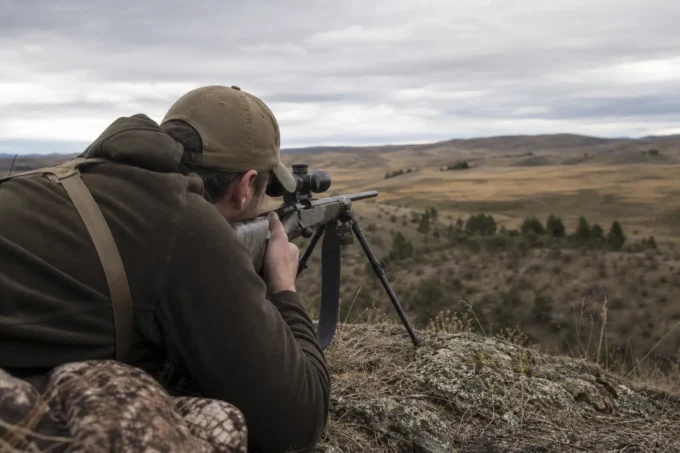
I’m not telling you to go buy a Leica or a Swarovski. A basic rangefinder that gives you accurate readings out to 400-500 yards costs less than a hundred bucks now. The one I carry is a budget Vortex model that I paid maybe $130 for. It’s been rained on, dropped in mud, left in a freezing truck overnight, and it still works fine.
What it does is simple: it replaces my terrible, overconfident guessing with an actual number. And that number has changed what shots I take. I’ve passed on deer I would’ve shot at five years ago, because the rangefinder told me they were farther than I thought, and I had the sense to listen.
That’s not a limitation. That’s ethical hunting. Knowing when not to shoot is more important than knowing when to shoot, and a rangefinder gives you the information to make that call honestly.
The One Piece of Gear I Should’ve Bought Sooner
If I could go back and change one thing about my first decade of hunting, I’d buy a rangefinder on day one. Not a better rifle. Not a better scope. Not better camo. A rangefinder. Because all the expensive gear in the world doesn’t matter if you don’t know how far away the animal is.
I still hunt the same woods. I still shoot the same rifle. But I don’t guess anymore. And I’ve stopped finding deer the next morning that I hit badly and lost in the dark.
Two seconds. Press the button. It’s the cheapest insurance policy in hunting.