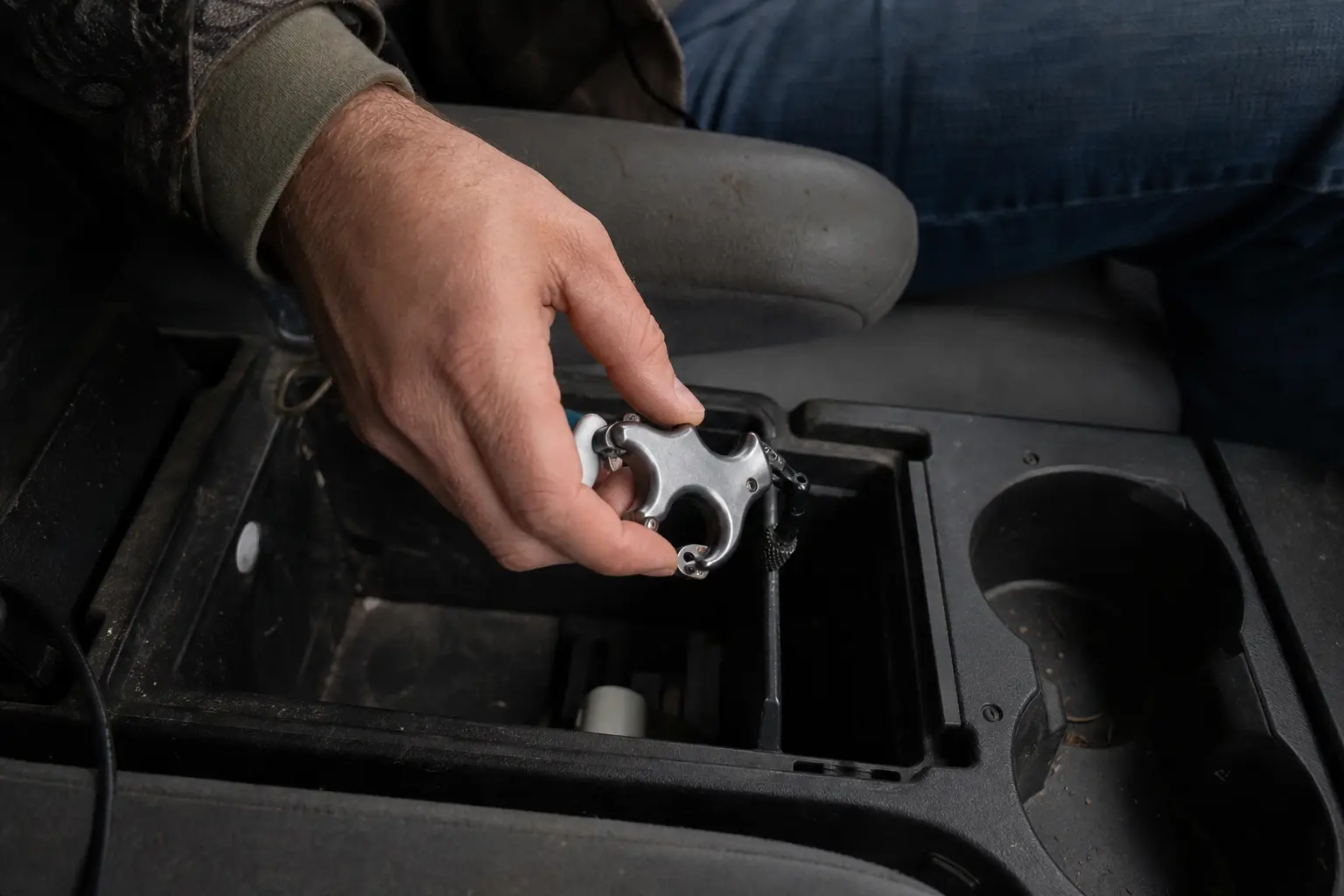
I spent two hundred dollars on a release aid because a guy on YouTube made it look like the only thing standing between me and a dead buck. He was some fit clean-cut fella in a perfectly lit shop, and he pressed the trigger on this brushed-steel, thumb-safety, adjust-everything hand machine, and the bow barely moved, and he looked at the camera and said the words that always get me. “It’ll change the way you shoot.” Ten minutes later mine was in the cart, and my old wrist-strap index release, the one that had put maybe fifteen does and two bucks in my freezer, went back in the truck console like a dog I’d traded in for a younger model. That was the first mistake. The second one I made at twenty-two yards on the last afternoon of October, with the biggest ten-point I have ever seen standing broadside in front of me.
Here is the thing I will tell you straight, because the whole lesson lives in it. I did not buy that release because I needed it. I bought it because it was shiny, and because a stranger said it would fix something that was not actually broken, and because somewhere deep in my gut I had decided that new gear is the same thing as getting better. It is not. New gear is just new gear. Getting better is boring, and it happens with the thing you already own, on a range, in the cold, when nobody is filming you and there is no button that says add to cart anywhere near your hand. I knew that when I clicked buy, and I bought it anyway, because the wanting felt like momentum and I confused one for the other. You do that too. We all do it. The industry is built on it.
The release sat in its little foam bed for a week while I admired it. I’d pick it up and click the thumb safety, watch the jaws snap shut on a loop of string, set it back down. I shot it exactly three times into the target at the camp that first morning before the season, got a decent group, and called it good, because that is what you do when you’ve already decided a thing is going to be great. Nobody wants to discover their two hundred dollars was a waste, so your brain does you the favor of not looking too hard. I carried that little lie all the way into a treestand in the last hour of legal light, and the ten-point walked out of the brush into it like he’d been sent.
The Part Where the Shiny Thing Reminds You What You Paid For
He was broadside at maybe twenty-two yards, and I did everything right, which is the cruel part. I drew smooth, settled the pin, picked the crease behind the shoulder. Then my thumb went looking for the thumb safety that is not on my old release, because your fingers have a memory that two hundred dollars does not buy in a week, and in that half second of fumbling the pin drifted, and I punched the trigger through it instead of pressing it, and the arrow left the string at a speed I would later measure and regret. He hit the ground running and he did not get up, and I found him the next morning four hundred yards away on the far side of a creek, dead where a coyote had found most of a backstrap before I did.
I am going to stop and be honest about what went wrong, because for a month afterward I wanted it to be the release’s fault and it mostly was not. The release did not make me miss. A release is a chunk of metal with a trigger, and it will shoot exactly as well as the monkey through whose hands it runs. What bit me was not the tool. It was the gap between the tool and the hands, the part where I had not put in the repetitions, the part where I had convinced myself that owning a thing is the same as knowing it. I’d shot that new release three times and called myself zeroed. I had shot my old one ten thousand times and I knew it like I know my front teeth. And at the moment that mattered, when my cold fingers had a split second to do the thing they’d been doing for years, they reached for the old release and found the new one. That gap is where the arrow went low, and that gap was mine to close, and I didn’t.

Buy Gear the Way You Decide to Shoot
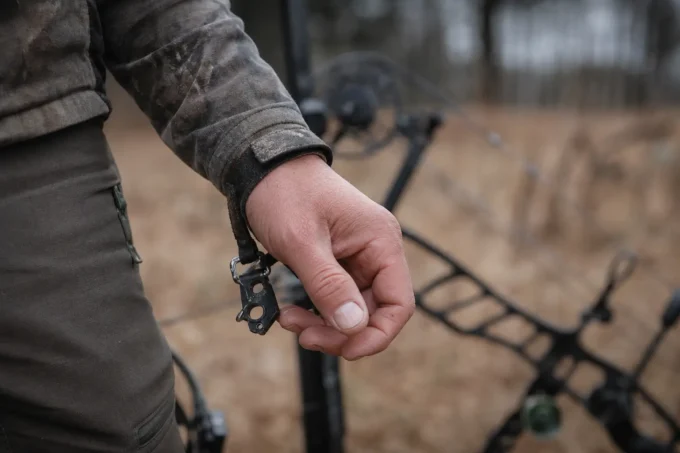
I gave that two-hundred-dollar release to a buddy who actually wanted it, wished him better luck than the thing gave me, and went back to my old wrist strap. I still use it. It looks like a dog that has been in a few fights, and it has never once made me stop and check what my thumb is doing, because there is nothing to check. That is the whole argument, and it took me a gut-shot buck and a ruined backstrap to hear it plain. The best piece of gear you own is the one you have used so many times that it stops being gear and just becomes your hand. A bow release, a rangefinder, a set of binos, a knife, your boots. If you have to think about how it works while a deer is in front of you, it is not ready, and neither are you.
I am not saying don’t upgrade. Lord knows I’ve got a drawer full of upgrades that earned their keep. I am saying treat a new purchase the way you’d treat a new spot, a new rifle, a new stand. You do not hang a stand over sign you found ten minutes ago and trust your whole season to it. You do not take a rifle you sighted in once at the store and carry it into the timber and expect the freezer. You put the work in first, because the work is the thing that makes the gear honest. Somewhere along the line I forgot that and started treating the cart button like it was doing the work for me.
The Cheaper Lesson I Wish I’d Bought Instead
If I could go back and unspend those two hundred dollars, I’d put it into exactly three things, and none of them come in a foam-lined box. First, a hundred shots a night with the release I already owned, in the same gloves I’d wear in the stand, at a three-inch dot, until my fingers could find it in the dark. Second, a half dozen sessions where I make myself shoot one arrow, cold, from a standing start, like the shot I’d actually take, instead of twenty warm-up arrows that make me feel good and teach me nothing about the one that counts. Third, a rule I have kept ever since, which is that I do not buy a single piece of hunting gear in the six weeks before a season opens, because that is when the wanting is strongest and the sense in my head is weakest, and the only thing that buys you in October is a mistake you’ll be explaining to yourself in November.
The buck I lost taught me more than the release I bought, and the release, in its way, taught me the same thing any piece of gear can teach you if you’re willing to listen, which is that the gear only ever agrees with you about one thing, and it is usually the thing you already knew and didn’t want to hear. I wanted a shortcut. I paid two hundred dollars for it, then I paid another one in meat on the ground because I was too proud to put the reps in. New gear can make a good hunter a little better, but it will absolutely make a lazy hunter lousy, because it sells him the idea that the work is done when the box opens. The work is never done. The moment you stop feeding it is the moment the whole thing starts to rust, and it will cost you the ten-point on the last evening of October, the one standing there broadside while your thumb went looking for a safety that wasn’t there, and the pin drifted, and you punched when you should have pressed, and then you sat in a cold stand for twenty minutes before you trusted your legs enough to climb down and go find where the blood ran out.
