
I had a buck pegged for three months. A big-bodied nine point I’d been getting on trail camera since July, always on the same oak flat, always moving in the same thirty minutes of last light. I studied him like I was going to take a test on him. I had my wind, I had my tree, and on opening day he came in exactly like I drew it up.
Eighteen yards. Stopped broadside. I could see the crease behind his shoulder, and my pin was sitting right on it. I remember telling myself don’t rush, don’t rush, and then I rushed anyway. The arrow hit him high and forward. Way forward. That dead zone between the top of the lungs and the bottom of the spine that old timers call “no man’s land.” The spot where a deer is either dead by morning or will be standing in front of somebody else’s camera next October.
He tore off like he wasn’t touched. I sat in that tree for an hour with my hands shaking, replaying the whole thing, already knowing in my gut I’d made the one shot you cannot afford to make.
The Blood Trail That Never Really Started
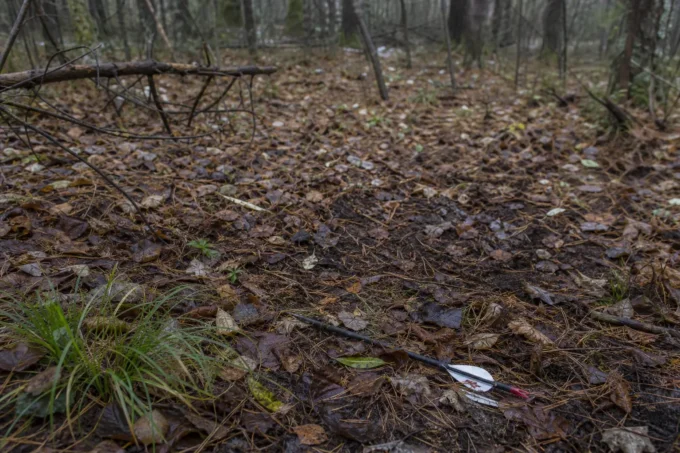
I climbed down at dark and found the arrow. Clean pass through, but the blood told the whole story in about ten seconds. A few drops, then a smear, then nothing. High lung shots bleed, and they bleed bright and frothy and plenty. This was not that. This was the kind of tiny, pinched trail that tells you the deer is carrying the arrow somewhere up around the shoulder blade, and all that blood spilling inside him has nowhere good to go.
Here is the part I actually got wrong, worse than the shot itself. I pushed him. I wanted to find him so bad I followed that thin trail into the dark, and when it died at maybe sixty yards I kept casting around in circles with my headlamp, hoping the next step would turn red again. Every dumb instinct I had was screaming at me to keep moving. I knew better. I’d read it a hundred times. And I did it anyway.
If I bumped him in that thick stuff, I’d never see him again. The only reason I stopped is because I had a moment of something close to sense and remembered that a wounded deer pushed off his bed will run further than I’m willing to grid search on my hands and knees. So I backed out, marked my last blood on my phone, and drove home sick to my stomach.
What a High and Forward Hit Actually Looks Like
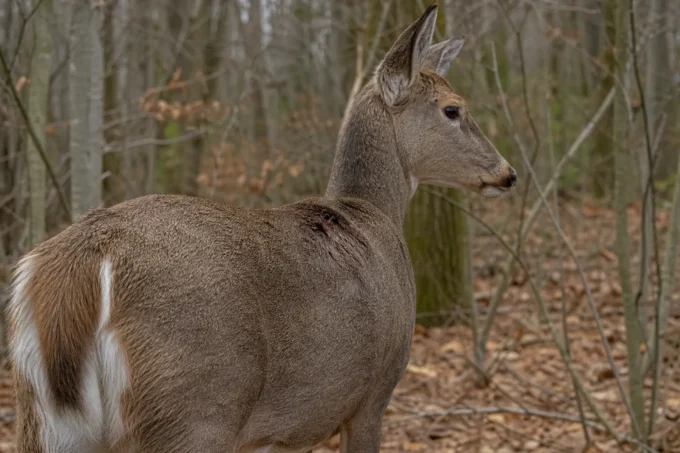
Let me save you the three a.m. Google rabbit hole I went down. That little pocket above the lungs and below the spine, where the shoulder blade and the top of the back meet, is survivable more often than people want to admit. There’s meat up there, a little artery work, and a lot of stuff a deer can walk off from if you don’t kill him clean. A lot of guys write that hit off as a loss, and plenty of times the deer shows up on camera two weeks later with a scar and a grudge.
The difference between finding him and never finding him usually comes down to two things. Time, and bodies. Give him time, not an hour, not two, real time. Then go in with people who know how to work a trail, not just one stubborn idiot with a headlamp and a bad attitude.
I did the bodies part right, at least. I called my buddy Dale and his brother in law, and I called a man with a tracking dog. Dog guys are worth every dollar they charge, and I do not say that about much. A good dog will find a deer that a dozen grown men walked right past. The dog found him the next morning, bedded up in a patch of greenbrier a little over two hundred yards from where I’d marked last blood. He hadn’t gone far at all. He’d gone to the nastiest cover on the property, because that’s what a hurting deer does.
The Checklists That Should Have Been Automatic
I’ve had all winter to be mad at myself, and I’ve turned it into a list. None of this is new. All of it would have mattered.
- Wait on the shot, then wait on the deer. I rushed the release and I rushed the recovery. Both cost me. A wounded deer needs hours. The rule I now live by: if it’s not a clean, obvious double lung, I’m not touching that trail until the sun is up and I’ve slept on it, even if it guts me to do it.
- Mark the trail, don’t erase it. Pin last blood on your phone, hang a flag or a strip of flagging tape, and take a picture facing the direction he went. The woods look different at ten in the morning than they did at ten at night.
- Bodies make a grid, not a single file line. Three people walking a grid find things one man never sees. When blood is thin, spread out and walk slow with your eyes up, watching for a bed, a darker patch, a white belly in the brush.
- Watch the birds. Crows and ravens circling in one spot will point you at a carcass like a neon sign. They found more dead deer than my headlamp ever did.
- Call a dog before you call it done. If there’s a tracking dog within two hours of you, that is not a luxury. That is the most effective piece of recovery gear you can put in the woods.

Guilt Is a Lousy Tracker
I’ll tell you the honest part now, the part nobody posts on Instagram. The guilt over wounding that deer sat on me for weeks. Not the kind that makes you quit, but the kind that makes you sick when you think about him carrying that arrow around. And the only thing that actually made it sit a little lighter was doing the work right the second time. Backing out when I didn’t want to. Calling people when I’d rather do it myself. Putting down my pride long enough to bring in a dog and a couple of friends who knew what they were doing.
We found him. The meat didn’t go to waste, and that’s the only thing that kept the whole mess from following me back to bed for the rest of the season. High and forward is survivable, and I got a hard lesson in it, but not the hardest one. The hardest one is what you do with the next forty eight hours after a bad shot. That’s where a bad hunter and a good one split ways, and I spent a long time on the wrong side of that line before I finally wised up.
Slow down before the shot, and slow down after it. The deer will teach you both lessons if you’re dumb enough to need them. I was.