Last fall I put an arrow through a big-bodied buck at twenty-six yards. Felt like a good shot. The deer hunched, bolted, and crashed through the slash for maybe sixty yards before the woods swallowed him. I sat in the tree for ten minutes, then thirty. Then I climbed down and started looking.
That was my second mistake. The first one I did not even know about yet.
The Blood That Wasn’t There
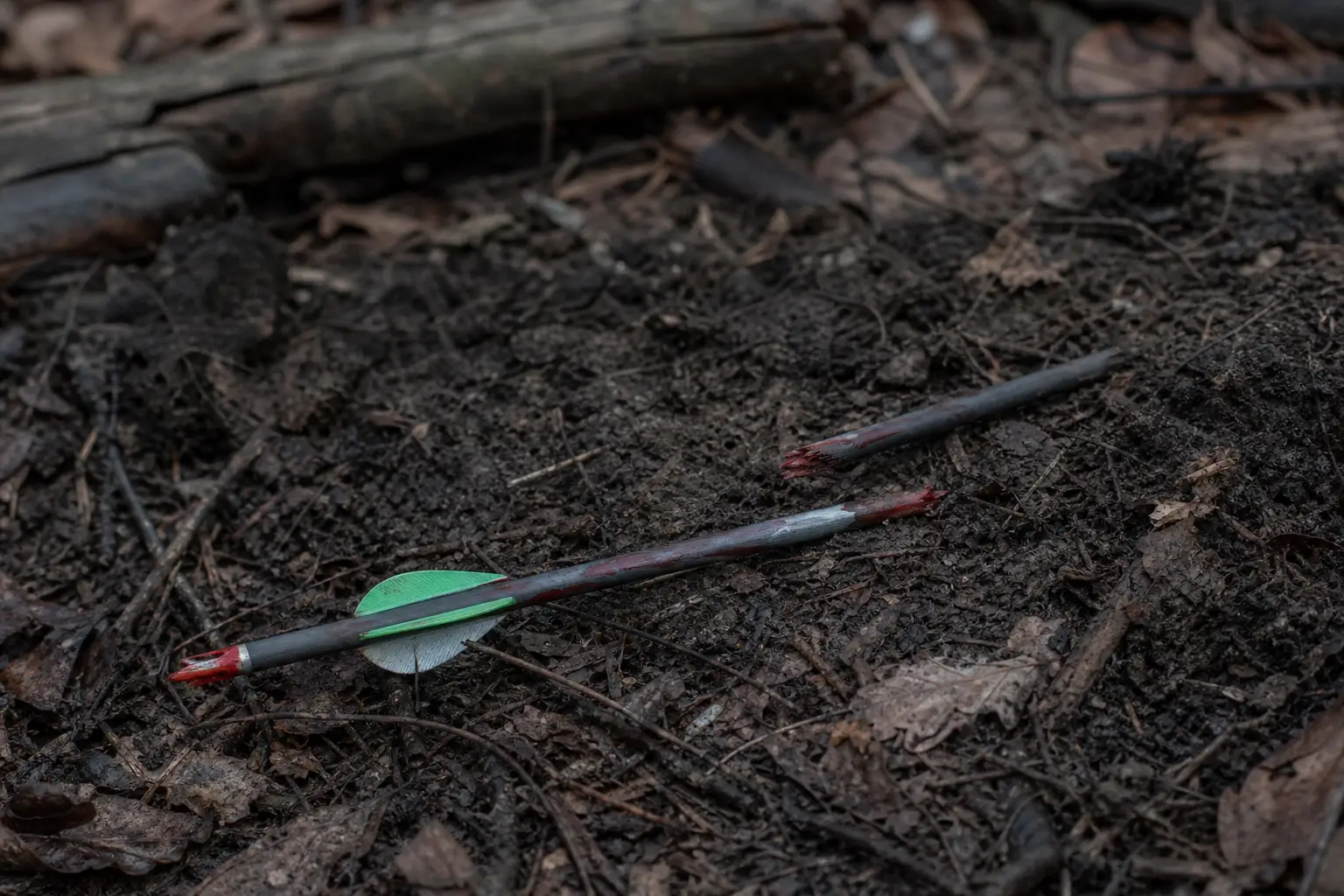
I found my arrow stuck in the dirt ten yards past where he stood. No pass-through. The shaft was snapped in half, and both ends had come back out of the deer. There was bright red blood up to the fletchings, hair on the broadhead, and a few drops on the leaves. So I did what every half-excited hunter does. I put my head down and started following drops.
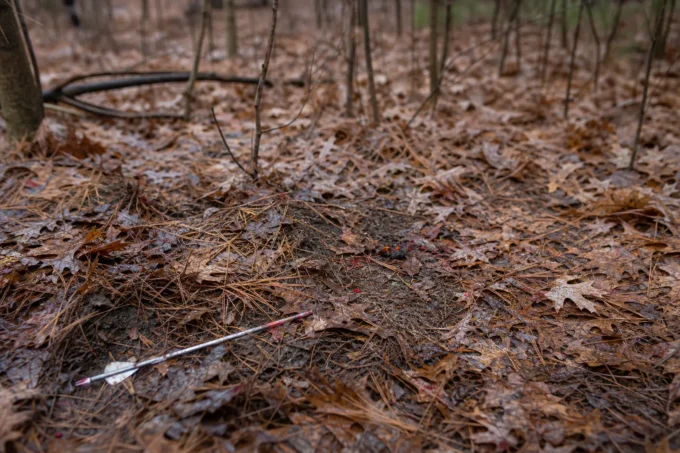
Thirty yards in, the drops thinned out. Forty yards, I was down to one speck every five or six steps. Fifty yards, the trail went cold. I stood there breathing hard, turning in a circle, telling myself he was hit hard and had to be close. He wasn’t. He’d laid up somewhere ahead of me, and I had already done the one thing you’re never supposed to do.
I Bumped Him
I heard him before I saw him. A crash, a hoarse grunt, then hooves pounding away through the briars. I’d pushed him. A liver hit will kill a deer, sure, but it’s slow, and the deer beds down to let it happen. I hadn’t given him that chance. I’d stomped straight onto him an hour after the shot because I couldn’t sit still, and now he was up and running on adrenaline, headed for the thickest creek bottom on the lease.
The rule every old-timer tried to drill into me goes like this: when in doubt, back out and wait. A still-hunting deer that is not pushed will usually bed within a couple hundred yards and die there. A pushed deer will run a mile before it falls, if it falls at all. I knew this. I’d heard it a hundred times. I just hadn’t believed it applied to me.
What I Did After
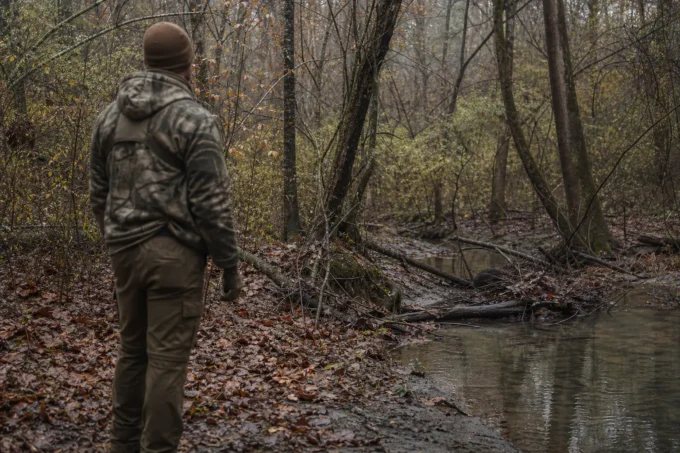
I backed out to the truck, called my buddy Dean, and told him what happened. He didn’t scold me. He just said “Give it two hours, then we’ll grid it.” Those two hours were the longest of my season. I sat on the tailgate in the cold, going over every step of the shot in my head, knowing I was paying for two mistakes with daylight.
When we went back in we didn’t track blood anymore. We went to his last known spot and ran a grid, shoulder to shoulder, twenty yards apart, looking for a brown shape in the brush instead of a red drop on a leaf. Dean found him ninety minutes later, maybe a hundred and forty yards from where I’d bumped him. I’d walked within thirty yards of that deer twice and never once slowed down to actually search.
Three Things I Got Wrong
- I didn’t read the hit. Bright red blood, no pass-through, arrow snapped, deer hunched and bolted. That’s a liver or one-lung hit, not a dead-right-there heart shot. The smart play was to wait at least two or three hours no matter how much I wanted to move.
- I tracked too fast with my head down. I was following drops like they were a rope tied to the deer. When blood thins out, you stop charging and start thinking. Mark last blood, back up, and guess the route before you take another step.
- I never committed to the grid. Once the blood is gone, blood-trailing is over and recovery is. You stop hunting one deer and start searching a place. Walk it slow, in lines, and check every blowdown and fence corner. That’s how you find them. It’s how I finally did.
The Lesson That Stuck
I got the deer, but I didn’t earn it clean. The meat was fine, the rack was decent, and I still feel a knot of shame when I think about the hour I spent chasing him through that creek bottom because I couldn’t handle the wait. Losing the animal and wasting the meat would have been on me, every ounce of it, and I knew it.
Now my rule is simple. If I’m not sure the deer is dead, I wait. Two hours minimum for a gut or liver hit, four or more if I can. I mark last blood with a piece of flagging tape and I don’t move past it until I’m ready to look for a deer, not a drop. And every single time I feel that itch to climb down early and go stomp around, I remember the crash in the briars and I sit back down.
Patience is the cheapest gear you own and the first thing you leave at the truck. Don’t be the guy who runs after a wounded deer at dusk. Be the guy who sits, waits, and comes back with a grid and a friend and cold daylight. The deer will still be there. They almost always are.