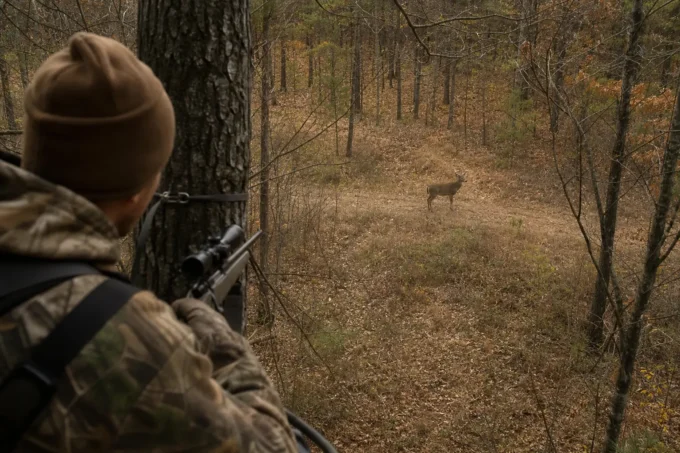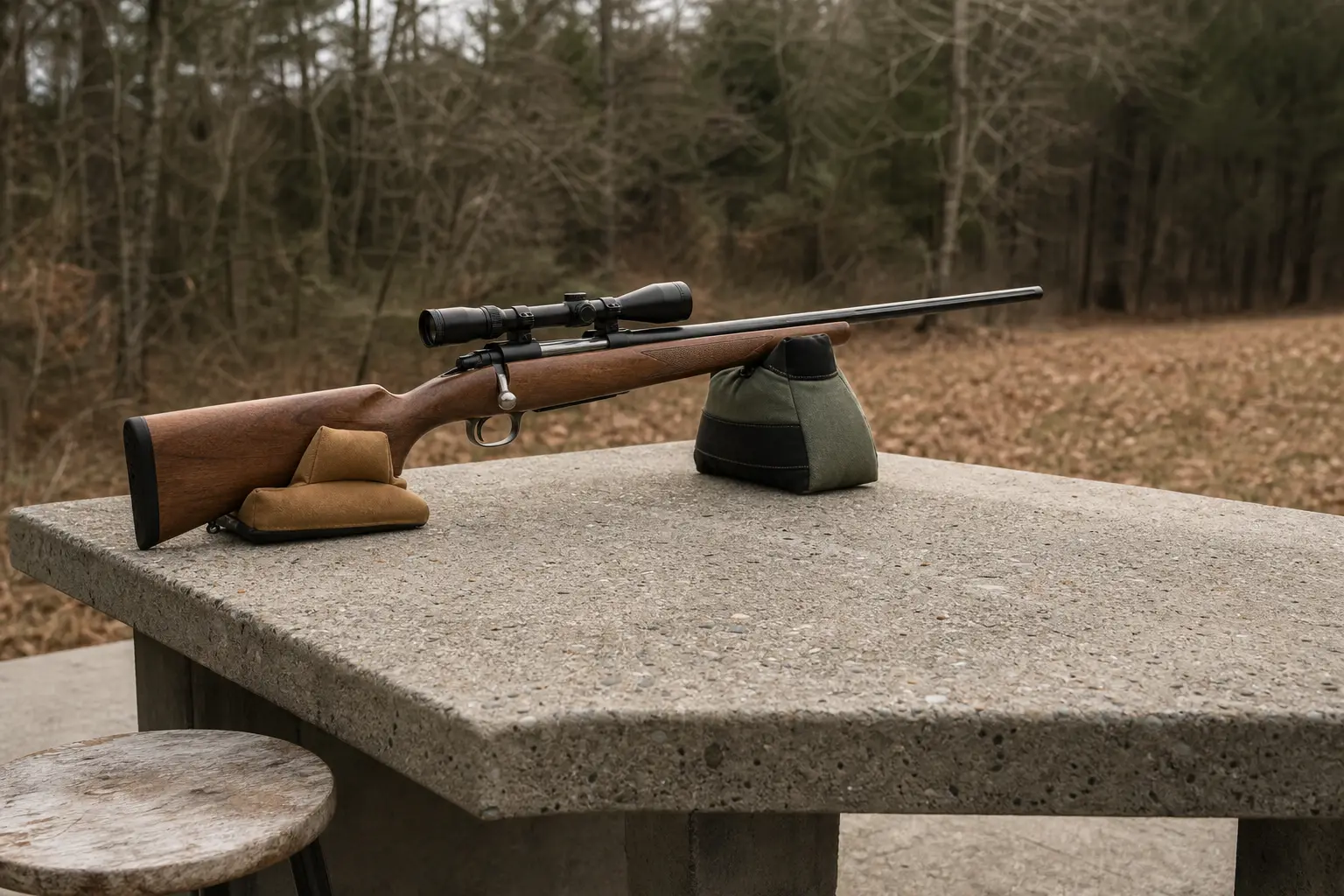
The shot was thirty-one yards, and I had shot it a thousand times. A thousand times on a cement bench at the range, with a sandbag under the forend, a stool under my rear, and a paper deer that never moved and never cared whether I lived or died. The buck standing down in the creek bottom did not know any of that. He was a heavy eight point with a chest like a feed trough, and he had walked in broadside as calm as a man checking his mail, and somewhere between my hands and my ribcage my whole summer of practice turned out to have been for a different sport.
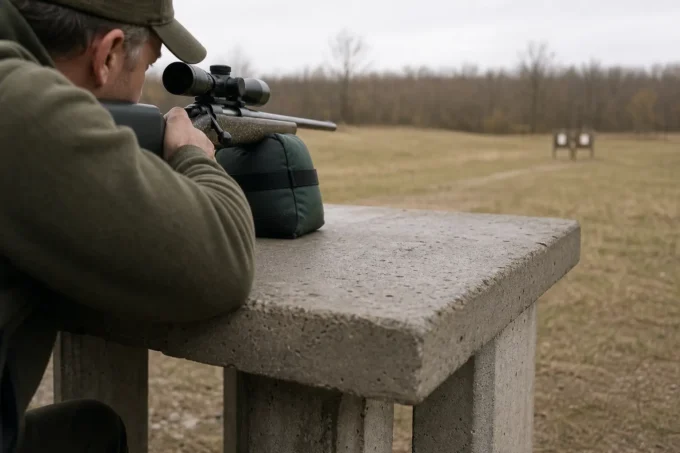
I was twenty-six years old and I had finally saved enough to buy a real rifle, a good bolt action with a scope that cost more than the first three rifles I had ever owned put together. I spent every Saturday from April to September proving I knew how to use it. I would lay my range bag out, set my sandbag, settle the rifle, work the bolt, and drill three shot groups into the ten ring at a hundred yards until the barrel was too hot to touch. I had the target pictures on my phone. I had the little dime sized groups taped to the fridge. I was, by every measure a bench shooter understands, excellent. And that, it turns out, was exactly the problem. I had trained myself to be excellent at a thing a deer does not ask you to do.
The Bench Is a Lie the Deer Never Told You
A bench rest removes every difficulty that actually decides whether you kill deer. The seat holds you up. The sandbag holds the rifle. The cement holds the seat. Your heart rate, by the time you fire, is whatever it was when you walked in the door, because nothing is at stake and the target is not looking back at you. The whole machine is built so a man can be steady. A treestand built the opposite way. In a treestand you are thirteen feet up a tree with your boots on a platform the size of a kitchen step stool, and the wind is pushing the tree in little circles, and the buck you have waited four seasons for is down there doing the one thing you have not practiced: existing, at range, while your heart hammers up around your ears.
When I raised the rifle, it did not feel like my rifle. Off the bench the crosshair would sit still as a fence post. Up in that tree it floated, and the harder I tried to hold it on the buck the wider it swung. My breath was wrong. My knees were doing something they had never had to do on a stool. I had no sandbag, no rear rest, no level cement. I had a strap and a heartbeat and a white knuckle on the forend, and the crosshair drew little circles the size of the buck’s whole boiler room when all I needed was to hold it in one spot behind the shoulder.
I squeezed anyway, because a man who has been waiting four seasons will squeeze anyway. The rifle jumped, the buck bolted clean over the far bank, and when I climbed down shaking and walked the creek, there was no blood and no hair and no deer, only the place where he had bedded and the place where he had not died. I had not missed because the rifle was bad. I had missed because I had spent a whole summer asking a bench to teach me to stand still, and a bench does not know how, and will never tell you that it does not know.
What I Did Instead of Shooting From a Chair
That winter I stopped going to the bench almost entirely and started doing the thing that felt stupid and wrong, which is usually the thing you need. I practiced the positions a deer will actually catch you in, and I practiced them with a heart rate up, because the whole trick of a field shot is that you will never be calm while you take it. You can only be steady anyway.
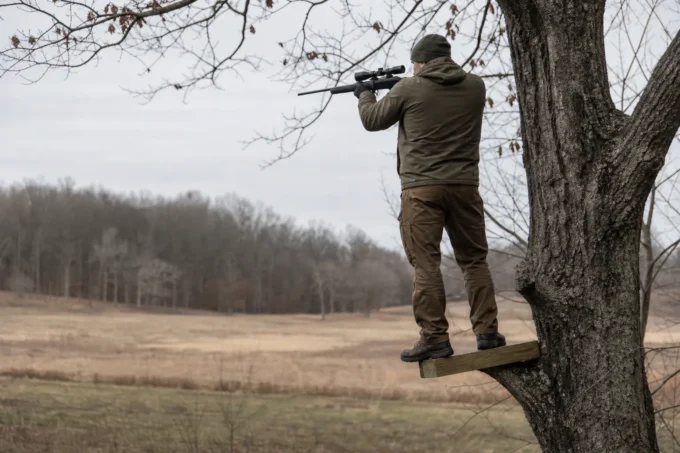
First, I built the simulated stand. I got a short length of pressure treated lumber and lag bolted it into a crotch of a tree in the back field at about the height my stand sits, and I stood on it with the rifle and practiced raising it, finding the target, and holding. The tree moved in the wind the same way my stand does, and that was the point. A real shot is fired from a moving, tired, half breathless body, and if you have never aimed from one, you are not trained, you are just optimistic.
Second, I shot offhand and kneeling and sitting, the three field positions a whitetail will hand you in order of likelihood. Offhand is the one that makes bench shooters cry, because there is nothing under the rifle but your two arms and your will, and the front sight wanders no matter how strong you are. The fix is not strength. It is a short hold and an honest trigger. You learn to accept the wobble, keep the crosshair moving in a small circle behind the shoulder, and break the shot the instant the circle crosses the spot, rather than fighting the wobble until it turns into a flinch. A flinch is just a man trying to time a shot he is no longer aiming.
Third, I started shooting tired and breathing hard. I would run the length of the field, drop to a knee, and shoot. I would do a set of pushups on the tailgate and then shoot sitting. It felt silly and my groups got worse before they got better, which is how you know it is working. A deer is not going to wait for your pulse to come down. The only steady a man can count on in the woods is the steady he can hold while his heart is doing a hundred and forty and his lungs are saying otherwise.
The Second Buck and the Shot That Finally Wasn’t a Bench Shot
The next November, in the same stand, a smaller buck came in on the same trail, walking the same broadside route as if the woods had saved the script for me. I did not feel calm. I felt exactly as wound up as the year before, and this time I did not wait to feel otherwise, because I had learned by then that the feeling never comes first. I raised the rifle, found the spot behind the shoulder, let the crosshair do its little circle, and when it swung through the spot I broke the trigger without fighting it. The shot took, and the buck ran forty yards and piled up, and I sat in the stand for a full minute with my hands on my knees and my heart trying to climb out of my chest, and I did not get down right away, because I had also learned that down and dead are two different things, and the woods will occasionally hand a wounded animal a head start if you hand it one first.
The difference between that buck and the one the year before was not the rifle, and it was not the deer, and it was not luck. It was one elk of a winter spent doing the boring, awkward, unphotogenic work of shooting from positions that felt wrong until they felt like the only right ones. The bench is a fine place to confirm your rifle shoots straight and your load groups well. It is a terrible place to learn to kill a deer, because a deer is never going to stand on a cement floor and wait for you to settle a sandbag under its chest.
If you are reading this and your whole practice routine happens from a chair, take the chair away for a while. Get up into something that moves. Shoot kneeling with your heart up. Learn what your crosshair does when you are tired, because that is exactly what it will do when the buck of your life is standing there. The steady that saves a buck is not the steady you buy or bench. It is the steady you build the hard way, one wobbling, breathing hard, honest shot at a time, until the crosshair finds the spot and stays there long enough for the trigger to do its one small job.