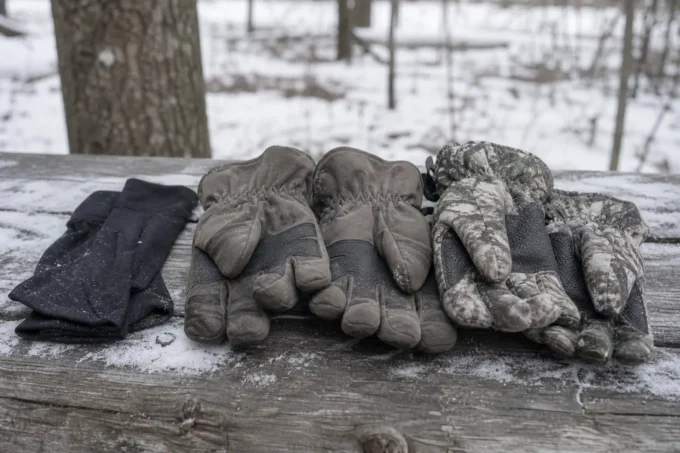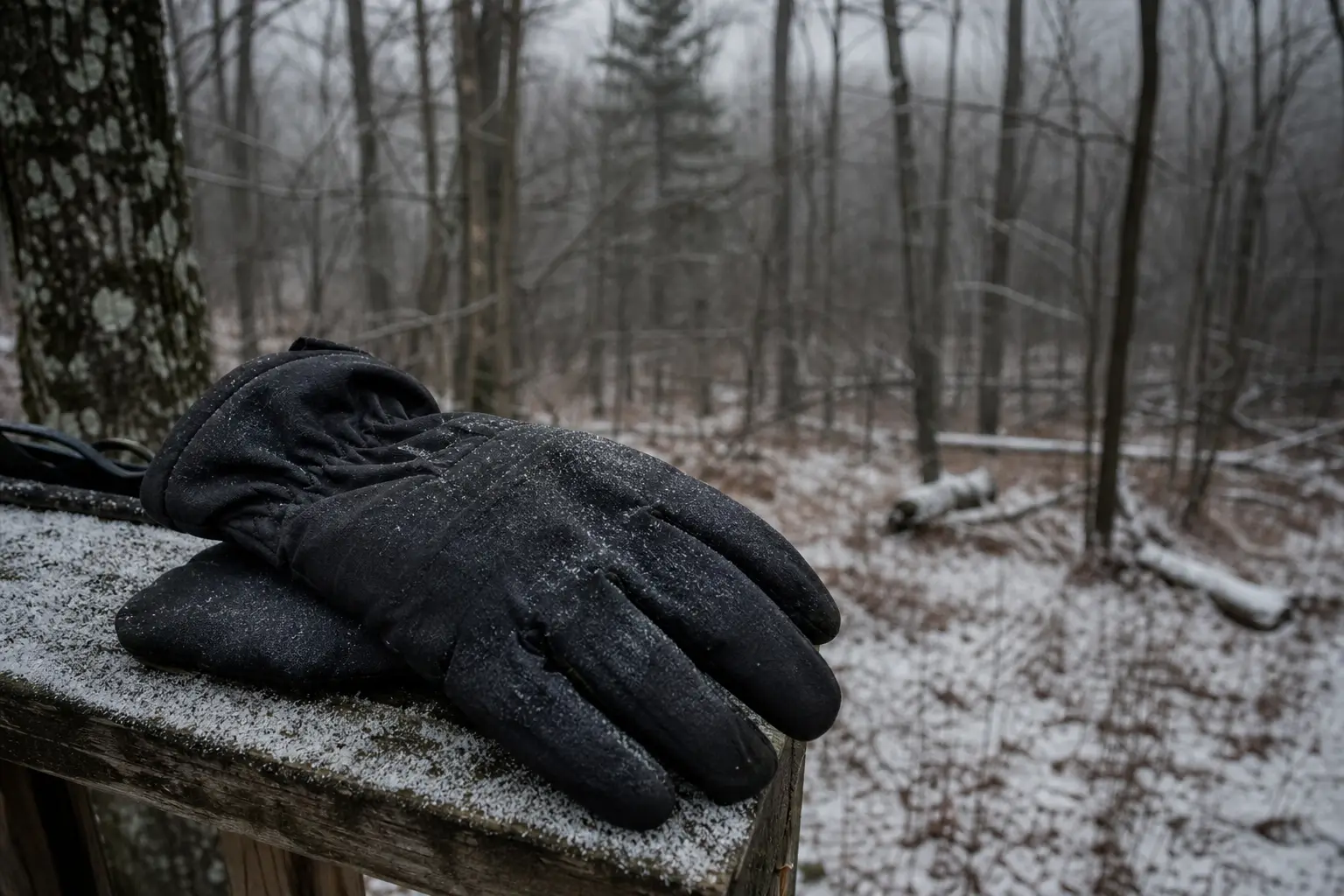
The first time I ever sat a late-season stand in real cold, I did the thing every broke, overconfident hunter does. I pulled on a pair of insulated “waterproof winter gloves” I bought off a gas-station sale rack for eleven dollars and told myself the woods owed me a deer for being tough enough to show up at all. The woods did not agree. The woods sent a cold front down out of the north that dropped the wind chill into single digits, and my eleven-dollar gloves spent the whole morning pretending to be a high-five from a dead man.
By nine o’clock my fingers had turned to ten small, useless candles. I could not feel the release. I could not feel the bowstring on my face. I sat there shivering and flexing my hands in my pockets like a man trying to remember what it felt like to use them, and when a doe finally walked out at thirty yards, I watched her the way you watch a movie you are not in. She wandered off. I did not even reach for the bow. There was nothing to reach with.
The Lie on the Label
Here is what I learned the hard way, because I am occasionally a moron and the learning always costs more than the lesson should. There is no such thing as a cheap pair of gloves that keeps your hands warm and dry all day in freezing weather. The tag said waterproof. The tag said insulated. The tag lied, or at least it told a story about the first forty minutes and shut up about the rest.
Waterproof and warm fight each other. A glove that seals water out also seals your sweat in, and the moment your hands go from cold to working and back again, the inside turns damp. Damp hands in cold wind go numb faster than dry hands ever dream of. The gas-station glove was waterproof the way a shower curtain is waterproof. It kept the outside out until it did not, and then it held the inside in, which was worse.
What actually keeps your hands working in late-season cold is a boring, unsexy list: a real membrane that breathes, insulation that is not a thin layer of marketing, a liner you can swap when it wets out, and a shell loose enough to move blood through. None of that costs eleven dollars. I wanted all of it for eleven dollars, which is not a gear problem, it is a me problem.
The Shake Felt Around the Stand
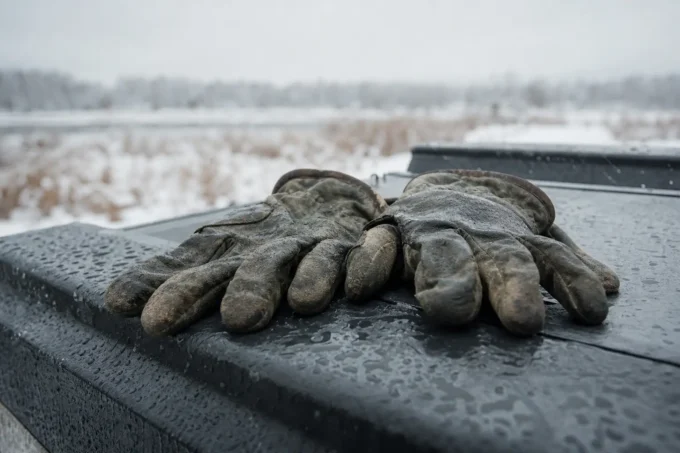
The next weekend I did what the stubborn never want to do and spent real money. A pair of gloves with an actual waterproof breathable membrane and a removable liner. I balked at the price the way a man balks at anything he should have bought a season ago, but I paid it. The first morning out, same stand, same single-digit wind chill, I sat until after noon and my hands never left the fight. I could tell you it was the glove, and it mostly was. But the thing that mattered more was that I stopped pretending toughness was a substitute for the right gear.
Toughness will keep you in the tree. It will not load your release, and it will not steady your pin. The deer that shows up at last light does not care how long you have been suffering. It only cares whether the string comes back smooth, and that is decided by hands that still work. Spending the season proving you can endure frostbite is just a slower way of missing a deer.
What Actually Works, Cold Hands Edition
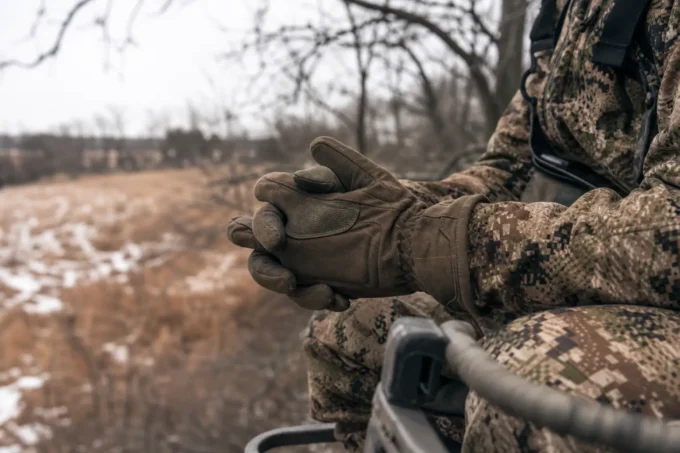
Take this from someone who had to learn it the expensive way twice. There is a short list of things that keep your hands in the game when the temperature drops, and everything else is decoration.
- Buy a real waterproof breathable membrane, not a coating. A coating wears off the palms and sleeves and you find out it is gone when you need it most.
- Use a liner you can swap. Two thin liners you rotate beat one thick glove you soak through, and a wet liner in a jacket pocket dries while you hunt.
- Go loose, not tight. A glove that is snug at the store cuts off circulation in the woods, and cut-off circulation is the actual cause of most frozen fingers.
- Keep a hand muff and chemical warmers. They are cheap, they work, and they are smarter than gritting your teeth for four hours.
- Do not buy the sale-rack glove for late season. If you are hunting November and December, the glove is not where you save money.
The guys who hunt the far north and the prairies, the waterfowl hunters in Manitoba and the late-bow guys in the Midwest, they all say the same thing in the end. The glove is not the place to be cheap. Dry hands are a weapon. Wet, numb hands are a spectator at your own hunt, and no amount of suffering makes up for the shot you never took.
I ate a cold, empty morning because I trusted a tag instead of my own hands. The doe that walked out at thirty yards never once looked at me. She did not have to. A man in a tree with frozen fingers is about as dangerous to a deer as a man in a tree with a pizza. I sat down, I got the right gear, and the next season I killed my deer on a morning just as cold, and the difference was not in the woods. It was in what I wore into them.