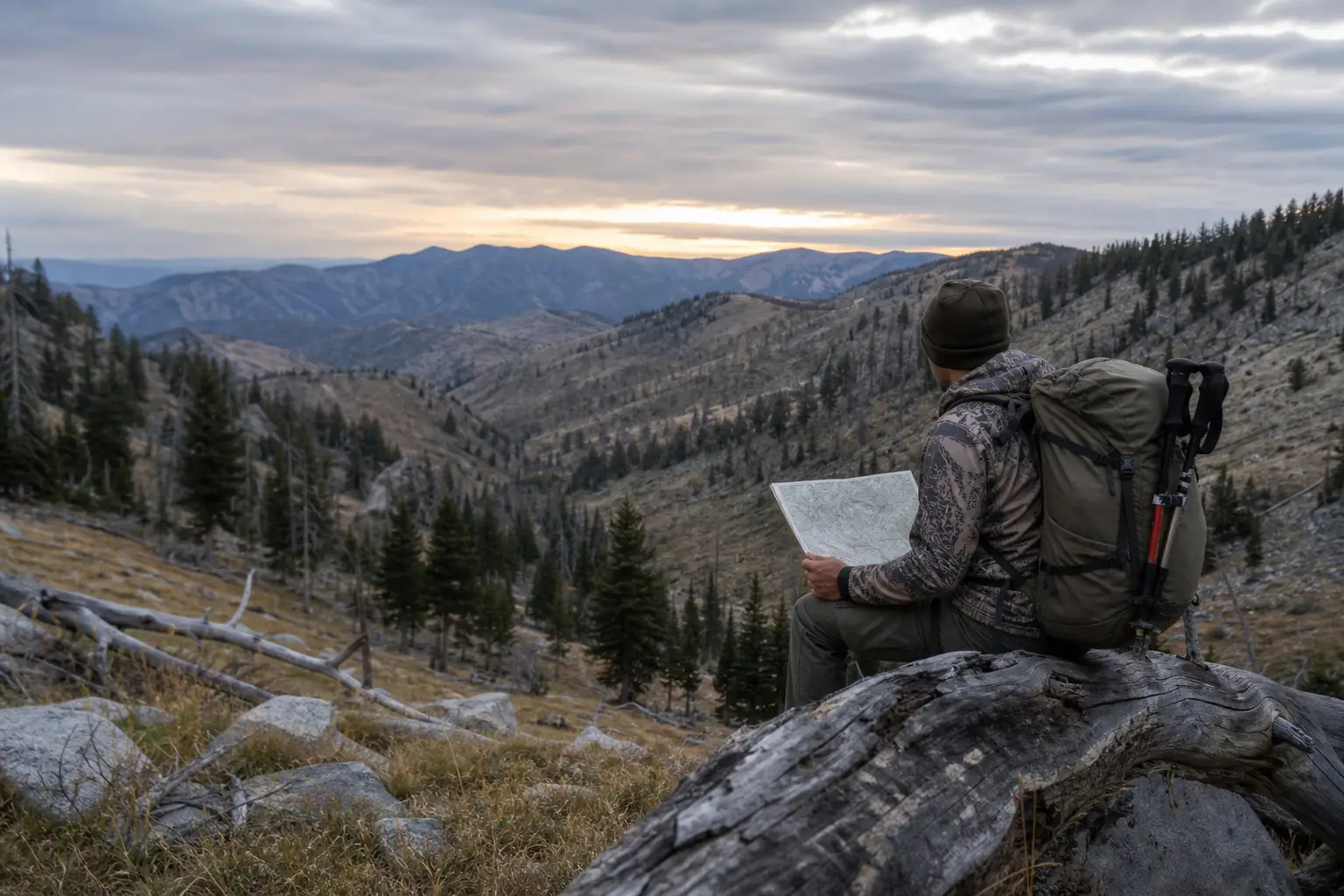
I got properly lost exactly once. Not “where’s the truck” lost. Not “let me pull up OnX” lost. Lost lost. As in: I sat down on a log, opened my map, and could not figure out which ridge I was standing on. My phone was dead. My compass was in my truck because I’d taken it out of my pack the night before to “save weight.” The sun was going down. It was late October in the Bighorns and it was going to freeze that night.
I was 28 years old. I’d been hunting for over a decade. I knew these mountains — or thought I did. I’d been in this drainage before. But everything looks different when you’re tired and the light is fading and you’re suddenly aware that nobody knows exactly where you are.
How It Happened
It wasn’t dramatic. I followed a mule deer through a saddle I didn’t recognize, dropped into a drainage I thought I knew, and kept going. The deer was moving slow, and I was moving slower, and somewhere along the way I stopped paying attention to where I was and started paying attention only to the animal. That’s how it always happens — you trade your awareness for your focus, and when the focus breaks, you realize you traded too much.
By the time the deer disappeared into timber, I was two drainages over from where I thought I was. I pulled out my phone. Dead — I’d been taking photos of the scenery earlier and killed the battery. Pulled off my pack to dig out my compass and realized I’d left it in the glove box. Stood there, turned in a slow circle, looking for anything familiar. Nothing was.
What I Did Right (By Accident)
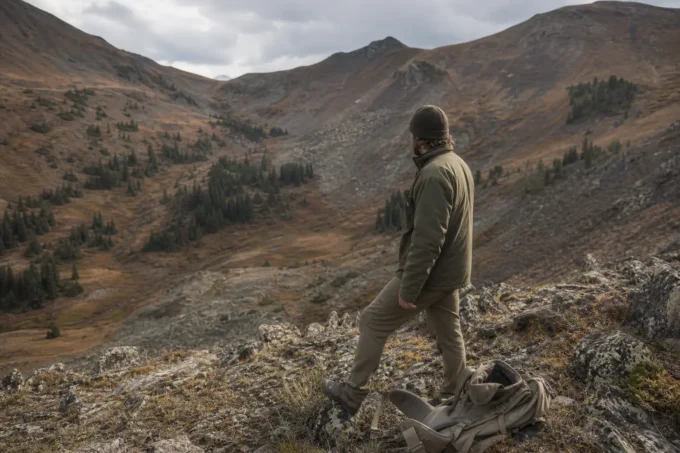
I made a few good decisions that day, and they were all luck dressed up as experience. None of it was skill. I just got lucky that the few things I did by habit were the right things.
First: I stopped moving. The instinct when you’re lost is to walk faster, cover more ground, find something familiar. That’s how people walk off cliffs in the dark or spiral deeper into terrain they don’t recognize. I sat down on that log and forced myself to think instead of walk.
Second: I had a map. A real paper map, folded up in my pack, because I’m old enough to have learned navigation before smartphones existed. Even without a compass, a map tells you the shape of the land — the drainages, the ridges, the direction the creeks flow. I oriented the map roughly by matching the sun to west and the slope of the terrain to the contour lines. It wasn’t precise, but it gave me a direction.
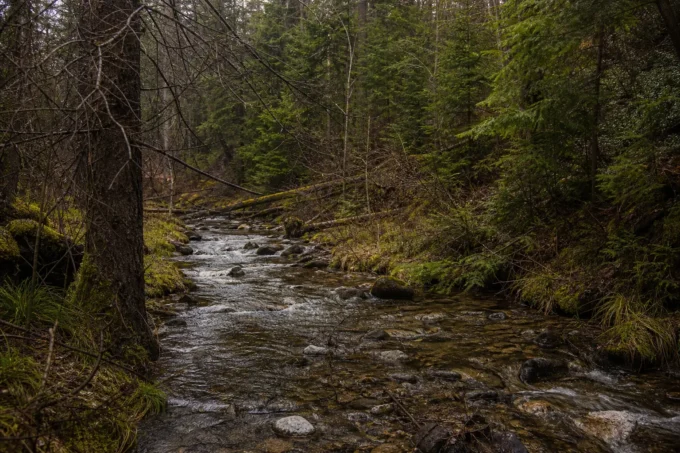
Third: water flows downhill to somewhere. I found a creek in the bottom of the drainage and followed it. If this was the drainage I thought it was — and I was about 70% sure — that creek would eventually hit the forest road where I’d parked. It took almost two hours in growing darkness, but it did. The truck was a mile down the road from where the creek crossed it. I got there around 9:00 PM, shivering and furious at myself.
What I Carry Now (And What I Actually Know How To Use)
After that night, I rebuilt my navigation kit from scratch. Not the gear-list version with seventeen redundant gadgets. The version that fits in a pocket and works every single time.
A compass. Always. Not in the truck. Not in the pack where I have to dig for it. In my pocket. A basic Suunto or Silva with a sighting mirror and declination adjustment. I check my bearing before I leave the truck and I check it again every time I change direction. It takes five seconds and it makes everything else on this list optional instead of essential.
A paper map of the hunt area. I print them from CalTopo or Gaia before every trip. The phone apps are great for planning, but paper doesn’t run out of battery, doesn’t lose signal, and doesn’t crack if you drop it on a rock. I mark my truck, my planned route, and any water sources I know about. If something goes wrong, I can hand the map to someone and say “I’m here.” Try doing that with a dead phone.
A small power bank. Yes, I still carry my phone. It’s a fantastic tool — when it works. A $15 Anker power bank the size of a lip balm tube will charge a phone from dead to 50%, which is enough for an emergency call or a GPS fix. I only use it for emergencies. If I’m killing my phone battery taking photos, that’s on me.
A headlamp with fresh batteries. Walking out in the dark without a light is how you break an ankle. Walking out with a dead headlamp is the same thing with extra steps. I carry a spare set of batteries in my pack and swap them every season whether they need it or not.
The Real Skill: Knowing When You’re Wrong
Here’s the thing about navigation that nobody teaches in hunter safety: the hardest part isn’t reading a map or using a compass. The hardest part is admitting you don’t know where you are. Your brain will try really hard to convince you that you do. It will find a ridge that “looks familiar” and build a whole story around it. It will tell you the truck is “just over that next hill” when the truck is actually two miles in the opposite direction.
The moment you realize you’re not sure where you are, stop. Don’t argue with yourself. Don’t let your ego tell you that experienced hunters don’t get lost. Sit down. Eat something. Drink some water. Get your map and compass out and figure it out with a clear head. Ten minutes of patient navigation beats two hours of confident walking in the wrong direction.
I still get turned around sometimes. Everyone does. The difference now is that I catch it faster, I stop sooner, and I have the tools to fix it. The mountain doesn’t care how many years you’ve been hunting. It will humble you the same way it humbled me — with a quiet evening, a dead phone, and a very long walk back to the truck.