The screen lit up with 3% and then went black, and I stood there in the dark trying to wake it back up like some fool shaking a dead man. The phone was my map, my compass, my way in and my way out, all wrapped up in one little rectangle I had never once thought to trade for a ten dollar compass and nine minutes of practice. I was two miles from the truck, I had turned down three different ridges, and the last thing I actually remember seeing clearly was a stand of oak that might have been anywhere. That was the morning the woods sat me down and made me earn my way home.
Everything Worked Until It Didn’t
For three seasons my system had been bulletproof. I would pull up the hunting app before I ever left the driveway, drop a pin on the truck, drag my finger across the screen to some spot I liked from a satellite photo, and go. The little blue dot followed me in. The little blue dot followed me out. I felt like a man who had tamed the whole country from a chair, and I told myself I was better at this than my old man, who still carried a folded map in a Zip-loc bag and a compass that looked like it survived a war. I would watch him unfold that thing at the table and I would roll my eyes like he was trying to start a fire with two sticks.
Then came the morning I left the phone on the charger all night like an idiot, or maybe the outlet was dead, I still don’t know. I grabbed it in the cold and it read 100% for about four seconds before the cold drained it. I noticed around 9am when the screen dimmed and the little battery icon turned red. I kept walking. The map was still up, cached, I figured out later, and the blue dot was still moving, so I kept pushing into a draw I had never hunted before, telling myself I would worry about the battery on the way out.
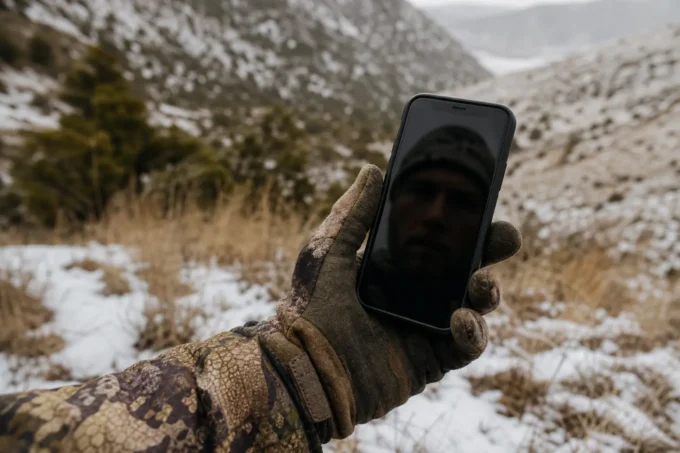
I shot nothing that morning. I also paid no attention to the way the sun sat in the sky or which direction the wind was cutting or which ridge I had actually crossed. Why would I? The phone knew. The phone always knew. At 10:30 I reached into my pocket to check my route back and the screen was a black mirror with my own stupid face in it.
The Compass I Didn’t Know How to Read
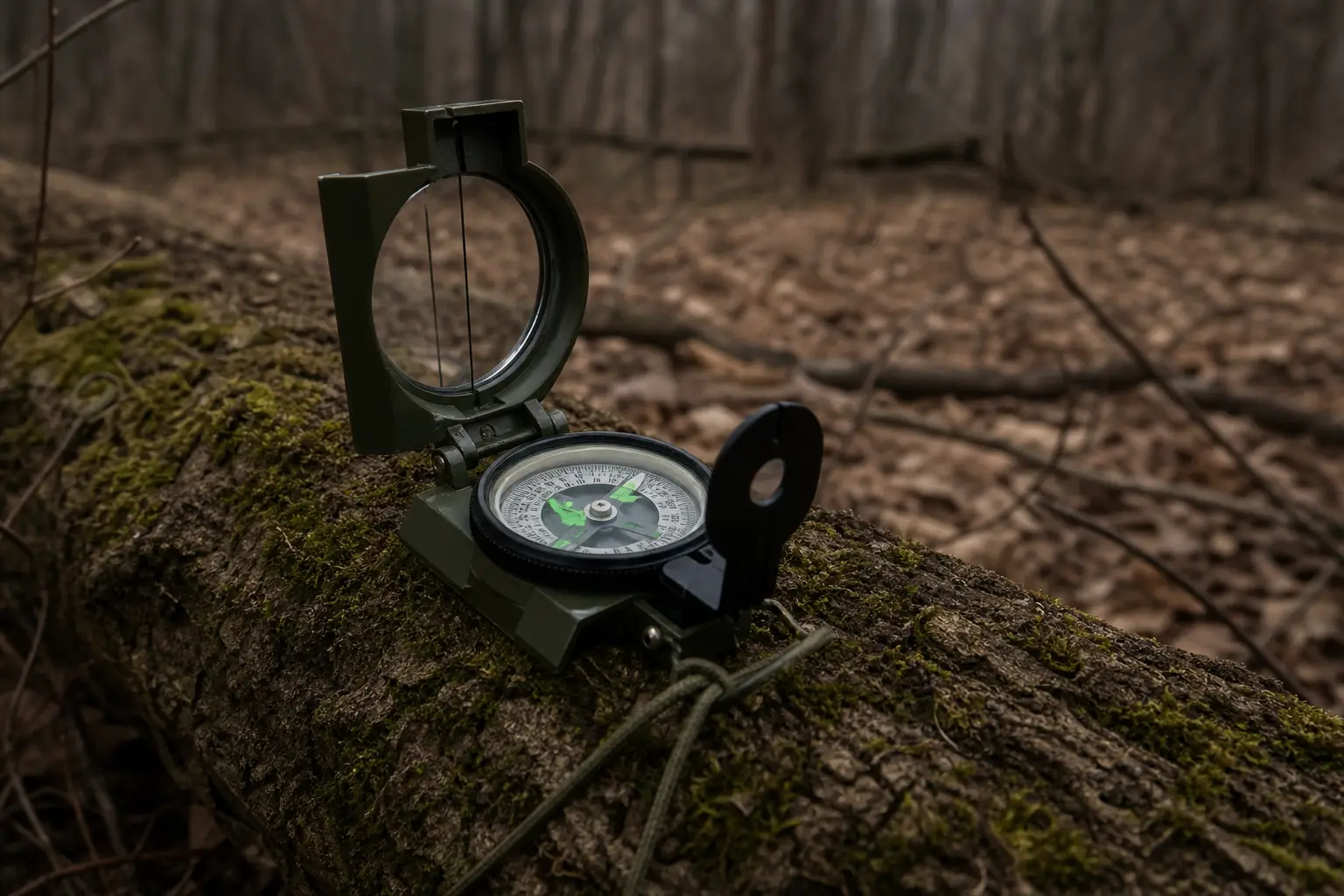
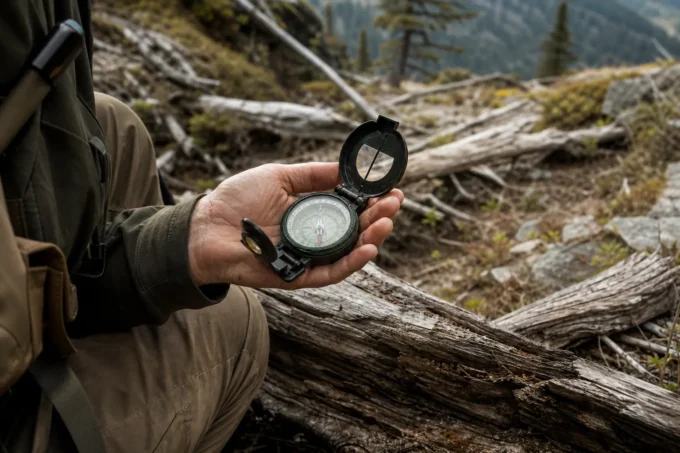
It sits in the bottom of my pack always, because some cousin gave it to me at a family reunion and it looked serious and outdoorsy. A real compass with a folding sight and a mirror that flips open. I had never opened the mirror except once to pick something out of my teeth. When the phone died I dug it out and held it flat in my palm like a man reading an heirloom he inherited but never learned the language of. The needle swung around and settled on what I knew, vaguely, was north.
North. Great. The truck was north. I was fairly sure. So I pointed myself at the needle and started walking, and here is the part where you should already be shaking your head, because all I did was follow the red end toward what I hoped was the road. The country is ridge after ridge, all of them running near the same way, and I walked down into one hollow and up the far side four times, each one looking enough like the last to make me doubt whether I had moved at all. Around noon I found a tree I was nearly certain I had passed twice and my stomach went cold in a way that had nothing to do with the weather.
What nobody bothers to tell you is that a compass only points. It does not know you. It does not know your truck, your oak tree, or which of eleven identical hollows you drove down. All the thing does is give you a direction, and without a map to pin that direction onto, north is just a word. Sitting on a log with the folded sight pointed at nothing I had the heavy, honest realization that I had spent three seasons pretending to be good in the woods while a ten dollar magnet and a folded piece of paper were outsmarting me from the bottom of my pack.
What Finally Got Me Out
I stopped walking for a full twenty minutes, which felt like being caught cheating and told to sit still. I made myself remember what I actually knew. I had parked off a county road that ran, I was fairly sure, east-west, with the truck on the north side where a little gravel lot dead-ends against a fence. The draw I had dropped into in the morning ran downhill to the south for a long time before it flattened. If I kept the needle on a steady heading and stopped zig-zagging every time a ridge looked familiar, I should hit that road going north. The problem was I had been walking whichever direction felt downhill and calling it a plan.
So I picked the red end, locked my eyes on a dead snag a hundred yards out in that direction, and I did not look down again until I reached it. Then I picked another snag. Then another. Straight line, no shortcuts, no second-guessing, and when a ridge stood up in my way I went over it instead of around, because going around is how a man loses his line and finds his own boot tracks in the leaves an hour later.
An hour and some change after that, I popped out onto the gravel road half a mile down from the truck, and I want to tell you I felt like Daniel Boone, but mostly I felt like a man who had been shown exactly how dumb he was by a plastic-bodied compass his cousin bought at a gas station. The phone, dead in my pocket, rattled against my leg the whole walk back like a little reminder that the fancy map is only as good as its battery.
Learn It Before You Need It
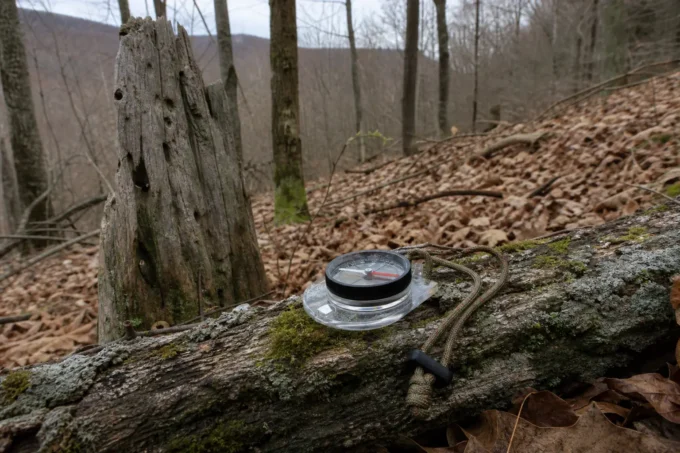
Here is the part I am genuinely embarrassed to say out loud: that night I sat at my kitchen table, unfolded the paper map that came with the county, and practiced. I set a bearing from the gravel lot to a pond I know, and I learned what the declination number in the corner means and why your compass does not always point exactly at the map’s north. It took less than an hour. I could have learned it ten years ago with the same map and a cup of coffee, and instead I learned it standing in a cold, too-quiet hollow with a dead phone and no idea which ridge was mine.
I still carry the app. It is a fine tool and it has kept me out of a lot of guesswork. But now there is a compass in my vest pocket where I can get to it with one hand, and a folded map in a Zip-loc bag, and I read them the way a man checks his oil before a long drive. The phone’s little blue dot is a convenience. The compass and the map are what actually get a man home when the battery dies and the ridge tops all start telling the same lie.
Practice the boring part at the table, on a warm afternoon, before the woods ever asks you to. Because the woods will ask. It always asks. And when it does, it would rather you earn the answer than shake a dead phone at the dark and pretend that somehow counts.