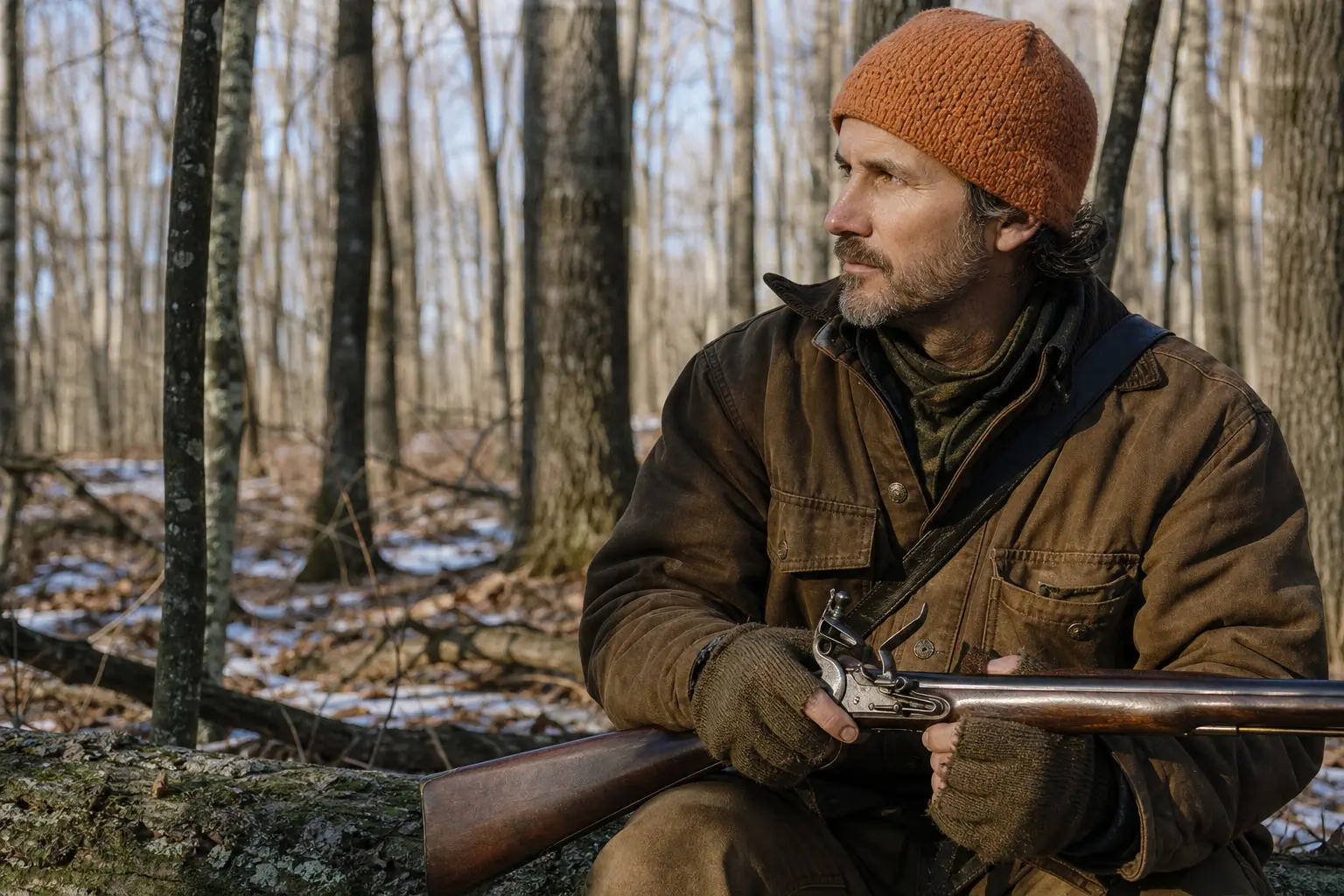
I bought a flintlock because I wanted to be a patient man. That is the honest version. The other version, the one I told my buddies, was about tradition and the old ways and connecting with the hunters who carried the same lock two hundred years ago. But the real reason is simpler and uglier. I had spent twenty years hunting with a rifle that reloaded as fast as I could work a bolt, and somewhere along the way I started shooting at deer the way a man eats free bar snacks, greedy and thoughtless and certain there would always be more.
I figured a flintlock would teach me patience. I was right. What I did not figure is that it would teach me I was never patient at all. It would just keep handing me a one shot, one chance, one agonizing reload situation until I finally stopped pretending the problem was the gun.
The First Lesson Arrived Before I Ever Fired It
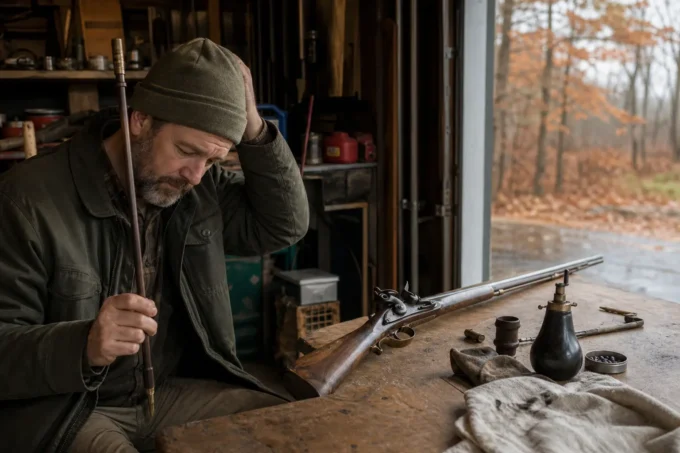
You cannot load a flintlock fast. You pour measured powder down the barrel. You seat a patched round ball with a ramrod. You prime the pan with fine powder. You close the frizzen. Every step is a small ritual, and every ritual is a chance to ruin the whole thing because you were in a hurry. I learned this in my garage in October, pouring a charge while glancing at my phone, and only realizing after I tamped the ball home that I could not remember whether I had actually put powder in first.
I sat there for ten minutes holding a ramrod and doing mental arithmetic on a gun that would not tell me the answer. I ended up pulling the ball with a screw and starting over. Twenty minutes I will never get back, all so I could stare at a brick wall and feel like a grown man who had just failed a test his great grandfather passed at twelve.
The Pan Is a Tiny Weather Station That Hates You
Opening morning it rained. Nothing heavy, just that fine October mist that sits on your wool like dew and finds its way into every seam. I was in the stand by first light, and somewhere between setting my coffee down and getting comfortable, the powder in my pan turned from dry gray to the consistency of oatmeal. A flintlock depends on that flash pan like a modern rifle depends on a firing pin, except the pan is open to the air, and the air on opening morning had decided to be damp.
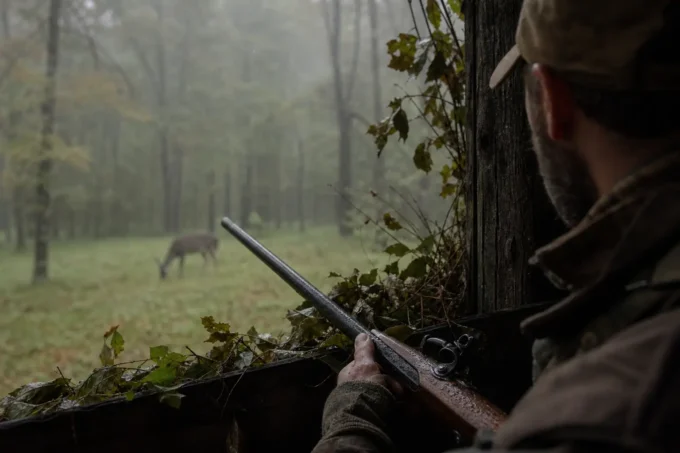
When a buck finally stepped out at sixty yards, broadside, an eight pointer with his head down in the clover, I raised the gun, eased the trigger, and heard the unmistakable sound of a flint snapping and nothing else. No boom. No recoil. Just the hiss of a spark that fizzled in a wet pan like a match dropped in a puddle. The buck trotted off into the timber while I sat there dry firing air and mouthing every word I knew for disappointment.
That was the day I learned the first real rule of flintlock hunting: the pan is a tiny weather station, and it does not care about your season. You either keep it dry and protected, or you accept that your one chance was spent on a click.
Reloading Under Pressure Is a Theatre of Errors
Here is where flintlock hunting stops being charming and starts being a mirror. The first time you fire at a deer and miss, or fire and hit and watch it run, a bolt action lets you chamber another round in about a second and a half and send a follow up. A flintlock hands you the slowest minute of your life. You stand there knowing the deer is still moving, still alive, still there somewhere, and you have to pour powder and patch a ball and seat it and reprime and hope your hands remember how to do all of it while your heart is trying to climb out of your mouth.
My hands did not remember. My second season, I shot at a doe, hit her, and watched her bound into a thicket. I then fumbled my powder flask, spilled half a charge into the leaves, dropped a patch, and by the time I had the gun loaded again I was shaking so hard I could not have hit a barn wall. She had long since vanished. I spent the rest of the afternoon on a blood trail with dying light, and when I finally found her she had gone farther than she ever should have because I was too busy panic reloading to do the one thing a muzzleloader hunter has to do, which is make the first shot count and then trust it.
What the Slow Rifle Actually Taught Me
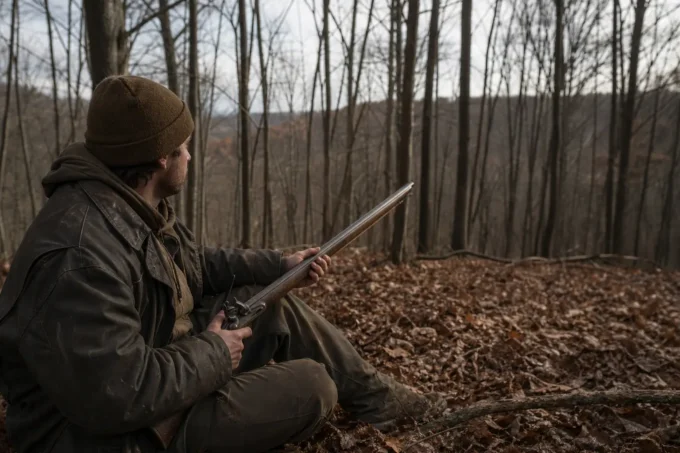
It took three seasons for the lesson to land, and it is this: the flintlock did not make me patient. It just removed every excuse I had for not being patient. When you only get one shot, and reloading takes a minute you may not have, you stop shooting at the first deer that walks by. You wait for the angle. You wait for the animal to settle. You check the wind twice and the pan three times. You pass on marginal shots you would have taken without thinking with a scoped bolt gun, because a muzzleloader will punish that greed every single time.
I started seeing things I had been missing for two decades. Where the deer bed. Which trail they use in the last hour of light. How a buck circles downwind before he commits. None of that mattered when I could throw lead at anything that moved. But when every trigger pull costs you sixty seconds and a fistful of spilled powder, the ground starts talking to you, and you finally start listening.
The Shot I Remember
Last season, opening day, cold and clear. No rain this time. I had wiped my pan dry three times and kept it covered with a strip of leather. A buck came in at seventy yards, quartering away, and I did not raise the gun right away. I watched him take two steps, turn, lower his head to feed. I settled the front sight behind his shoulder. I thumbed the hammer back. I let out half a breath and squeezed the way my grandfather would have, slow and sure.
The pan flashed. The rifle boomed and pushed back through the smoke, and when the white cloud cleared the buck was on the ground. I remember every part of that trigger pull. I remember the sight picture. I remember the weight of the gun and the cold of the stock and the smell of burnt powder hanging in the still air. I do not remember any shot like that from my bolt gun, not once in twenty years, because with a bolt gun I never had to earn a shot badly enough to feel it.
The flintlock did not turn me into a patient man overnight. It turns out you cannot buy patience in a gun shop, not even in a long barrel with a flint and a frizzen. But it gave me a reason to practice patience until it stopped being a performance and started being the only way I know how to hunt. One shot. One chance. One slow, honest minute at a time. I bought the rifle to prove I was patient, and I spent three years proving something better, that I was finally ready to learn.