My granddad said it so many times it might as well have been chiseled on the mantle. “We don’t shoot does.” My dad said it too, and his dad before him. It wasn’t a rule you questioned. It was a rule you inherited, same as the rifle and the hat that smelled like a lifetime of November mornings.
For ten seasons I sat in that same oak and I passed does. Not one or two. Dozens. Whole family groups of them would drift under the stand at last light, and I’d watch them all the way down to the creek and back up, and I never once touched the trigger. I’d tell myself I was being patient. I’d tell myself a real hunter waits for horns. The truth was simpler and uglier than that. I thought shooting a doe was cheating, and I was too proud to look like the kind of man who takes the easy thing.
The Browse Line That Wouldn’t Lie
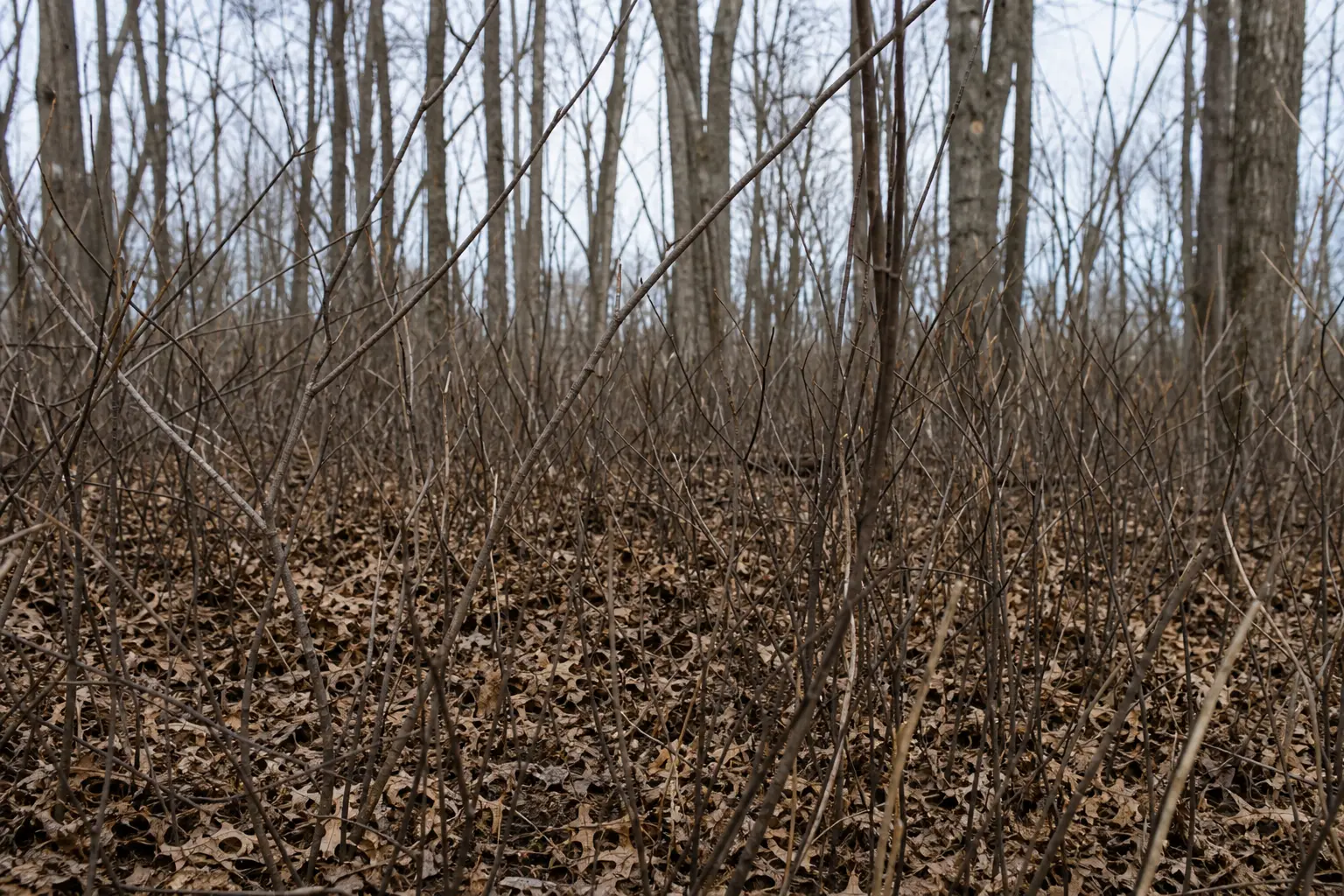
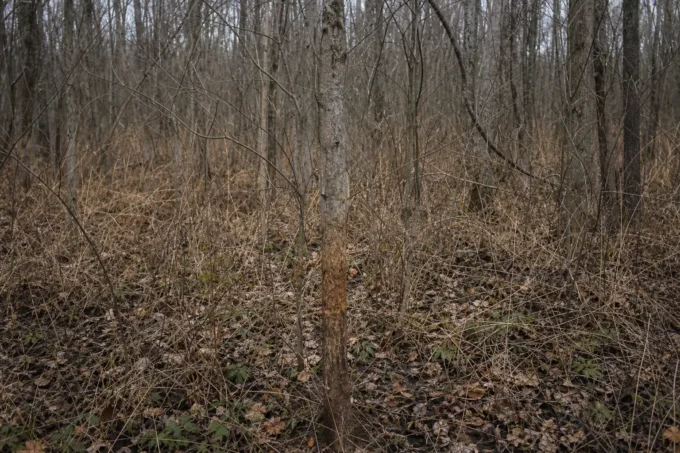
Everything changed the year I took over a lease with my buddy Walt. Walt’s the guy who actually reads the regulations instead of just carrying the pamphlet around folded in his glove box like a prayer card. He walked me out to the woodline that first fall and pointed at the trees. There was a line through the brush, clean as a tide mark, about four feet off the ground. Everything below it was stripped bare. Nothing but twigs and a few sad greenbrier stems.
“That’s a browse line,” Walt said. “Means too many deer and not enough food. They’ve eaten everything they can reach. They’re starving the slowest way there is.”
I looked at him like he’d insulted my mother. “So we shoot more?” I said. “The herd’s thin, not thick. Look at the ribs on that doe.” And he just shook his head, the way a man does when he’s about to spend forty minutes explaining something you should have learned thirty years ago.
Does Run the Herd, Not Bucks
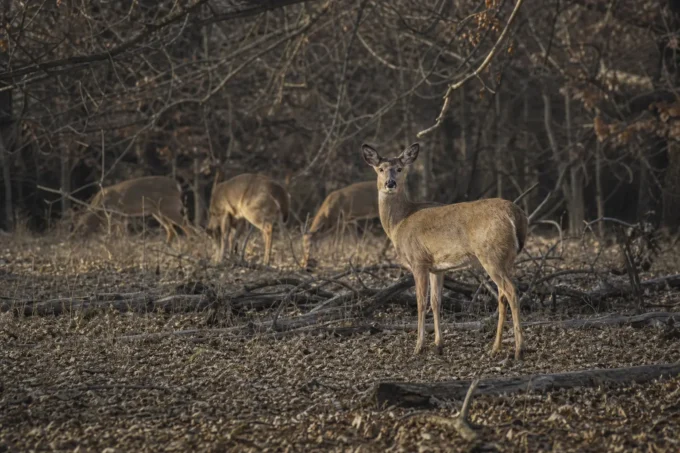
Here’s the thing I was too thick to see. A buck is a headline. A buck is the picture on the calendar. But a herd isn’t run by its bucks. It’s run by its does. Every doe on the place is the engine that makes next year’s deer. Too many does, and you get small fawns, late fawns, does that go into winter thin and come out of it with nothing left to raise the next one. Starvation. Disease. Coyotes doing the culling that ought to be yours. The woods get out of balance because somebody has to keep the numbers in line, and if you don’t do it, the land does it harder.
Walt pulled out his phone and showed me a figure I’ve never forgotten. By most state surveys, something like seven out of ten hunters never fill a single antlerless tag. Seven out of ten. All of us out there every season, a hundred thousand guys with rifles and freezer space, and almost nobody takes the one animal that actually steers the herd. Because horns make the wall, and a doe just makes meat. And somehow, somewhere, we all decided meat was the shameful part.
That was me. That had been me for a decade. I wasn’t managing anything. I was collecting antlers and calling it tradition.
“You Won’t Eat the Eggs If You Kill the Hens”
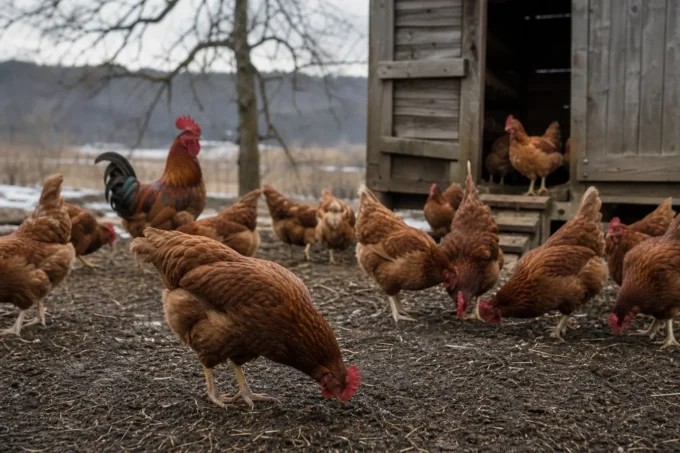
The argument that finally cracked it open, weirdly, had nothing to do with deer. It was chickens. We were standing by Walt’s coop one Saturday, and he said, “You keep roosters in any number you like, but if you want eggs next spring you sure don’t shoot the hens.” And I stood there holding a feed scoop, and I felt like a complete fool. Because he was right, and because I’d known it all along, and I’d spent ten years pretending the opposite because it flattered me.
Shooting a doe isn’t a shortcut. That’s the lie I’d been telling myself. A shortcut is what the lazy man does instead of the work. Filling an antlerless tag when the herd needs it is the work. It’s the least glamorous, least photogenic, most important work there is. The buck on the wall is a scoreboard. Taking the does the herd needs taken is what makes you something better than a customer.
The First Doe I Took On Purpose
That fall I bought the antlerless tag. Not because Walt told me to. Because I finally ran the numbers for myself. I’d watched that browse line eat its way higher every season. I’d seen fawns following does that looked like coat racks in a drought year. The land was asking for something, and I’d been answering it with silence for ten years. So one cold afternoon in late season, I watched a fat mature doe step out at sixty yards, alone, and I didn’t pass her. I put the crosshair where the shot should go and I took her clean, two lungs, and she piled up forty yards from where she stood.
Putting a hand on her was different than any buck I’d ever tagged. No antlers to measure, nothing to mount, nothing to post. Just good clean meat and the quiet knowledge that I’d finally done the thing the land needed instead of the thing my ego wanted. She fed my family through most of the winter. Every pack of ground, every roast, every backstrap I pulled out of that freezer should have had an apology printed on it, for the ten years I spent too proud to be useful.
What I’d Tell a Young Hunter
If some kid wearing his first blaze orange asked me, here’s what I’d say, slow and plain:
- Read the antlerless rules before you read anything else. Earn-a-buck, doe-only zones, the works. The people who wrote those rules weren’t trying to cheat you out of a big buck. They were trying to keep the herd healthy.
- Hunt the herd, not the wall. Ask what your land actually needs. More deer, fewer deer, more cover. Act on the answer, even when the answer has no rack on it.
- Meat is not the consolation prize. It’s the whole point. The buck on the wall is the bonus. If you shoot nothing but horns your whole life, you’re not a steward, you’re a scorekeeper.
- Tradition is only worth keeping if it’s honest. Half of what I inherited was true learning. The other half was just pride with a longer beard. Sorting them is your job.
I still get a little thrilled when a big buck walks out. I don’t think that ever leaves a man, and I don’t want it to. But I don’t confuse him with the herd anymore. The does were never the thing I was supposed to leave alone. They were the thing I was supposed to learn to read. Took me ten seasons and one old man with a chicken coop to figure it out. Better late than never, but it didn’t have to take that long. Most of it never does.