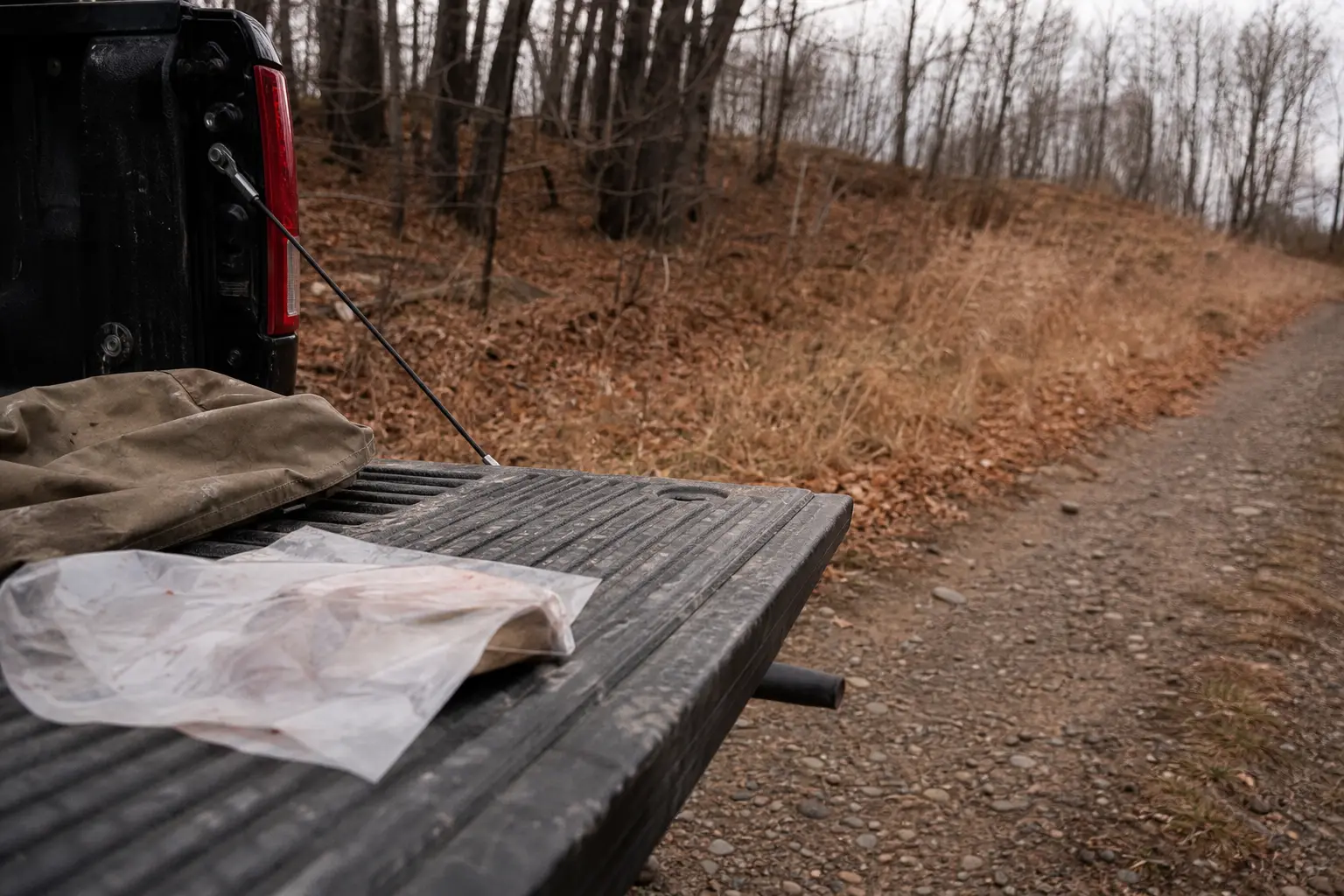
I threw away a deer shoulder once and didn’t think twice about it. That’s the sentence that still sits in my gut when I talk about conservation, because it’s the honest one. It wasn’t spoiled. It wasn’t shot up. It was just the off-side shoulder on a buck I’d already spent an hour dragging, and it was full of bone chips and bloodshot meat from a quartering-away shot I took too fast. I looked at it in the bed of the truck and decided it wasn’t worth the knife work. Tossed it in the ditch at the end of the driveway, watched it go, and didn’t tell a soul where it went.
For a while I told myself that’s what everybody did. Bloodshot shoulder, bone chips, why bother. Coyotes would get it. The woods got it back, one way or another. That’s the story a lazy man tells so he can go sit on the couch fifteen minutes sooner on opening day. I told it to myself for two seasons before I finally had to look at what I’d actually done.
The Day That Wouldn’t Let It Go
It wasn’t some dramatic moment with a mentor or a lecture from an old-timer. It was my buddy’s kid, eight years old, standing over a doe we’d just field dressed. Most of the meat was already in the cooler, but my buddy was down on his knees working on the neck and ribs, digging out every scrap, and the kid asked him why he was still going when there was nothing left.
My buddy didn’t look up. He said, “She gave us all of it. So I’m taking all of it.”
It landed on me like a bucket of cold water because I’d never once thought of it that way. To me a deer had been a target that turned into meat. The parts that were easy to cut were a win, and the parts that took work were somebody else’s problem. My buddy didn’t hunt that way. He cut neck meat for jerky, scraped ribs, saved the heart and liver, and by the time he was done there was a pile of bones clean enough to hang on a wall. I stood there holding a bag that had the backstraps and the hams and nothing else, and I felt it. The difference between what I’d killed and what I’d taken.
What “Respect the Animal” Actually Means
Everybody says respect the animal. It’s printed on shirts and stitches into every hunting podcast and it’s the first thing a guy says when he’s trying to explain to a non-hunter why we do what we do. But I’d gone years mouthing it without ever doing the work that made it true. Saying you respect the animal and then throwing away a third of it because trimming is tedious is not respect. That’s the same thing as a bow hunter who takes a shot past his range because he wants the rack. It’s disrespect wearing a polite coat.
The work is the boring part. Trimming silver skin off neck roasts. Digging the tenderloins out without cutting yourself. Turning a pile of trimmings into burger instead of paying the processor to compost it. Saving the heart and slicing it thin instead of letting it fall out in the field. That’s the part nobody posts a picture of, because it doesn’t look like much. It looks like a grown man hunched over a table at midnight with cramped hands and meat under his fingernails, wondering why he didn’t just order a pizza.
But that’s the actual cost of the animal. Not the tag. Not the gas. The hours of knife work after the fun ends. When you skip it, you’re not saving yourself work, you’re deciding the animal was only worth the easy half of itself. I’d decided that more times than I wanted to admit.
I Fish the Same Way, By the Way
It wasn’t only deer, either. Last summer a buddy and I limited on walleye, and while I was bagging fillets he was cutting the cheeks out of every head. You get two cheeks off a walleye, little walnut-sized buttons of meat under the eyes, and most guys pitch them in the gut bucket because they can’t be bothered. He got thirty-two of them off a mess of fish and fried them up with butter and they were the best bites of the whole trip. I’d thrown away a dozen crappie heads the week before without once thinking about what was in them.
Same lazy story, different species. The thing had gills and I killed it and then I only took the easy filets off the side and fed the rest to the raccoons. I used to tell myself I was a meat hunter, as if that explained it. Now I think a real meat hunter is the guy who treats every ounce like it cost him something, because it did. It cost the animal everything and it only cost me a bullet or a hook and my patience.
The Uncomfortable Math
Here’s the part that stings if you sit with it. When I threw that shoulder in the ditch, I wasn’t just wasting two or three pounds of meat. I was deciding that my dead buck was worth less than my convenience. And when enough of us make that call, quietly, in our own driveways and gut buckets, we’re the ones who teach the anti-hunters what they already believe about us. That we kill for the fun of it and the meat is an afterthought.
They don’t see us field dressing in the dark or trimming for the freezer at 11 at night. They see a gut pile and a ditch full of a shoulder some guy was too tired to process. And you know what, some of us are exactly what they think we are. I was, for a stretch there. The only reason I got mad about the accusation at the time is because I was too comfortable to change the behavior that earned it.
Conservation isn’t all public land meetings and license dollars, even though those matter. A big part of it is just not wasting what you killed on purpose. It’s the least glamorous, most private discipline there is, because nobody’s watching when you decide whether to reach for the knife or the ditch. That’s when it counts. When there’s no audience and no photo and nothing but a tired back and three pounds of work between you and the couch.
Where I Landed
I still don’t use every deer perfectly. Some years I lose a little to freezer burn, some years I rush a butchering job and make a mess. But I stopped throwing shoulders in the ditch, and I stopped pretending the easy half of an animal was the whole animal. If I take a bad shot and bloodshot half a shoulder, the good half still comes off that same shoulder, and it goes in the grinder like everything else. The neck, the shanks, the heart. All of it.
I’m not writing this to sound like a saint, because I’m not one. I’m writing it because “conservation” got sold to a lot of us as a thing you do at meetings with a name tag and a membership card, when really it starts at the tailgate with a tired man and a knife and a choice nobody else will ever see him make.
The animal gives you all of it. Take all of it. That’s the whole thing. The rest is just paperwork.