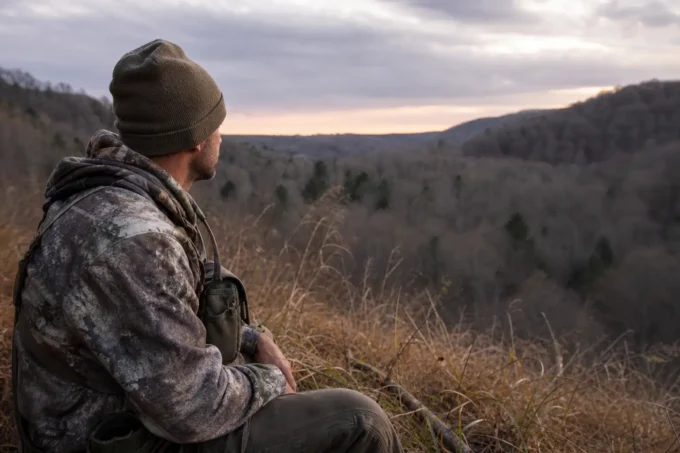
The buck was maybe ninety pounds, and he was running away from me, and I shot him anyway. That is the sentence I have been trying to make peace with for six years, and I will tell you the rest of it straight, because dressing it up would be a different kind of lie.
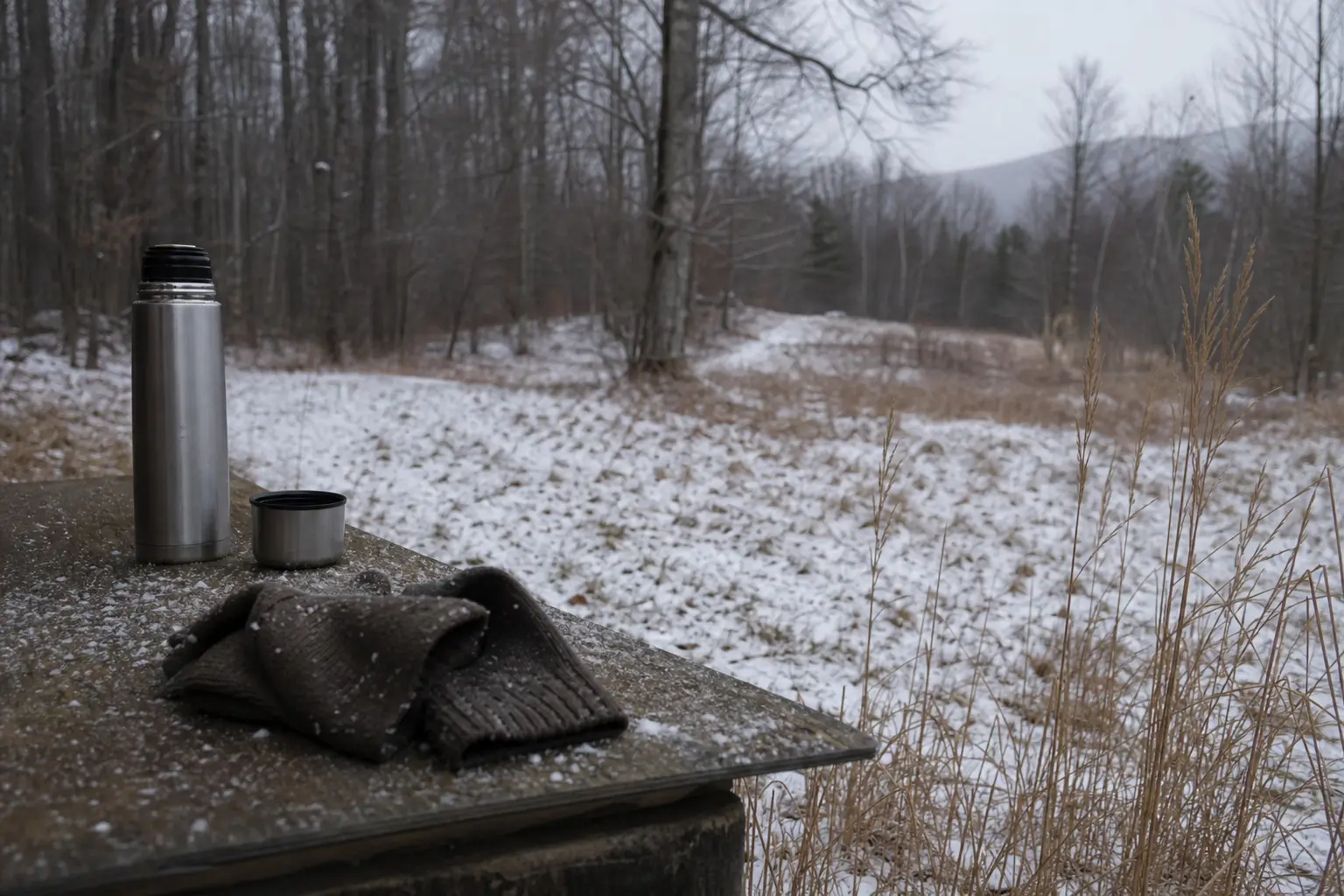
It was the last afternoon of the rifle season. I had hunted eleven days that year, and I had seen exactly one buck, a decent eight point, and I had not gotten a shot at him because I was cold drinking coffee out of a thermos when he walked through the clearing like he already knew the season was ending. So by the last day I was carrying around a thing that had stopped being hunting and turned into a grudge. I had a tag in my pocket and I was going to fill it, and I did not care much what came walking by. That was the first mistake, and it was a big one, and I made it before I even left the truck.
He stepped out of a thicket about thirty minutes before legal shooting light ended, a little fork-horn, and I knew he was small the second I put the glass on him. A yearling, maybe two years old, body the size of a big dog with antlers on. A couple years before that I would have let him walk on the principle that you do not shoot the first thing that shows up just because it showed up. But a grudge is not a principle. A grudge is a reason you invent after the fact to make a lazy decision sound like a plan. I told myself he was a cull, that he would never get bigger, that somebody else would just shoot him if I did not. I said it out loud, even, sitting there in the ladder stand like the deer could hear me and would be convinced.
The shot was a running shot, quartering away through brush, and I took it because the light was going and I was mad. I hit him far back. I knew it the moment the gun went off and he folded and then got up again, and I sat there with my gut doing a slow drop while he made it into the thick stuff and out of sight. There is a sound you make when you know you have messed up a deer, and it is not a word. It is just air leaving you.
The Walk In Was Fine. The Walk Back Out Was the Problem.
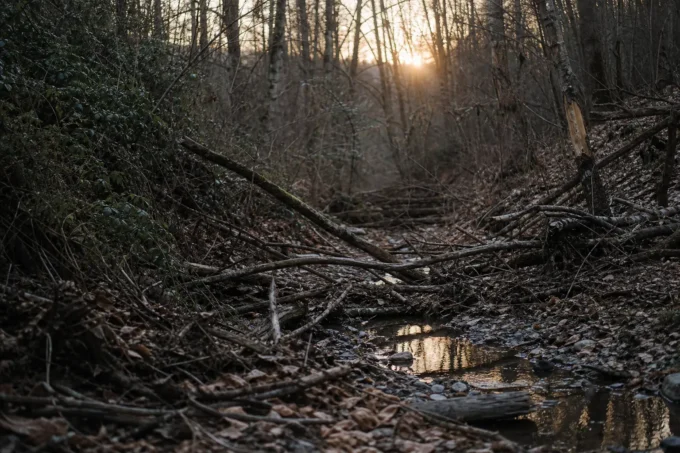
I found him forty minutes later, down in a creek bottom that took me through blackberry and deadfall and a slope so slick with leaf rot I went down twice and cussed both times. He was done when I got there, which is the only decent thing in this whole story, and I knelt next to him and felt the weight of what I had done settle onto my chest like cold water in the lungs. A gut shot, in the last light, on an animal too small to have mattered, because I was mad at an eight point that had not waited for me to finish my coffee.
Here is the other thing I had not planned, because a man running on a grudge does not plan. He was ninety pounds, and I was on foot, and the truck was just under a mile away through the nastiest ground on the whole property, and it was getting dark, and I was alone. A real hunter thinks about recovery before he ever touches the trigger. A real hunter looks at a little buck and asks himself, could I get him out clean, and is he worth the walk, and do I have the time and the light and the help. I asked myself none of that. I just shot, and then I stood there with a knife and no headlamp and no drag rope and the temperature barely below forty, and I started making more mistakes in the dark because it turns out one bad decision is a door and the rest of them just walk in behind you.
Forty Degrees and No Plan
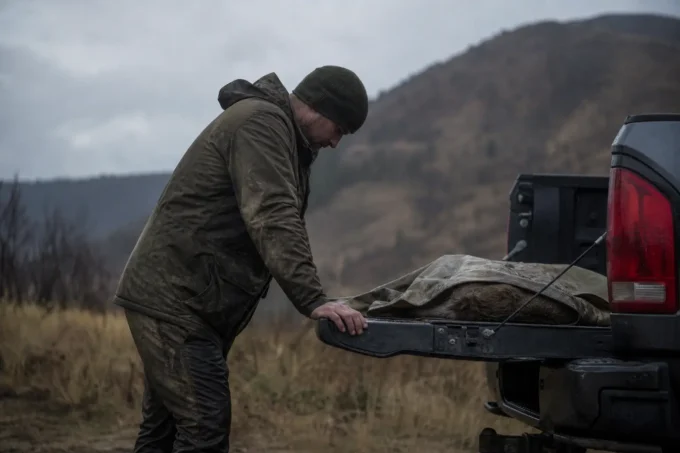
I gutted him by feel with a knife that needed sharpening, and I will not pretend I did a clean job of it. I was hurrying, and my hands were shaking from the cold and from the shame of the thing, and I nicked the gut trying to work blind, and then I dragged him the wrong way for two hundred yards and had to turn around. It took me three hours to get him to the truck. By the time I had him field dressed and mostly out of the low ground, I was soaked through with sweat and creek water and my own blood where a branch had taken a slice out of my forearm, and the meat was warm and dirty and I knew, standing there leaning on the tailgate, that I had wasted more of that little deer than I had saved.
When I got him home and hung him and started working, the truth of it was worse than I wanted to admit even to myself. The hindquarters were salvageable. The backstraps I fought for and kept and they were fine, because a backstrap is hard to ruin if the deer is not gut shot. But the gut smell had gotten into the tenderloins and the flanks and a good chunk of the front shoulders, and I stood at the table cutting away usable meat and tossing it into a bag for the coyotes, and I kept a running total in my head of how much of this animal I had turned into garbage because I shot a running fork-horn at last light with no plan and no help and no business doing it.
I have thrown away a deer before, in the bad old years, and I told myself then that it was normal, that everybody loses a little meat. This was different. This was not losing a little meat to a sloppy job. This was me taking an animal I had no right to take, the way I took it, and then standing in my garage watching most of him go to a coyote pile, and knowing every ounce of it was on me and nobody else.
What I Actually Learned, Six Years Late
Conservation gets talked about like it is a set of rules you follow, a tag you buy, a limit you respect. Those things matter, but they are the easy part. The part that took me six years to understand is that conservation is mostly the decisions you make in the last thirty minutes of the day, when you are tired and cold and your ego is doing the talking. A man does not waste a deer because he is a bad person. He wastes a deer because he is tired, or mad, or a little too attached to filling a tag so he does not have to tell his buddies he got skunked again. That is the whole of it, and it is not a complicated truth, but it took a ninety pound fork-horn and a three hour drag through the blackberries to drive it into my thick skull.
I do not take running shots anymore. I do not shoot anything on the last day unless I would shoot it on the first day, because a deer is worth the same on the last day of the season that it was worth on the first, and the only thing that changed was me. I ask the recovery question before the shot, every time, out loud, like a checklist I stole from a smarter man than me. Could I get him out clean? Do I have the light? Do I have the help, or the drag, or the time? If any of those answers is no, I let him walk, and I go home empty, and I am fine with it, because an empty tag feels a lot lighter than a garbage bag full of meat you ruined.
That little buck taught me more than any big one ever has, and I wish to God he had not had to. If you take one thing from this, take the recovery question. Ask it before you shoot, not after you are standing in the dark. Because the worst thing you can waste in the woods is not a bullet or a tag or an evening. It is the animal, and he does not get to walk away from your bad decisions the way you do.