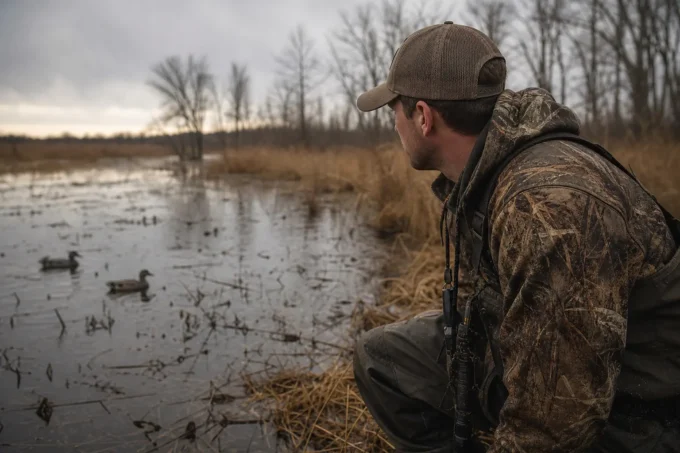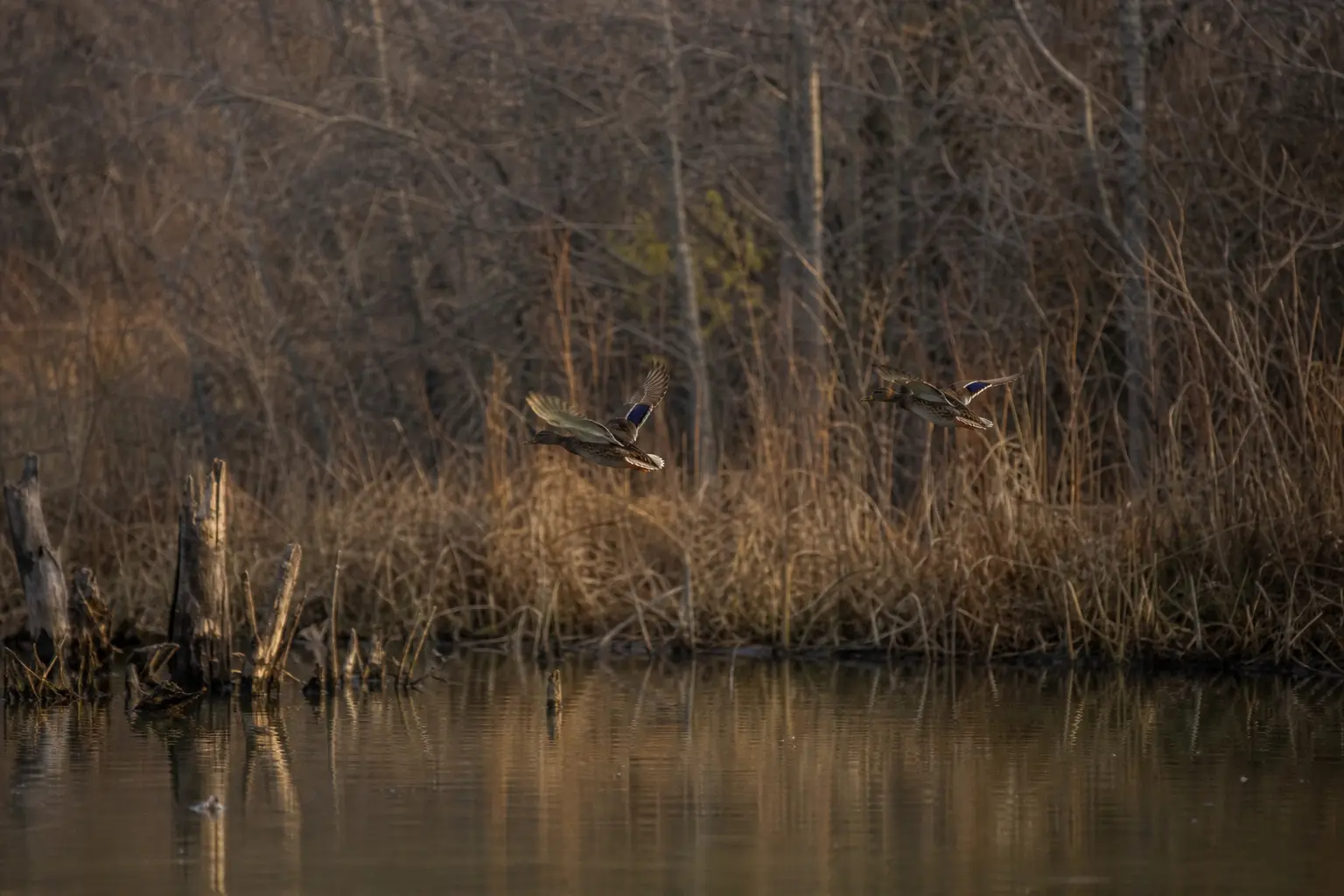
The first duck I ever shot clean dropped straight out of the sky and hit the water with a sound you could hear from the blind, a kind of flat smack, and I remember thinking the whole thing had been easy. I was twenty-three, it was the second weekend of the season, and my buddy Travis had been pestering me for a year to come out to his family’s timber hole, and I had finally said yes because his texts had started to sound less like an invitation and more like a man who was worried I was afraid of the cold. I was not afraid of the cold. I was afraid I would look stupid with a shotgun I had never patterned, which is a fair thing to be afraid of, and I should have listened to that fear instead of swallowing it.
The bird I hit clean was a mallard drake, and it was clean by accident, because I had not aimed at him so much as at the whole flock, and the flock had done the work for me by crossing at twenty-five yards instead of the forty-five I told myself they were at, and I dropped one out of pure, dumb luck. Travis said “nice shot” in the tone of a man who knew it was not a nice shot but did not want to ruin my first morning. I stood there with my ears ringing and felt like I had arrived at the thing I had been missing, and I strung that bird on a piece of orange cord I had bought at a gas station, and I did not think about the two birds I had shot before him, the ones I had knocked down and watched sail on a broken wing behind the far treeline, because in my head they had not counted.
The Birds I Did Not Count
Here is the thing nobody explains to you when you are twenty-three and holding a new shotgun, and if they do explain it you are too amped up to hear it. A bird does not have to fall dead at your feet to be dead. A bird you fold up and watch glide a hundred yards into the brush and disappear is a bird you killed. It is not a miss. It is not “close.” It is a dead duck that you left in the woods for the possums and the coyotes and the soft, patient rot, and if you are honest with yourself, you know it the second the bird stops pumping his wings and coasts, and you just do not want to count him because counting him means you are closer to done than you wanted to be.
That first morning I knocked down three birds in the first hour. One died in the decoys. Two sailed off, one only a few feet past the edge of the hole, close enough that a dog or a man willing to get wet would have found him in five minutes, and I let both of them go because I was young and stupid and because the limit was six, and six felt like a number I had a right to, and I did not want two of them eaten up by wounded birds I could pretend never existed. Travis took one of the cripples later, wading chest deep in water that was forty-five degrees, and came back with a hen with a shattered wing and finished her with a quick twist, and he set her down next to my mallard and looked at me for a second, and then he said “that one counts toward yours, you know.”
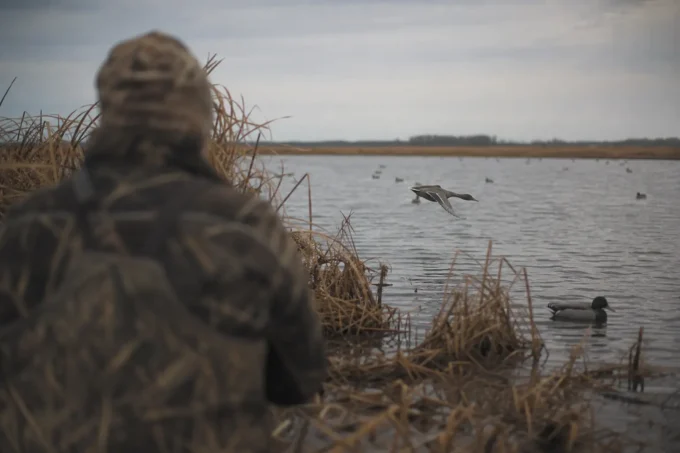
I laughed. That is the part I still think about, and I mean it. He told me the most honest thing about waterfowl hunting a man can tell you, and I laughed, because I thought he was busting my chops, because I had decided somewhere in the back of my head that the rule was about what you carried out and not about what you put down. And Travis, who is not a man who argues with anybody about anything, just looked out at the decoys and let it sit there between us, that one sentence, “that one counts,” hanging in the cold air like the smoke off his breath, and I shot a fourth duck twenty minutes later and I did not even watch to see if it went down clean.
The Evening I Actually Learned It
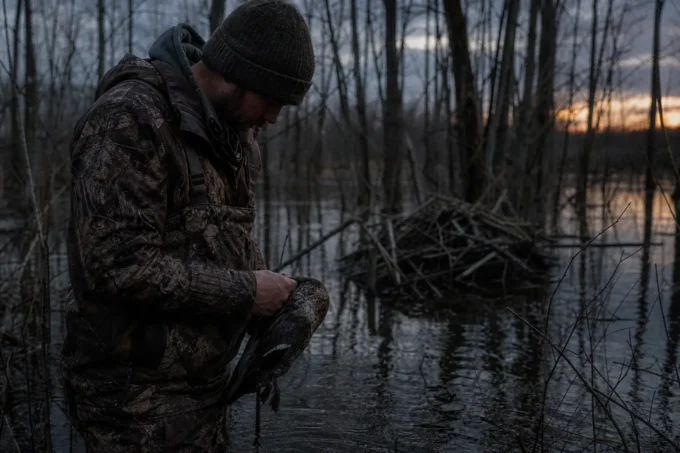
It took two more seasons for the lesson to land, and it landed on a day in late November when the weather had turned ugly and the birds were moving fast and everything I had been doing wrong all along showed up in one afternoon. I shot at a high crossing pair and clipped a drake, and he went down behind me in thick, flooded timber, maybe two hundred yards back, and I marked the spot by a beaver house and told myself I would go get him after the next pass, and then the next pass came and I shot again and another bird sailed off broken, and then the light went gray and started to die and I was standing there with two dead birds on my string and two more out there somewhere with lead in them and cold settling into my boots, and the math finally did itself in front of me.
Four birds. Four dead birds, two of them still out in the timber where I had put them, and my limit was six, and I had told myself all afternoon I was fine because I only had two on the string. But a limit is not a thing you pick up off the ground. A limit is a number of dead birds that have your name on them, whether you found the body or not, and if you do not count the ones you could not find, you are not obeying the law so much as pretending the law is about your convenience. I stood in that cold timber until dark looking for the first cripple, wading through water over my knees with my headlamp dead because I had not bothered to change the batteries, and I found him eventually curled up under a log, half frozen, and I finished him and stood there holding him and feeling something I did not have a name for, and it was not pride.
What “Conserve” Actually Means
People who do not hunt think conservation is just a word printed on a license or a thing you donate to at a banquet, and I will admit that for a long time I thought the same thing, that it was the money from the stamps and the little pits in the swamp and that was the whole of it. But conservation is not the check you write. It is the discipline of not taking more than you can honestly account for, and it is the refusal to pretend a bird you left in the brush does not count because counting it would be inconvenient, and it is the hundred quiet decisions you make when nobody is watching and no game warden is going to walk up and check your string.
A wounded bird has no bag limit in the fevered part of your head, because it vanished, and vanished things are easy to forget. But a real hunter counts the vanished ones, because that is the whole difference between a man who respects the resource and a man who is just burning through it. I have walked a lot of cripples in the years since that cold afternoon, and I have changed the batteries in my headlamp before every single hunt, and I have stopped taking the long shot at the tail end of a flock when the light is going, because I learned that the bird you cannot see land is the bird you are most likely to cheat yourself out of, and cheating yourself is the same as cheating everybody who comes after you.
Travis knew it at twenty-three and I did not, and it took me until twenty-six and a frozen drake under a log to catch up. That is not a brag. It is the opposite of one. I was the kid who laughed when somebody told him the truth, and if you are reading this and you are twenty-three and you just knocked a bird down and watched it sail behind the treeline and you are trying to decide whether it counts, I will save you the three seasons and the cold boots: it counts. Go get him. That is the entire job, and there is no shortcut through it.