
I spent two years turning a hunting rifle into a math problem. I mean that literally. I had a dope card laminated in my pack, a ballistic app on my phone, a rangefinder I trusted more than my own eyes, and a scope with more numbers on the reticle than my mortgage statement. I could tell you the drop of my load at 400, 500, 600 yards in my sleep. I could bore a stranger to death at any cookout talking about dialing elevation and mils versus MOA. I was, by my own honest accounting, the most prepared man in the county to shoot a piece of steel from a hilltop.
And then a buck walked out at a range I will be too embarrassed to name in a minute, and I stood there frozen like a man trying to remember a phone number, and I let him walk with a whole season of rehearsing rattling around in my skull doing absolutely nothing.
The Build That Ate My Brain
It started innocent enough. My old rifle was a beat-up .30-06 with a scope I bought used from a guy in a parking lot. It worked. It killed deer. But I got on the internet, the way you do, and I started reading about people shooting at 1,000 yards and talking about first focal plane reticles and zero stops and tracking tests, and somewhere in there I convinced myself that my parking lot scope was the reason I was not a better hunter.
So I saved up. I bought the good glass, the kind that costs more than my first truck. I bought a rail and rings and a torque wrench and I read the manual twice, which I have never done for anything in my life, including the instructions on my own blood pressure pills. I leveled the scope with a plumb line and a bubble level and I think at one point I whispered at it. I spent a weekend at the range zeroing and re-zeroing, shooting groups so tight I took pictures of them and showed my wife, who said “that’s nice honey” in the voice she uses for the cat.
I made a dope card and laminated it. I bought a kestrel and a wind flag. I learned to read mirage off of asphalt. I had, in short, built the whole machine around the shot, and I had never once thought about what all that machine was going to feel like when there was a live animal in front of it and my heart was doing something my breath could not catch up to.

Opening Morning, and the Number I Could Not Find
Opening day came. I was up at four, which for me is a personality change, not a schedule. I hiked in to a ridge I had scouted all summer, and I got set up on a log with my pack in front of me like a desk, because that is how you shoot now, apparently, from behind a desk. The sun came up. My coffee went cold. I sat there checking my phone for the weather, checking the wind, re-checking the dope card like it was going to change its mind about something.
At about seven thirty the buck stepped out of the timber. He was a good one, a solid eight point, the kind of deer that makes you stop breathing for an entirely honest reason that has nothing to do with your gear. And he was close. I did not need the rangefinder to know he was close, but I raised it anyway, because that is the reflex I had built in myself over two years. I am not going to tell you the exact number. It was under 200 yards. It might have been under 150. A man with iron sights and a half-decent rest could have made that shot with his eyes half shut.
The rangefinder gave me a number. Then my brain, the one I had spent two years teaching to be clever, went to work doing something clever. I started thinking about where my zero was, and whether I was dialed, and what the holdover would be, and whether the wind was doing what the flag said, and what the app said versus what the card said, and at some point I realized I was holding my rifle still not even on the animal, staring at the reticle like it was going to show me a multiple choice test.
At a hundred and change yards, with a rifle I had shot hundreds of times, I could not remember if I should just hold on him or dial. That is the whole truth. I had so much information loaded into my head that it stacked up like a traffic jam and nothing was moving. The buck took one step, then another, and then he was gone back into the trees, and I sat there on my log with a laminated card in my lap and a rifle I could shoot better than I could think.

The Failure Was Not the Rifle
I tell this story now because nobody on the long range forums tells you the downside of building a shooting system instead of being a shooter. The rifle was perfect. The glass was perfect. The dope was, I am fairly sure, correct down to the last click. None of that mattered, because I had trained myself to run a checklist, and when the animal showed up there was no time for the checklist, and instead of falling back on the simple thing I had been doing since I was twelve, I froze in the gap between the two.
The old men who hunt with a 30-30 and no scope are not better shots than I am on paper. I can out-shoot most of them at a bench all day. What they have that I lost is a single thought. Buck, sights, squeeze. That is the whole program, and it leaves no room for a laminated card to get in the way, because there is no card. There is just the shot, the same shot every time, and their body knows it the way my body knows how to back a trailer out of a driveway.
You would think I would have thrown the scope in the river. I did not. That scope is the best piece of gear I own, and on a steel plate at 600 yards it does things that make me grin like an idiot. The problem was never the gear. The problem was that I let the gear sit in the front of my mind where the shot was supposed to live.
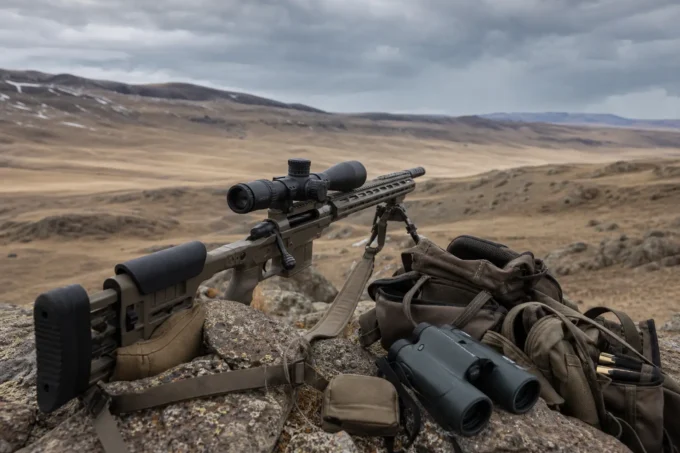
What I Changed, Once I Stopped Being Dumb
The fix was embarrassingly simple, and I will lay it out because someone out there is doing the exact same thing I did and does not know it yet.
First, I stopped shooting from the bench like a scientist and started shooting from the positions I actually hunt from, off a log, off my knees, off my pack, standing with a tree to lean on. The bench had taught me that the rifle could shoot. It had not taught me to shoot it. Those are two different things, and I had two years of the first and almost none of the second.
Second, I picked one close range that is my “just kill it” range, anything inside 300 yards, and I drilled myself until at that distance there is no thinking at all. Point on him, squeeze. I still have the dope card for the far stuff, but the card stays in the pack, and the rifle comes up clear of everything except the animal.
Third, I made myself take the shot. I set a little rule in my own head, the kind you make after you fail so hard the memory of it keeps you warm at night. If a deer is inside 300 yards and broadside, I do not run a checklist. I do not raise a rangefinder. I shoot. The whole two-year machine is there as a backup, but the first move is the old one, the one my grandpa would have recognized.
The scope is a tool. It is a very good tool, and I am glad I own it, and at long range it has made me dramatically worse at lying to myself about how far I can shoot. But it taught me something I did not expect, and it cost me the best buck I have ever had in front of me to learn it. The goal is to be a good shot at the distances that actually matter, most of the time, and a good shot there means empty hands and a single clean thought. Buck, sights, squeeze. Everything else is just expensive wallpaper.