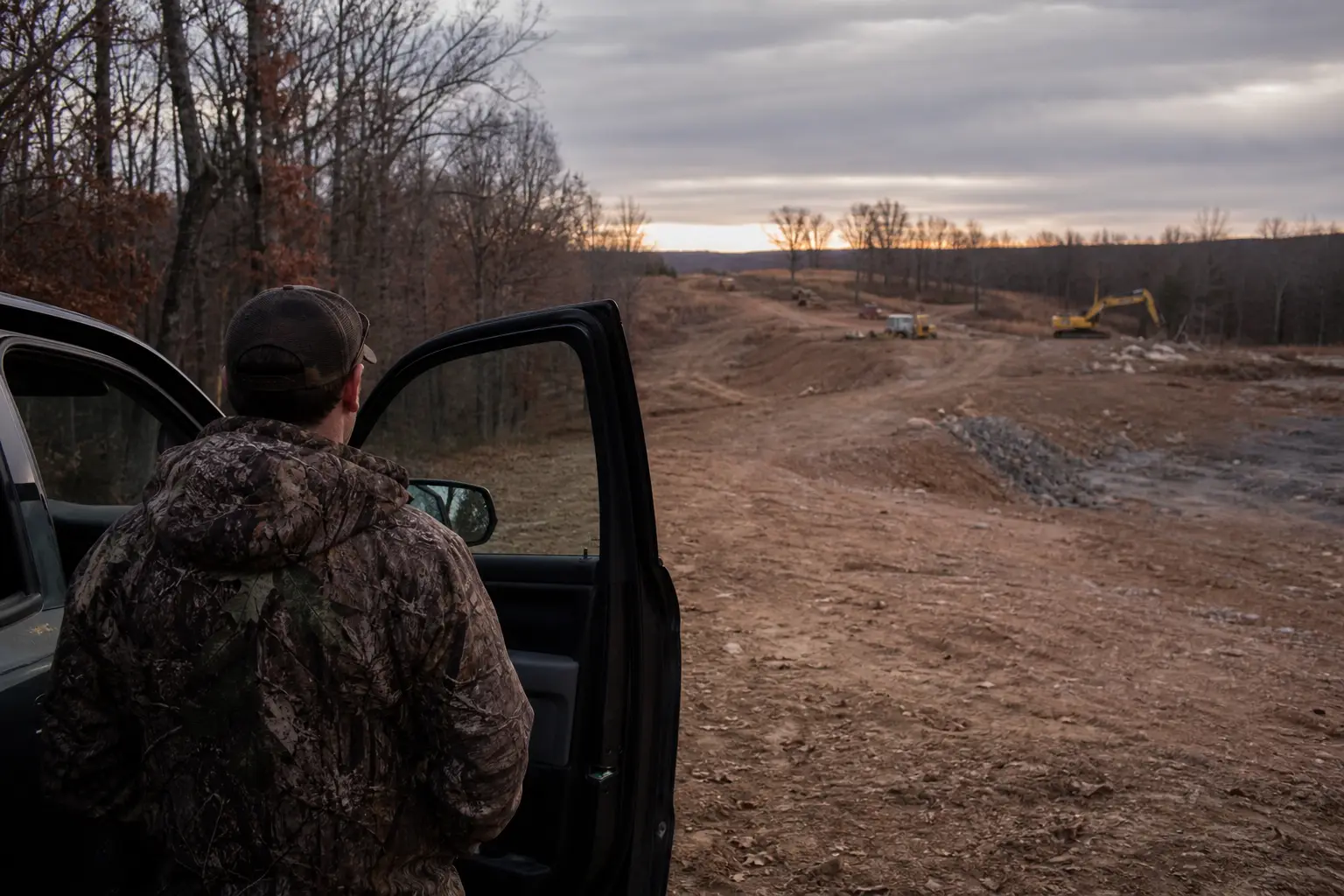
I used to think “conservation” was something other people did. Biologists. Government agencies. Guys with wildlife management degrees and clipboards. I bought my hunting license, followed the regs, and figured that was enough. I was a responsible hunter. That’s conservation, right?
Kind of. But also no.
The Day It Stopped Being Abstract
Three years ago, I showed up at a piece of public land I’d been hunting for almost a decade. It wasn’t anything special — maybe 400 acres of mixed hardwoods, a creek running through the middle, a couple of old logging roads. I’d killed three deer there. I knew every oak flat, every bedding area, every spot where you could catch a buck cruising a ridge at first light.
There was a gate across the road that had never been there before. A brand new gate, with a brand new NO TRESPASSING sign, and fresh tracks from construction vehicles on the other side.
I sat in my truck for a long time. Called a buddy who knew the area. Turns out the timber company that owned the land had sold it to a developer. Two hundred acres of it, anyway — the rest was already subdivided into lots. By the following spring, there were cul-de-sacs and driveways where I’d once found a shed antler from a buck I’d been watching for three seasons.
I didn’t have any claim to that land. It was private property. The owners had every right to sell it. But I’d hunted it for years and never once thought about who owned it or what would happen if they decided to cash out. I’d taken from it — venison, memories, sunrises — and given nothing back.
What “Giving Back” Actually Means
After I lost that spot, I got curious. I started looking into how public land actually works. How it gets funded. How it gets protected. And what I found was uncomfortable.
Most hunters know that our license fees and excise taxes on gear fund conservation through the Pittman-Robertson Act. That’s the “I already do my part” argument. And it’s true — we do contribute. But license sales have been declining for decades. The money isn’t keeping up. And there’s a difference between paying a fee because you have to and actually showing up.
I’m not saying every hunter needs to become an activist. I’m saying that if you care about having places to hunt in twenty years, you need to do something more than buy a license. Because buying a license didn’t stop that timber company from selling my hunting spot to a developer. It won’t stop the next one either.
The Small Things That Add Up
Here’s what I do now. It’s not heroic. It’s not Instagram-worthy. But it’s more than I was doing before.
- I joined a conservation organization. Not just a check at the end of the year — I actually go to the local chapter meetings. Backcountry Hunters & Anglers, in my case. There’s probably a chapter near you. They do habitat work, they fight for public land access, and they’re full of people who care about the same things you do.
- I show up for habitat work days. Planting trees. Clearing invasive species. Maintaining trails. It’s manual labor, usually on a Saturday, and you get dirty. But it’s the most direct way to improve the land you hunt.
- I comment on public land management proposals. When the Forest Service or BLM opens a management plan for public comment, they actually read those comments. Most people don’t bother. A few hundred hunters writing in can shift policy. It’s boring. Do it anyway.
- I take someone new hunting every year. Not because I’m generous. Because the future of hunting depends on there being hunters. If we don’t recruit, we disappear — and so does the funding, the political capital, and the public tolerance for what we do.
It’s Not Someone Else’s Job
I used to think conservation was something the state wildlife agency handled. They stock the fish, they manage the herds, they enforce the regs. And they do — but they can’t stop a developer from buying up the last piece of huntable ground in your county. They can’t force Congress to fund public land. They can’t create new hunters out of thin air.
That part is on us. The people who use the land. The people who say they care about it. If we don’t protect it, nobody else will — because nobody else needs it the way we do.