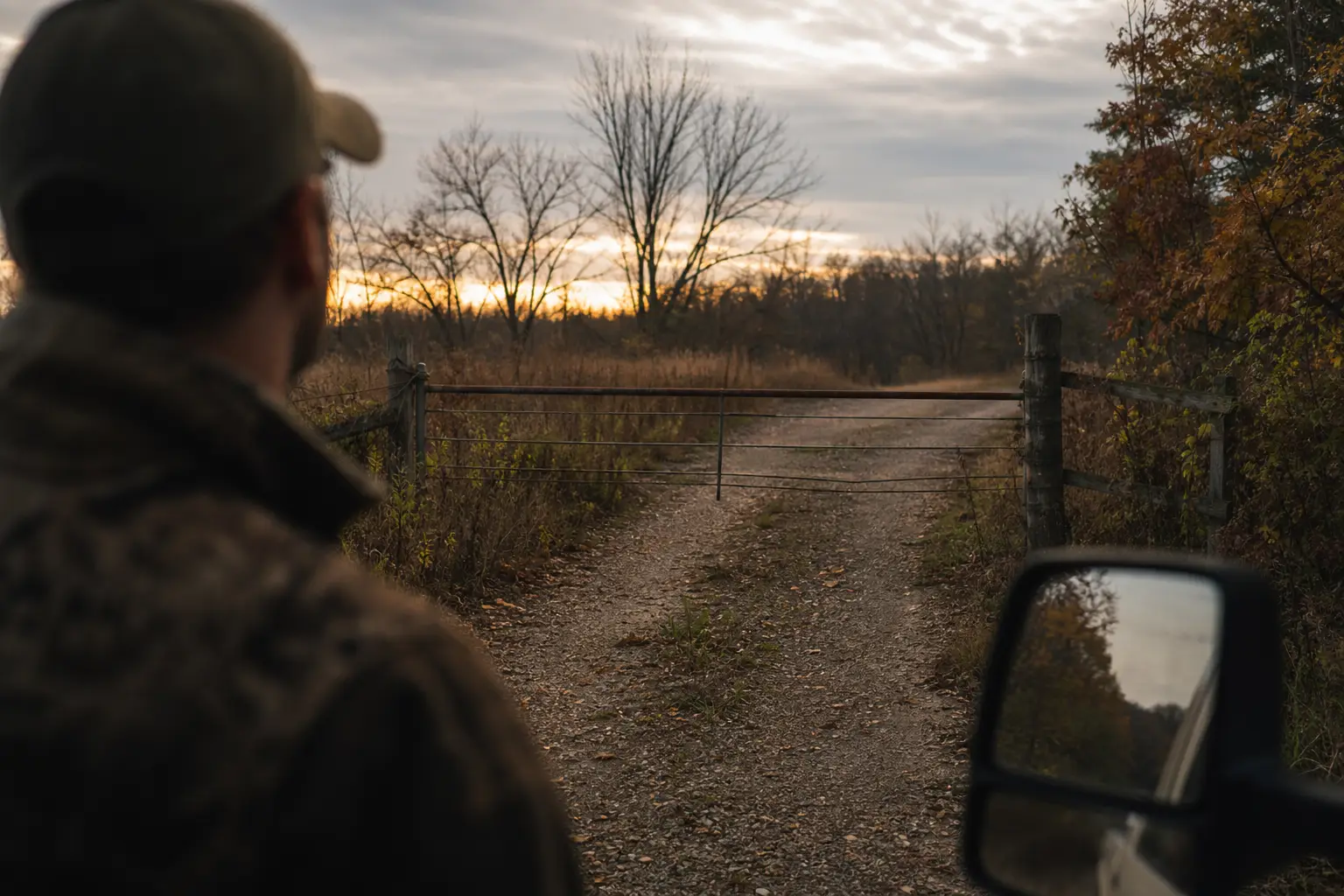
I pulled into the gravel lot at 5 a.m. and there it was. A For Sale sign. On the gate. The gate to the 300-acre piece of public-adjacent private land I’d been hunting for seven years.
The sign said “Zoned for Development.” Seven years of pre-dawn coffee in this exact spot, boots crunching the same gravel, that one fallen oak I always used as a marker — and now, probably condos.
I sat in the truck for a while. The season hadn’t started yet, so I couldn’t even hunt it. I just sat there like an idiot staring at a piece of paper stapled to a wooden post, feeling like I’d lost something I didn’t own.
It’s Happening Everywhere
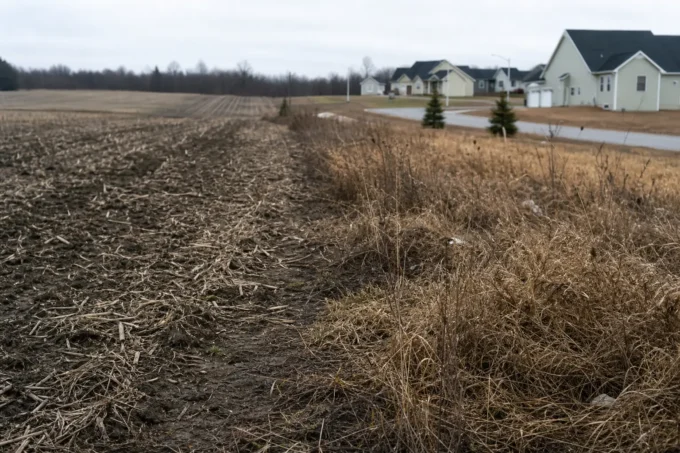
I’m not gonna pretend this is unique. Almost every hunter I know has a story like this. The farm they grew up hunting — sold. The public land they drove three hours to reach — subdivided. The creek bottom that held deer every November — now a cul-de-sac called “Whitetail Estates,” which should be a crime against language if nothing else.
According to the U.S. Fish and Wildlife Service, we lose about 6,000 acres of open space every day in this country. That’s not a rounding error. That’s one of your hunting spots disappearing every 24 hours, somewhere, for someone.
The Part Nobody Likes to Admit
For a long time I thought conservation was someone else’s job. Ducks Unlimited does it. RMEF. The state DNR. Guys with more money and bigger hats. I bought my license, I followed the regs, I picked up my hulls. That felt like enough.
It’s not enough. It was never enough. And I knew it — I just didn’t want to do the uncomfortable thing about it.
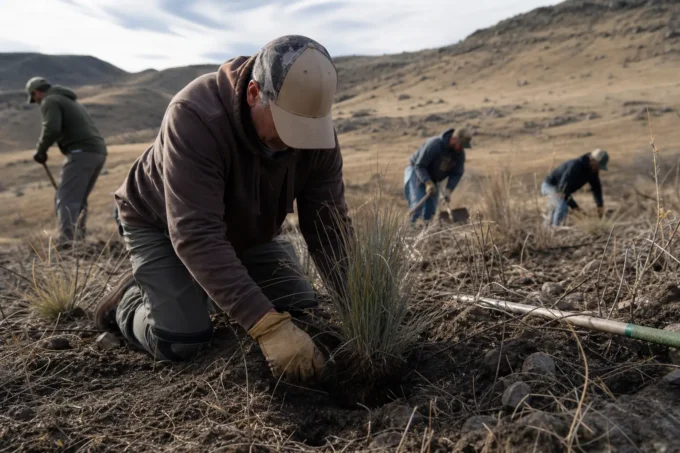
Conservation isn’t just writing a check to a big organization once a year. It’s showing up to a public meeting when your county is rezoning. It’s joining a local conservation club, even if the average age is 65 and they spend half the meeting arguing about the coffee budget. It’s volunteering for habitat work — planting native grasses, clearing invasive brush, building water guzzlers. Unsexy work. Dirt work. The kind that doesn’t get posted on Instagram.
What I Actually Did About It
After that For Sale sign, I made three changes:
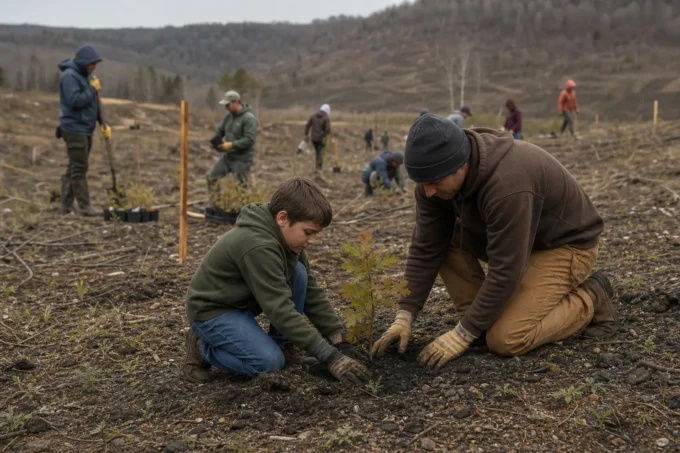
- I joined the local sportsmen’s club. Cost me 40 bucks a year. They run habitat improvement days. The first one I went to, we planted 200 oak seedlings on a reclaimed strip mine. Half of them probably died. But the half that lived will be producing acorns when my kid is old enough to hunt.
- I started showing up to county land-use meetings. Not every one. Just the ones about land near where I hunt. Most meetings are boring. But when a developer wants to rezone, being one of the five people in the room who speaks up actually matters. Bureaucrats count heads.
- I bought a habitat stamp. State-dependent, but most have one. It’s usually $5-10 on top of your license. Takes thirty seconds at checkout. The money goes directly to public land access and improvement. Every hunter should do this. Every single one.
The Uncomfortable Truth
Hunters are the largest conservation funding source in North America. Through licenses, tags, excise taxes on gear — we pay for the bulk of habitat protection and wildlife management. But funding isn’t enough. If we don’t defend access, all the money in Pittman-Robertson doesn’t matter. You can’t hunt a condo complex.
That For Sale sign was a wake-up call I wish I’d gotten ten years earlier. I found another spot eventually. It’s smaller, further away, and I have to share it with more people. But I show up to the meetings now. I plant trees I might never hunt under. And I don’t pretend conservation is someone else’s job.
Because nobody else is coming to save your spot. It’s you or the bulldozer.