There’s a particular look people give you when you tell them you ate a squirrel. It’s somewhere between “are you serious” and “are you okay.” I’ve seen it a hundred times. And I get it — squirrels are rats with better PR. They live in trees instead of alleys, but the family resemblance is there.
I used to think the same thing. Then I actually tried one.
The First One Tasted Like Regret
My first squirrel was a disaster. I was maybe twenty-two, had a .22 and an afternoon to kill, and I shot a big gray in a hickory grove behind my apartment. I had no idea what I was doing. I skinned it badly — tore the hide, got hair all over the meat. Then I threw it in a pan with some oil and cooked it like a chicken breast.
It was tough as a boot. Dry. Gamey in the worst way. I chewed one bite for about three minutes, swallowed, and threw the rest in the trash. Told myself squirrel wasn’t worth eating. Case closed.
I was wrong. I just cooked it terribly.
What Actually Works
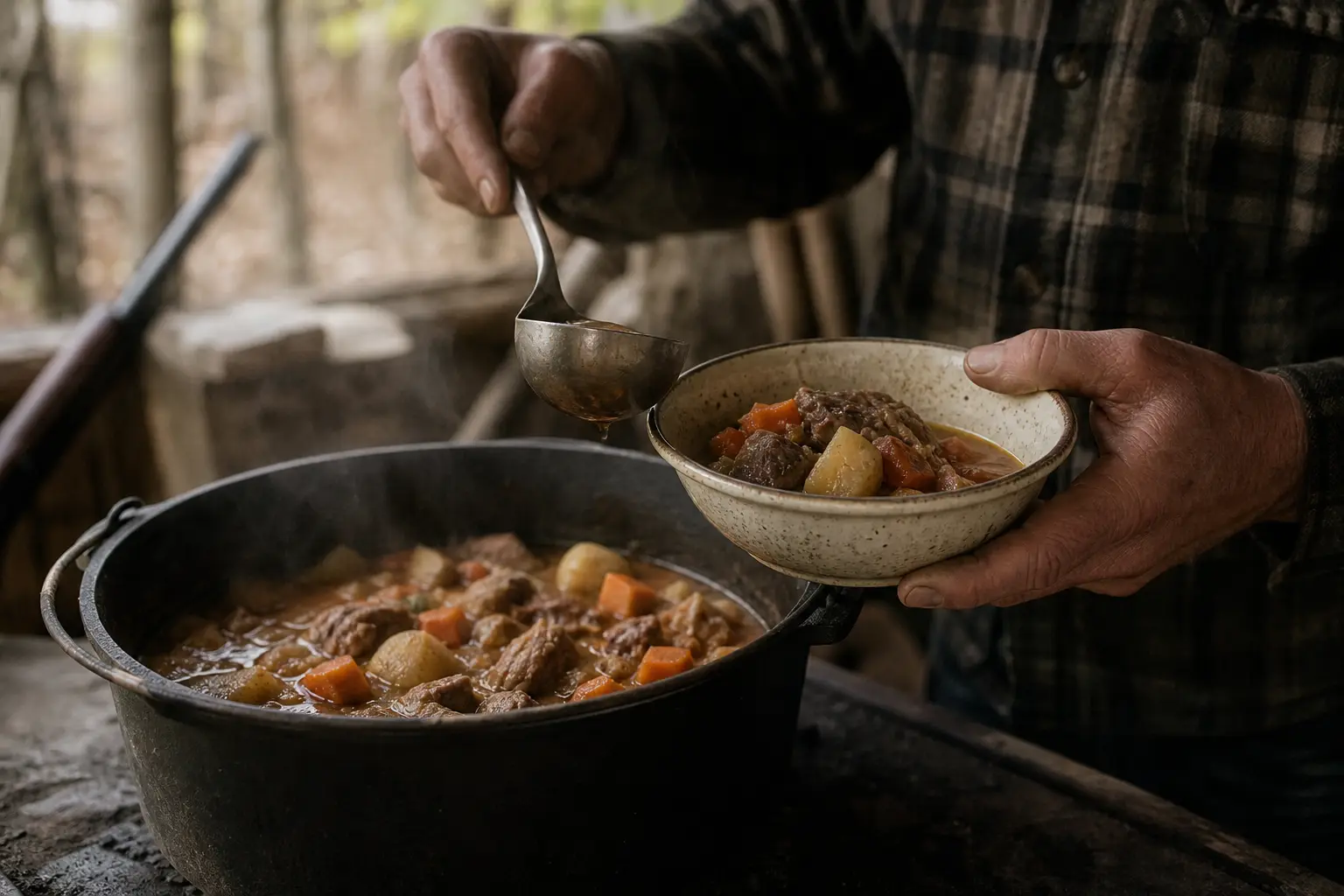
Years later, an old-timer at deer camp showed me how it’s actually done. He brought a pot of squirrel stew that had been simmering all day and it was… incredible. Rich, dark meat that fell off the bone. No gaminess. Just deep, savory flavor that reminded me of dark-meat chicken but better.
Here’s the secret: you can’t cook squirrel like chicken. Squirrel is lean, muscular, and works all day. It needs low and slow. Braising, stewing, pressure cooking — anything that gives connective tissue time to break down. Fry it hot and fast, and you’re chewing on a leather glove.
The old guy’s recipe was simple: brown the squirrel pieces in bacon fat, throw them in a pot with onions, garlic, carrots, potatoes, and a can of tomatoes, cover with stock, and let it simmer for four hours. That’s it. Salt, pepper, maybe some thyme. Nothing fancy.
Why I Hunt Squirrels Now
I’m not out there every weekend chasing bushy-tails, but squirrel hunting has become part of my season for three reasons.
First, it’s the best entry point for new hunters. Squirrel season is long, bag limits are generous, and you don’t need anything more than a .22 and a place to walk. It’s low-pressure hunting that teaches you to move quietly, spot movement in the canopy, and make accurate shots on small targets. Skills that transfer directly to big game.
Second, it’s genuinely sustainable. Squirrels are everywhere. They reproduce fast. The population isn’t threatened. Eating one is about as ethical as wild protein gets.
Third — and this is the one nobody talks about — squirrel meat is good when you cook it right. Recipe matters more than species. A properly braised squirrel will beat a badly cooked venison backstrap every time.
The Real Test
Last fall, I made a pot of squirrel and dumplings for my wife. She’s not a hunter. She grew up in the suburbs eating chicken breasts from Costco. I didn’t tell her what was in it until she asked for seconds.
“This is really good,” she said. “What kind of chicken is this?”
I told her. She paused for about three seconds, looked at her bowl, and said “…huh.” Then she kept eating.
That’s the bar. If someone who’s never hunted will eat it and ask for more, it’s not weird food. It’s just food. Good food, from the woods, that you got yourself.