I don’t talk about this hunt much. Not because it’s embarrassing — although some of it is — but because it’s the one that taught me something I wasn’t ready to learn.
It was the last day of rifle season, 2019. I’d been hunting hard for nine days straight. I’d seen deer — does, spikes, a small six-point I passed on day two and immediately regretted — but nothing I wanted to tag. By the final morning, I was tired. My feet hurt. My back hurt from sleeping on a cot in a wall tent. I was out of clean socks and out of optimism.
I almost slept in.
The Walk I Didn’t Want to Take
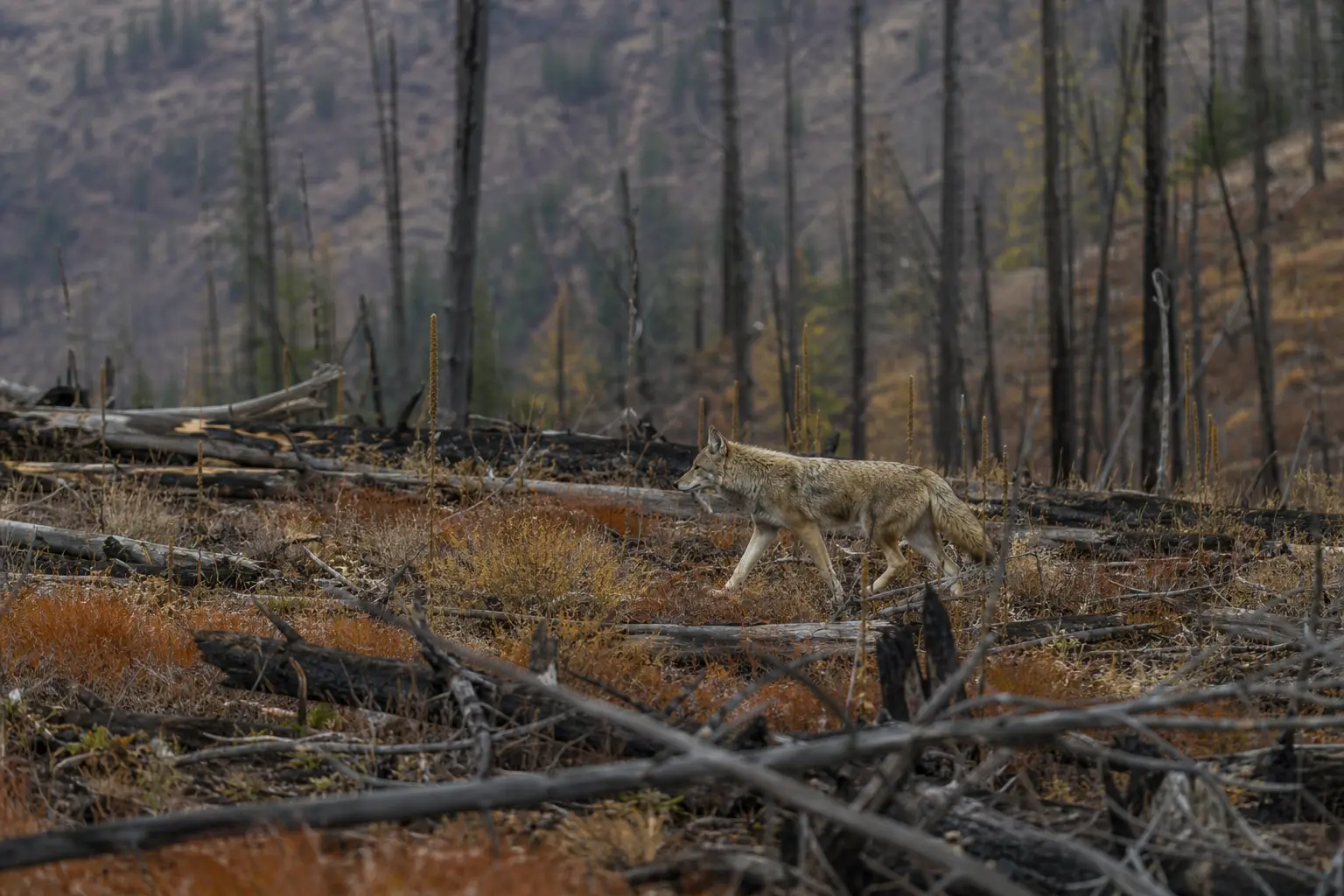
But it was the last day. You don’t sleep in on the last day. So I dragged myself out of the sleeping bag at 4:30, made coffee, and decided to hunt a spot I’d been ignoring all week. It was a long walk — about two miles up a steep ridge, through a burn scar from a fire five years back. Ugly country. No trails. Deadfall everywhere. The kind of place you hunt when you’ve run out of better ideas.
I got there just as the sky was turning gray. Found a downed log with a decent view of a small clearing, sat down, and waited.
Nothing happened for two hours. I was cold. I was bored. I was thinking about the drive home and whether I’d stop at the diner in town for a burger. I had mentally checked out. The rifle was across my lap, but my brain was already in the truck.
Movement
Something flickered at the edge of the clearing. Not a deer. Smaller. Lower to the ground. A coyote, moving through the deadfall, nose down, working a scent trail. He was maybe sixty yards out, crossing left to right.
I raised the rifle. Found him in the scope. Crosshairs on his shoulder.
And then I didn’t shoot.
Not because I couldn’t. Not because the shot was bad — sixty yards, broadside, dead rest on the log. It was as easy a shot as I’d had all season. The safety came off. My finger went to the trigger.
And something in my head just said: nah.
I Don’t Have a Good Explanation
I’ve thought about that moment a lot. I don’t have anything against coyotes. I’ve shot them before. They’re predators, they hammer fawns in the spring, and in most places they need management. I had no ethical objection. The pelt would’ve been nice. It was perfectly legal.
But I didn’t want to.
I watched him cross the clearing, stop once to look back over his shoulder — not at me, just checking his backtrail — and then disappear into the timber. The whole thing lasted maybe thirty seconds. I sat there with the safety off for another minute after he was gone, then put it back on and lowered the rifle.
The rest of the morning was quiet. I walked out at noon, got in the truck, drove home. My wife asked if I got anything. “Nope,” I said. “Good season though.” And I meant it.
What Changed
That hunt changed how I think about success in the field. For years, I measured my seasons in tags filled. If I didn’t kill something, the season was a failure. That’s a young hunter’s mindset — and I don’t mean young in age, I mean young in experience. You hunt to prove something. To yourself, to your buddies, to whoever.
But that morning, I had a perfect opportunity and I chose not to take it. And instead of feeling defeated, I felt… peaceful. Like I’d finally figured out that hunting isn’t a competition. It’s not a video game where you need to max out your stats. It’s just being out there, paying attention, and sometimes pulling the trigger when it feels right.
I’ve told this story to exactly three people. Two of them didn’t get it. The third one — an old bowhunter I used to work with — just nodded and said, “You’re growing up.”
Maybe that’s what it was. The hunt where I grew up.