You Wake to the Smell of Fat Going Rancid, and a Hide That Will Stiffen Into Wood by Morning
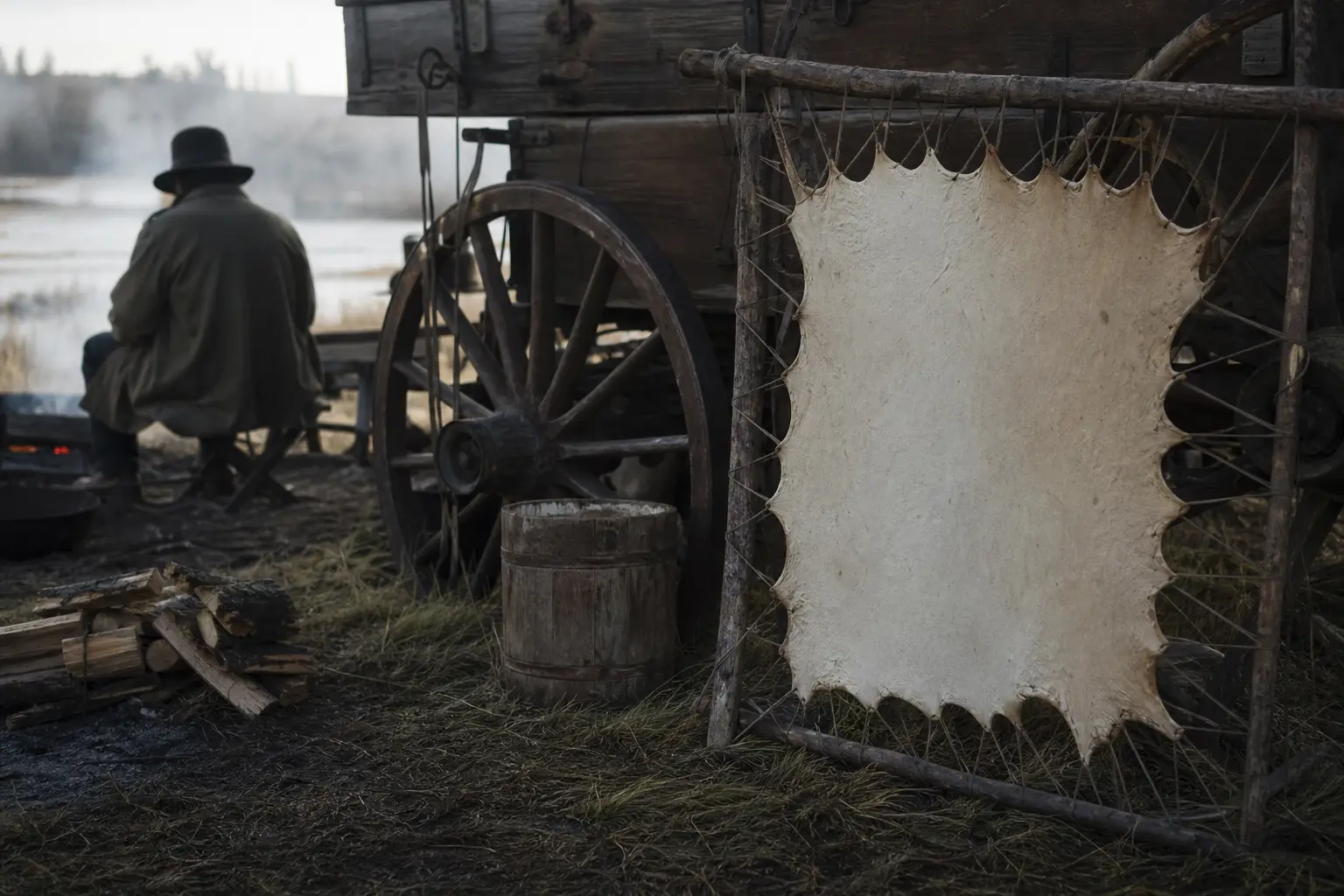
Late October, 1846. Somewhere along the Platte, three days east of Fort Laramie. You wake because the smell has shifted under the wagon. The cow hides you skinned three days back are turning. The one you stretched green on a willow frame is already pulling tight at the edges, drying into something like a plank that would stand up in a corner on its own. The brain bucket sits behind the wheel, and the cold has not kept it. Flies found it before dawn. You can hear them working.
Your brother-in-law Sam is already up, poking the fire. He does not look at the hides. He looks at his coffee tin, which is empty, and then at you, and the look says the same thing it said yesterday and the day before: nobody else in this party is going to turn that stiff, stinking slab into something a man can wear. Hannah is down at the water with the smallest boy, beating clothes against a rock. Morrison is propped against a wheel, watching a fly crawl up the spokes, and he smells worse than the hides, and he is going to die of the flux the way the last three did.
You do not want to end up like Morrison. You also do not want to sleep another night in a coat that is coming apart at the armpits, or go into the mountains with the cold behind you and a woman and a boy whose mittens are rags. The raw hide on the frame is worth nothing stiff. You have to turn it, and you have to do it now, before the sun climbs and the hide dries past saving.

Why a Raw Hide Is a Liability, Not a Blanket
A green hide does one of two things. Dry it too fast, stretched in the wind, and it becomes rawhide: hard as a shingle, good for lashing a wagon tongue and nothing you would wrap a child in. Leave it damp in a pile and the grain rots, the hair slips out in your hand, and the whole thing smells like the inside of a grave. You are walking the narrow line between those two, and there is no ice, no tannery, no six dollars to hand a tanner at St. Louis. There is only the animal’s own brain in a bucket and a long afternoon of work you did not plan on doing.
The truth you learn that first morning is quiet and mean: you skin a cow for the meat, and the hide is the payment you did not want. You cannot eat it, you cannot leave it, and if you carry it wet across two hundred miles it ruins everything it touches. So you turn it. Brain tanning is the only way a party this far from a settlement gets soft leather, and it is ugly, exacting work that leaves your hands cracked for a week.
The Work, Step by Step
First, scrape. You have already separated the skin from the cow, but the flesh side still carries membrane, fat, bits of meat long gone grey. You lash the hide hair-down over a smooth cottonwood pole, take the dull side of your drawknife, and peel. This is the slow part. The fat comes off in curls that you throw to the dog, who eats them and then throws them back up an hour later while everyone watches. The hair side stays whole; you are not ready to grain it yet. By mid-morning your palms are raw where the handle rides, and a tendon in your shoulder has begun to sing.
Next, the grain. You flip the hide and work the hair and the thin outer membrane both together, down the grain, with the knife held almost flat. If your angle is wrong you cut through, and a cut in a hide this size means a hole in every garment it ever makes. Sam comes over and shows you a spot you missed, then remembers he has to watch the coffee that is not there. The boy sneaks close and wants to know why the cow has two skins. You tell him to go check on Morrison, mostly so he will leave.
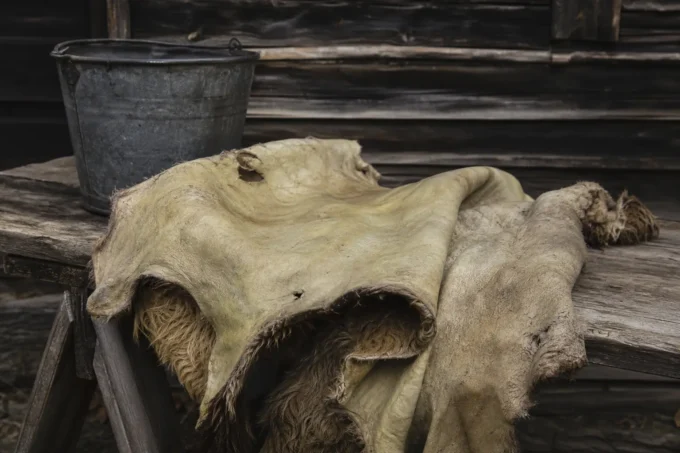
Now the brain. You take the bucket you have been dreading, the grey-pink mash that was a cow’s head, and you work it with your hands until it is smooth and thin like wash water. One brain dresses one hide of its own size; the old trappers said so, and now you believe it, because you spread it over the flesh side and the hide drinks it and asks for more. You fold the hide, flesh side in, and leave it to soak. The smell of iron and sweet rot hangs on you the rest of the day, and Hannah will not sit downwind of you at supper.
Last, you soften. You take the hide out, wring it, and as it dries you pull it, again and again, over the edge of the pole, over a rope, over your own knee until your hands go numb. This is the step that makes the difference between leather and board, and it is the step you will be too tired to do properly. The hide fights the whole way. By dusk it is soft, mostly, except a streak near the flank that dried stiff while you were wringing the other end, and that streak will now live in your coat forever.

The Small Human Things That Happen While You Work
Hannah says nothing when she comes back with the wet clothes. She looks at the hide on the pole, picks up a corner, flexes it once, and nods, and that one nod means more than anything Sam has said all season. She hangs the clothes and goes to feed the smallest boy, and you think briefly about people back east eating bread with no weevils and sleeping on mattresses, and then you go back to pulling leather with your teeth clamped shut.
Morrison stands up for the first time in two days. He walks to the edge of camp, steadies himself, and pisses into the sage, and then he sits back down without saying anything, and you understand that the man is just marking the day. The dog has eaten the fat and is now lying on its side, groaning, its job apparently done for the year.
What Goes Wrong
The rain comes at dusk, a thin cold slant out of the west, and it falls on the hide you had laid out soft and nearly done. You and Sam scramble to move it under the wagon, but the hide is big and wet and it takes the two of you and the boy to fold it up without dragging it through the mud, and by the time it is safe the near corner has picked up a pound of grit and the soft spot has started to stiffen again in the cold. A third of it will need reworking tomorrow, and you will do it, because there is no other answer. You just want to sit down. You sit down, and you can still smell the brain on your own skin, and you fall asleep halfway into the first plate of beans.
What Was Real
Brain tanning, or brain dressing, is one of the oldest leather-working methods on the continent, used by Indigenous peoples across North America long before European contact and adopted by trappers and emigrants who lived too far from a commercial tannery to pay for bark tanning. The core chemistry is genuine: an animal’s brain contains lecithin and other emulsifying oils, and roughly one brain from a comparable-sized animal dresses one hide. The soft, smoke-able leather it produces is often called buckskin, from the white-tailed and mule deer hides most commonly worked this way.
The process follows the steps described here. Fleshing removes meat, fat, and membrane from the flesh side. Graining strips the hair and the outer grain membrane. The brain is mashed into a slurry, massaged into the hide, and left to soak, and then the hide is pulled and worked as it dries to keep the fibers separated; the softening stage, done over a beam, cable, or rope, is what keeps the leather soft and supple instead of hardening into rawhide. Smoking the finished hide over a smudge of rotten or punk wood is a final step that darkens it, adds durability, and helps keep it soft after repeated wetting.
On the Oregon Trail, roughly 1841 to 1869, somewhere around 400,000 people crossed, and for most of them a good hide was real value, not decoration. Buffalo hides were heavy and often left as robes or bedding, deer and elk hides became clothing and moccasins, and small game like rabbits were sometimes cut for their skins to line gloves and patch gear. Emigrant accounts describe tanning hides by creeks in the evening and sewing them into moccasins when shoes gave out, because on a road measured in months and hundreds of miles, a coat or a pair of soles you could make yourself at camp was worth more than the money you no longer had.
The word buckskin itself is old American frontier English, and it carried a second meaning by the nineteenth century: a frontiersman, a “buck,” named for the dressed deerskin leggings and clothing such men wore as a kind of uniform of the woods.