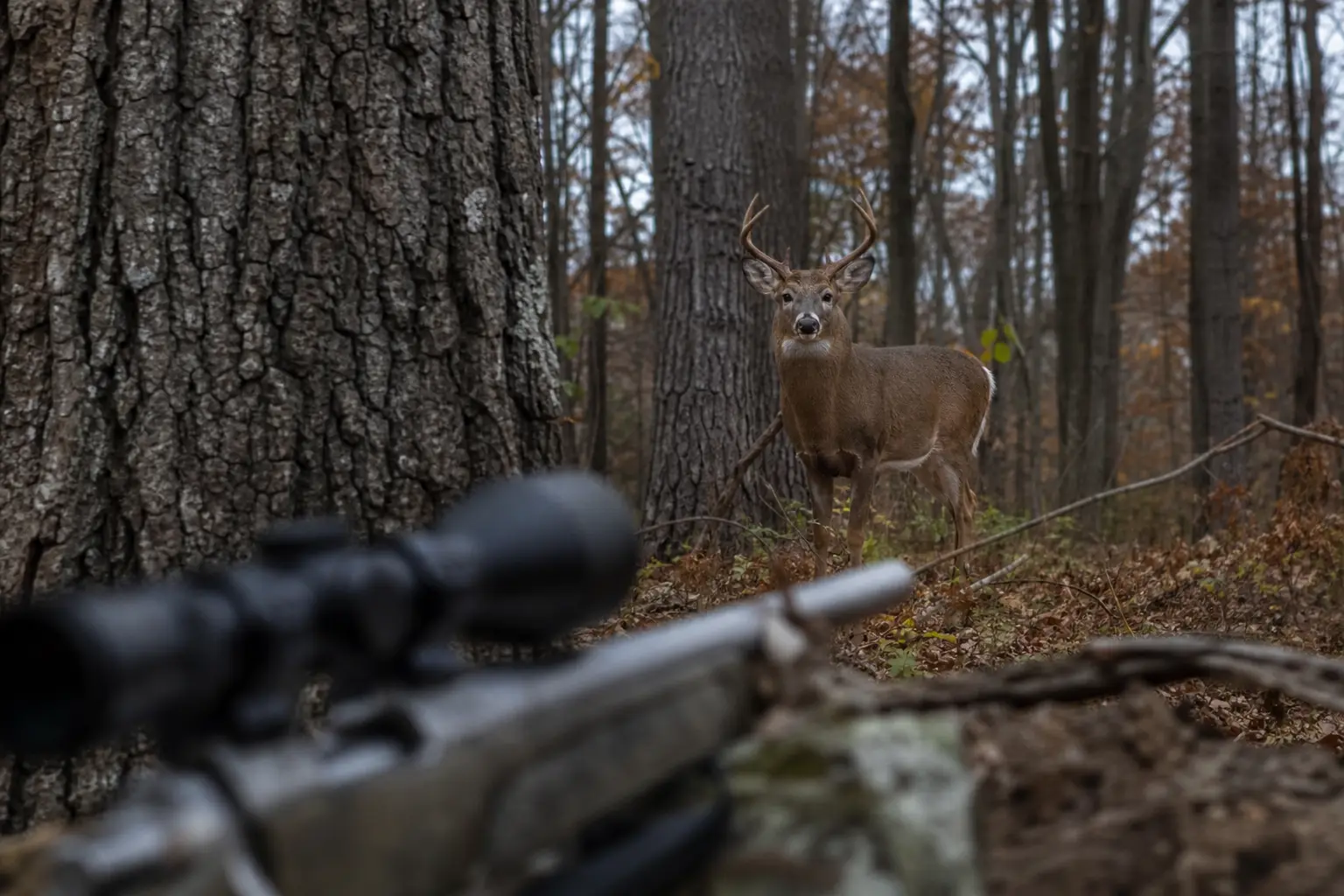
The buck was at forty yards and I did everything right except the one thing that mattered. I had practiced on paper for three weekends straight. I had a rangefinder that talked to me. I had a rifle that cost more than every tool in my dad’s garage put together. And I had a scope that was not pointing where I thought it was pointing. The buck stood broadside, breathing steam into the November air, and I watched my bullet hit a pine tree two feet above his back. He did not run. He looked up like I had just insulted him, then walked off into the brush with the slow, unhurried strut of an animal that knew I was never a threat in the first place.
That was the morning I learned that a scope is not a promise. It is a guess that works until you bump it against a truck door, a tree stand, or the ground because you were too proud to carry the rifle with two hands like an adult. I had knocked it and I did not check it, because checking would have meant admitting the rifle case was just a very expensive pillow. Instead I climbed into my stand before first light, cold and confident and wrong, and spent the next three hours being the best hunter in the county in my own head.
The Week It Started to Slip
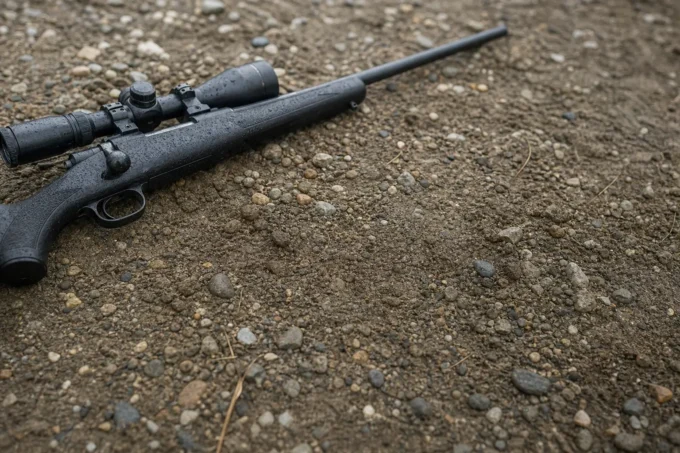
A week before opener, I did something I am honestly embarrassed to type. I pulled my rifle out of the case to admire it, like a man opening a jewelry box, and I dropped the muzzle straight onto a gravel driveway. It did not fall far. It did not fall hard. The scope did not even crack. It landed on the objective bell, took a slow bounce, and lay there in the dirt while I stood over it saying words I would not repeat to my own mother.
Here is where a real hunter stops. A real hunter walks back into the house, pulls the bolt, numbers out a six-inch group at fifty yards and starts there. I did none of that. I wiped the bell with my sleeve, looked through it at a fence post two hundred yards away, saw the post, and decided that was good enough. The post was visible. The post existed. In my head, a visible post meant a zeroed rifle, because I wanted very much for that to be true and I am lazy in the exact way that ruins hunts.
Everyone tells you to check your zero before season. Everyone says it like it is a chore, like flossing. I heard it and nodded and did not do it, because the schedule was tight and the wind was perfect and checking a zero is the boring part that does not put antlers on a joke for the group chat. So I skipped the boring part. The buck at forty yards was the thing that finally showed me the boring part was the only part that ever mattered.
The Shot That Wasn’t
Opening morning, I had the picture you dream about. Thick frost on the field, a scrape line I had found in October, and a buck that walked out at forty yards broadside like he was posing for a magazine I would never get to write. My heart did the thing where it hammers, and my hands did the thing where they shake, and I forgot every single thing about breathing because breathing is what your body does automatically and hunting is what your body does badly when you are excited and under-trained.
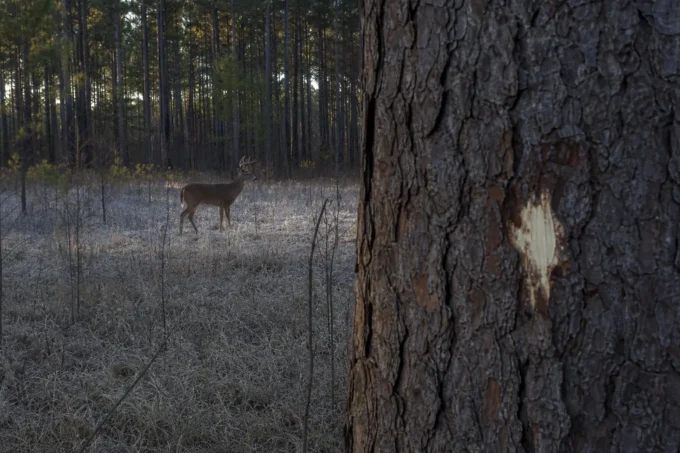
I settled the crosshair behind his shoulder. I took a breath, let half of it out, and squeezed. The rifle went off. The buck did not drop. The buck did not even flinch. For one long, stupid second, I thought I had missed because my hands were shaking, and I started rehearsing the excuse I would tell everyone back at camp, the one about the twig and the gust of wind and the cold barrel. Then I saw the fresh white scar on the pine tree, two feet above the living deer, and the excuse died in my mouth like a lie that knows it is late.
Two feet high at forty yards is not a shaking hand. That is a scope knocked clean off its zero, and I knew it in my bones even while I tried to talk myself out of it. I sat there with the empty stand creaking, watching the buck stroll off, and I finally did the boring math I had refused to do all week. The drop off the tailgate. The muzzle in the gravel. The one clean look through the glass at a fence post that proved exactly nothing. I had spent three weekends shooting paper and one careless morning erasing all of it with a bounce I was too proud to double-check.
What Real Zero Check Actually Means
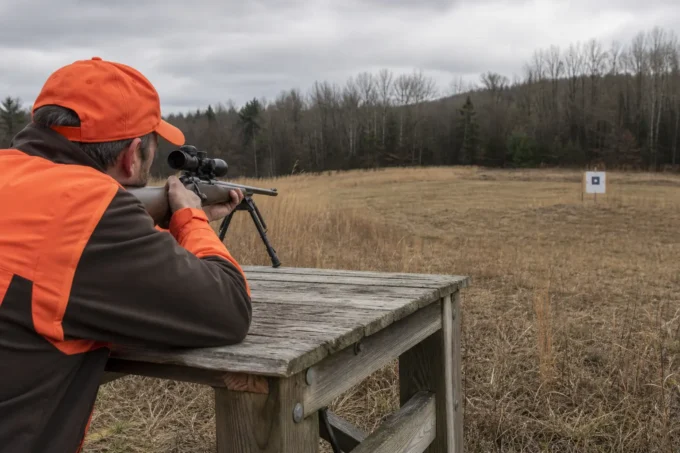
After I climbed down with my ego dragging behind me, I drove to the range still wearing my orange, and I put a target at fifty yards. The first group printed four inches high and a good two inches right. Four inches high at fifty yards does not just miss a pine tree over a buck’s back. It explains every clean miss you are going to have this season if you do not stop and fix it now. It took me six rounds and twenty minutes to walk it back to center, and the whole time I kept thinking about how twenty minutes and a cardboard box would have saved me the best shot I will get all year.
The honest part is that checking zero is not complicated, which is exactly why I skipped it. Two or three rounds at fifty. Confirm at a hundred if you shoot that far. Let the barrel cool between groups like you mean it. Counterintuitively, the busier you are, and the more you have spent on gear, and the more you have talked about hunting before the season starts, the more likely you are to skip the boring thing. The boring thing does not care how expensive your glass is. The boring thing will end your season while you are busy being impressive.
And here is the kicker nobody advertises: your zero can be off on Monday and back on by Friday and you will never know because you are not shooting enough to catch it. A scope does not just drift. It gets knocked, then it settles, then it gets knocked again. The only way to know is to shoot. Not look through it. Not trust the post you can see at two hundred yards. Shoot. Fire the damn round and see where it lands. Everything else is theater, and I spent an entire week starring in that theater until a forty-yard buck walked out and closed the curtain on me.
The Buck That Never Came Back
I did not see that buck again for the rest of the season. I hunted the same stand, the same scrape line, the same frost-covered field, and he never once came back to the spot where I vaporized a pine tree two feet over his back. Maybe he moved. Maybe he went nocturnal. Maybe a deer is smart enough to remember the exact sound a rifle makes when it is aimed by a man who does not check his gear. I like to pretend it is not that third one, but deep down I know a whitetail does not need three chances to learn that a particular stand has a clown in it.
The worst part of the whole thing is how avoidable it was, and how clearly I can still see it. I can still see the buck’s breath. I can still see the frozen field. I can still see the exact moment my crosshair was two feet above where it needed to be, and the way the whole universe did not care that I had practice three weekends running. Practice from a bench at a cardboard bullseye in the daylight is not the same as a shot in the cold, at a live animal, with the shakes and the heart hammering. All the bench work in the world does not help if your scope moved and you refused to verify it.
Next season, I am checking zero the boring way, twice, and I am carrying my rifle with two hands like a man who respects what the thing cost. I am done being the guy with the expensive gear and the broken zero and the story about a pine tree. The buck at forty yards taught me in one silent second what three weekends of paper never could: a rifle is only as honest as the last time you actually fired it and looked at the hole. Everything else is just a man in a tree, pointing a guess at the woods, and hoping the deer forgives him.