The Cold Snap That Turns Every Fish Into a Ghost
The first week of October I was a genius. The bass were chasing shad into the shallows, the water was still warm from a long, stupid summer, and I could do no wrong. I caught fish off docks, off points, off a plastic worm I found half-buried in my truck console from two years ago. I stood on the bank and believed, with the full confidence of a man who has never once been humbled by weather, that I had cracked the code to fall fishing forever.
Then the cold snap hit and the code stopped working. No warning, no slow taper. One Tuesday the air went from seventy to forty-five between lunch and dark, the wind swung around out of the north, and by Thursday every fish in a ten-mile radius had apparently unionized and decided to never bite again. I found out the hard way, because I am the kind of man who does not check a forecast before he loads the boat. I check it after, standing in water that feels like it was piped out of a glacier, explaining to nobody in particular that the fish are just moody today.
This is the part of fishing nobody puts on a sticker. The skunk. The blank. The long, cold, honest stretch where you do everything you know and the water gives you back exactly nothing. I have been skunked enough times this fall to have opinions about it, and most of those opinions were wrong for the first two weeks. That is the whole point of this. The skunk will teach you more than the stringer ever will, but only if you stop lying to yourself about why it is happening.
Blaming the Weather While the Weather Was Right
My first excuse was the temperature, which is a very common thing for a grown man to say when the real answer is that he got lazy. The water cooled fast and the fish went sluggish, and I decided this meant the fish were gone. I figured a cold snap scattered them, pushed them to deep water, made them impossible. So I did what every genius does when his favorite trick quits: I threw the same bait harder, in the same spots, and cursed the sky when it did not work.
A buddy of mine, the kind who fishes three times a week whether or not anyone will go with him, set me straight without meaning to. He said the cold snap happened faster than he expected. That is all he said. But it landed in my head and stayed there, because he was not blaming the cold. He was describing it. There is a difference, and I had been missing it for two straight weeks.
The fish did not leave the lake when the water dropped. They changed jobs. A bass that was chasing shad at sunrise in sixty-five-degree water is not going to do that same job at fifty. He is going to sink down a little, hold tighter to cover, and wait. He still eats. He just eats slower, smaller, and closer to home. The cold snap was not hiding the fish from me. I was hiding the fish from myself by refusing to adjust, and then calling the whole season a wash so I would not have to admit I was the one who had gone slack.
Downsizing Is an Insult Until It Is the Only Thing That Works
The advice every old-timer gives you during a fall cold front sounds like an insult at first: slow down and go smaller. You do not want to hear that when you have been throwing a quarter-ounce bait for six weeks and crushing fish on it. You want the fish to respect the bait, not the other way around. You did not drive all the way out here and freeze your knuckles off just to be told the problem is that your lure is too confident.
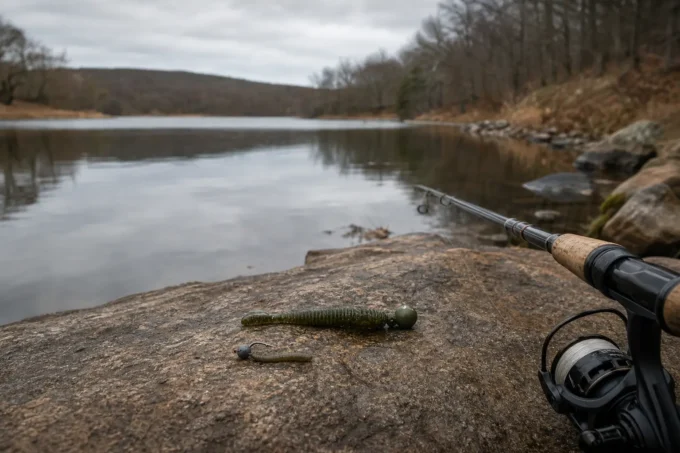
I resisted for exactly as long as my ego could afford, which was about ten days of empty casts. Then I tied on the smallest finesse thing I had, a little ned rig that looked like it belonged in a child’s tackle box, and I made myself fish it at a pace that felt like punishment. Dead slow. Barely moving. Long pauses where I counted out seconds and felt like a fool.
The first thing I learned is that cold water makes you fish slower whether you want to or not, and if you fight it you are not fishing, you are just pacing the bank with a stick. The second thing I learned is that the fish were there the whole time. I had been dragging a fast, flashy bait over the top of fish that were sitting six inches off the bottom, waiting for something slow and dumb enough to drift down to them. They had not gone anywhere. I had just been casting over their heads for two weeks and calling them gone.
The Crappie Opened Late, and They Did Not Send Me an Invite
Somewhere in the third week, I overheard two guys at the ramp talking about crappie. Crappie are starting to turn on, one of them said, and the other nodded like this was news they had both been waiting on. I stood there pretending to fix a rod I did not need to fix, because I realized I had been so locked into bass that I had not even considered the fish that were actually biting.
That is another thing the skunk will do to you if you let it. It narrows you. You get obsessed with breaking the blank the way you used to break it, the fish you always catch, the spot that always works. Meanwhile the lake is doing a dozen other things right under your nose. The crappie were schooling up off structure, the bluegill were still picking if you dropped a tiny jig in the right pocket, the water was full of fish that were not the fish I had decided to catch.
I am not saying you should give up on the fish you love. I am saying the skunk is sometimes just the lake’s way of telling you that your definition of fishing got too small. You decided what a good day looked like before you got out of the truck, and the water was never going to live up to a plan it was not consulted on.
Setting the Drag of My Own Expectations
The turning point for me this fall was not a fish. It was the afternoon I stopped and looked at my own expectations, which had been cranked all the way tight since the first warm week. I had turned one good run of fall bass into a personal guarantee, and then every quiet day after that felt like the lake breaking a promise it never made. That is not a fishing problem. That is a head problem with a rod in its hand.
Once I loosened it, the smallest things started showing up as wins. A single tap on a slow retrieve. One bluegill that saved a two-hour afternoon. The kind of small, cold-water bite you do not even feel most days, just a weight that is there for a second and then gone. It was not a monster, but it was a fish, and it proved something I needed to hear this year: the water never actually went empty. I did.
I still do not love the skunk. Nobody does. But I have stopped treating it like a verdict and started treating it like a teacher who does not grade on a curve. It asks you to slow down, to go smaller, to look at the fish that are actually there, and to set your own ego somewhere below the surface where it cannot get in the way. Do that, and the cold snap stops being the thing that ruined your fall and starts being the thing that taught you to fish it.