The Company of Strangers Who Were All Catching
It started as a good morning, the kind you believe in. Cold enough to keep the mosquitoes honest, warm enough that your fingers stay useful in the first hour. I had the exact rod three different forums told me to buy, the reel that cost more than my first truck payment, and a tackle tray that looked like a mechanic had organized it. I was not worried. Worry is for people who skipped a step, and I had read about every step twice.
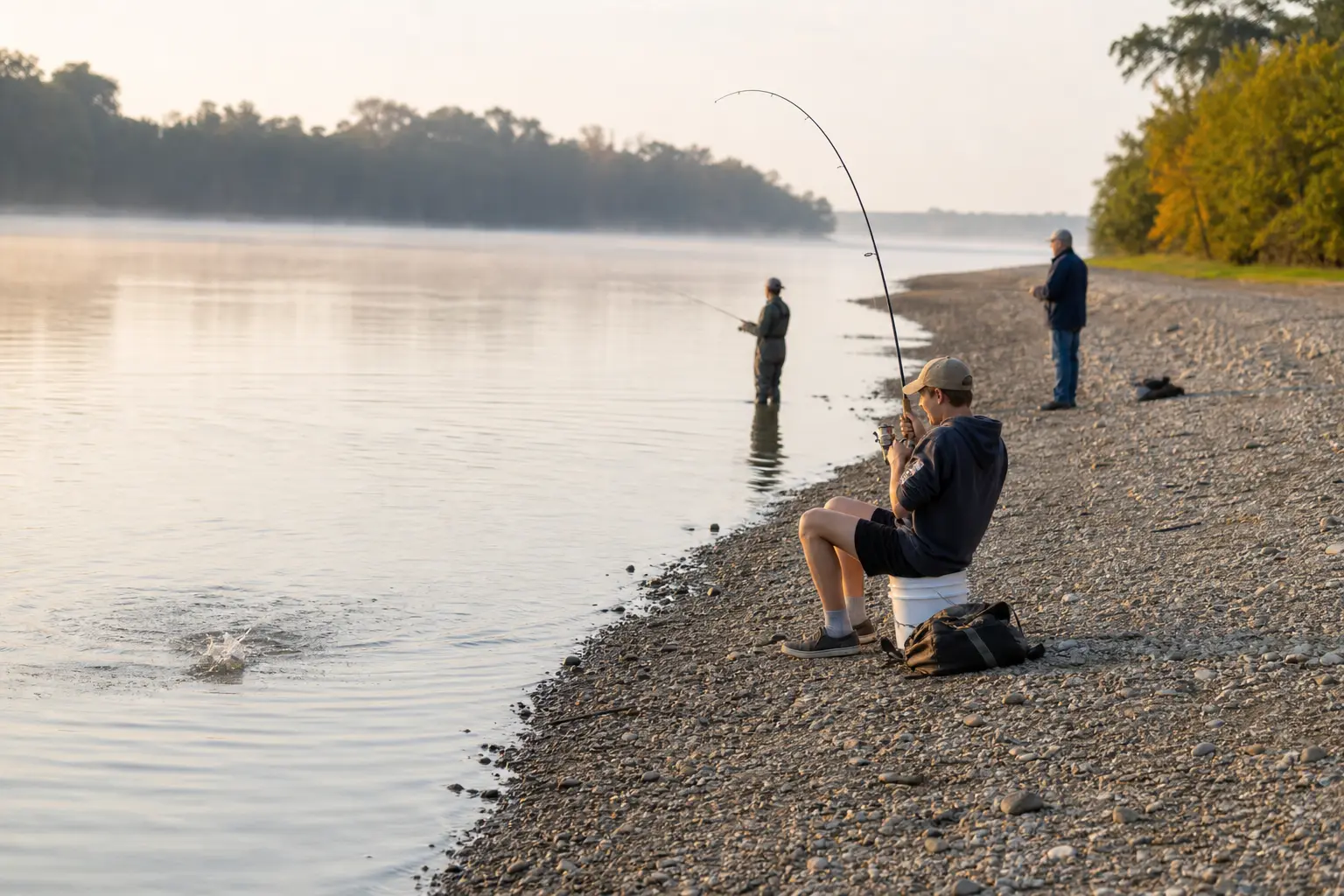
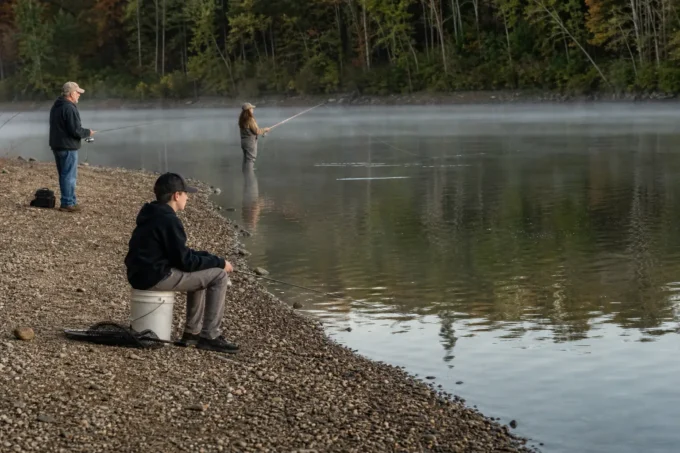
The lake had one good bank, a long gravel shelf where the water dropped off about ten feet out. A man in his sixties stood at the north end with a beat-up spinning rod. A teenager sat on a bucket at the south end with a rod that looked borrowed. A woman in waders worked the middle with a fly rod, casting with the kind of rhythm that made the whole thing look effortless. Within twenty minutes I had watched all three of them land a fish. The old man unhooked a bass and slid it back without even looking up. The teenager whooped. The woman smiled at something under the water and kept casting.
I stood in the middle and watched my line do nothing. It was not a skunk yet. A skunk is earned over hours. This was just the slow, creeping understanding that every other rod on the bank was bending and mine was not.
The Setup Wasn’t Wrong
This was the part I could not get past. I had the good gear. I had braided line that everyone online swore by, a flourocarbon leader tied with a knot I had practiced in my kitchen while the water boiled. I had soft plastic lures in four different colors, each one chosen after watching hours of videos of men catching fish on the exact same lure. When the teenager landed his second fish I walked over to peek at what he was throwing. Same color, close enough to the same weight. A kid in a borrowed setup, catching fish ten feet from a man with a thousand dollars of tackle doing nothing.
I should have recognized the warning. I did not. I told myself the fish were just over on that side. Then I told myself the fish were over on the woman’s side. Then I told myself the fish were everywhere except where I happened to be standing, which is the exact moment a lazy man starts walking instead of thinking.
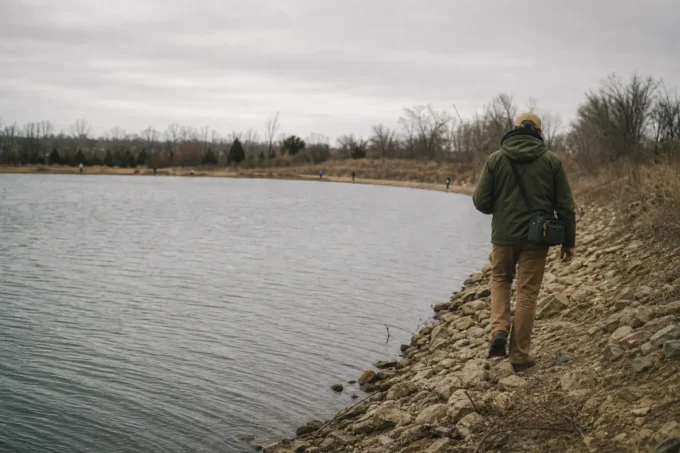
So I moved. I walked down the bank. I tried the north end where the old man had been standing a few minutes before. I tried the south end. I changed lures four times, each swap a small act of faith that the next piece of plastic would be the key that the last four were not. Every time I moved, someone else’s rod bent somewhere I used to be.
The Man on the Bucket
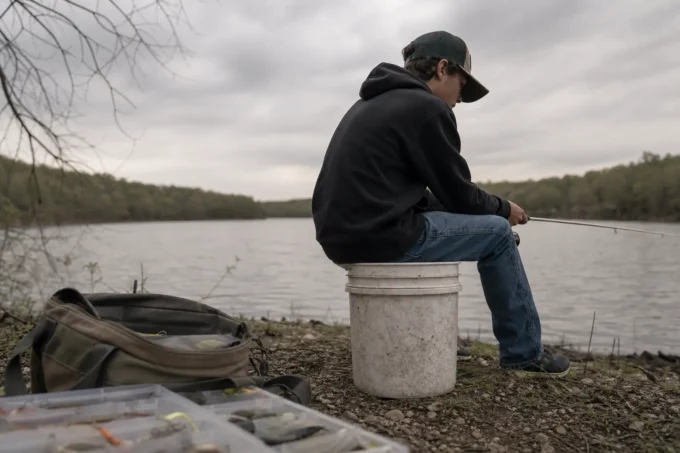
It was the teenager who broke me, though he did not mean to. He came over for a drink of water and saw me peeling off another lure. He looked at my tray, then at the water, then back at my tray. He did not say anything unkind. He just asked, in that polite way kids have when they have already figured out you are an adult who does not want advice, what I was using. I told him, proud of the answer. He nodded and said his uncle fished that exact same thing.
Then he said the thing that rearranged my whole morning without either of us knowing it. He said the fish were biting light this time of year, coming up and just breathing on it, and that if you set the hook too hard you ripped it right out of their little mouths before they ever got it. He said it like it was the most obvious thing in the world, then walked back to his bucket and caught another one.
I stood there holding a rod rigged to feel every tick, and I understood in a cold, mean flash exactly what I had been doing all morning. Every soft tap, every hesitation in the line that I had ignored or yanked like it was a fourteen-pound snag, had been a fish. Probably a good number of fish. I had been so convinced I was doing everything right that I had turned a lake full of careful little takes into a costume party where I was the only one missing the joke.
The Mistake That Wasn’t the Gear
The worst day of fishing is not the day you catch nothing. It is the day you catch nothing while everyone around you, using nearly the same setup, catches everything, and you have to sit with the fact that the lake is fine and the fish are fine and the guy on the bucket figured it out because he listened to his uncle instead of arguing with the water. The gear was never the problem. The problem was a man who had decided, before he ever made a cast, that he already knew how to fish, so whatever the water told him went through a filter that translated every fact into proof of his own correctness.
That filter is the thing. It is not ignorance, which can be fixed by reading. It is the certainty that comes right before a fish pulls. You read enough, you buy enough, you watch enough, and somewhere in there you stop paying attention to the actual animal in the actual water and start performing confidence instead. The fish do not care how much you spent or how many videos you watched. They only care about what your hook is doing in the last six inches before they commit, and if you are not feeling what is happening in those six inches, you might as well be casting into a bathtub.
Learning to Feel the Take
The old man eventually ambled over, because old men can smell a full grown adult losing a private argument with a pond. He did not lecture. He just stood there a minute, then said the bite this time of year sometimes felt like the weight of a wet leaf on the line. Not a strike. Not a tap. A leaf. You do not set the hook on a leaf. You lower the rod, you give it a half second, and when the line starts moving sideways on its own, you lift, easy, and the fish is just there.
I did what he said. It felt wrong at first, like holding my breath through a scare. The first time the line went a little slack and then slid sideways, I almost ripped it out of pure habit, but I did not. I lifted slow. And a small bass was just there, one moment a rumor and the next a living thing, and I had to sit down on the bank because a fish that maybe weighed a pound and a half had just taught me more in four seconds than my whole tackle tray had all season.
The kid on the bucket saw it and gave me a thumbs up that was not mocking at all, which was somehow worse. I had spent a whole morning being the man with the expensive gear who could not catch a thing, and everyone on that bank already knew why, and none of them had been cruel about it. They had just kept fishing, gently, and let the water teach me at the pace my stubbornness allowed.
The Fish Were Always There
I caught three more that afternoon, all small, all because I finally stopped trying to win an argument the fish were never part of. The difference was not a new lure or a better knot. It was the half second I finally gave the water permission to explain itself, the lowering of the rod instead of the jerk, the willingness to feel a wet leaf and trust that it meant something. All the reading and buying and watching had been me stacking bricks on top of a foundation I had never once bothered to check.
Nobody needs a thousand dollars of tackle to learn this. The teenager proved it with a borrowed rod and an uncle who told him one true thing. But I needed the whole expensive morning, the moving up and down the bank, the four lure changes, and the quiet humiliation of a kid being gentle with me before I was ready to hear it. Some lessons have to be purchased with time and embarrassment because they are the only currency a stubborn man will actually spend.
The fish were always there, in the water I had been standing over while I performed confidence at it. The only thing that ever left the bank that day was the version of me that thought knowing things in advance was the same as paying attention to what was happening right in front of him. The gear stays in the garage now, same rods, same reels, same tray, and when I set the hook I still hear the old man’s voice telling me it feels like a wet leaf. It is the truest thing anyone ever said to me on a bank full of strangers who were all catching fish.