The Truck Was Never Worth More Than the Walnut Trees
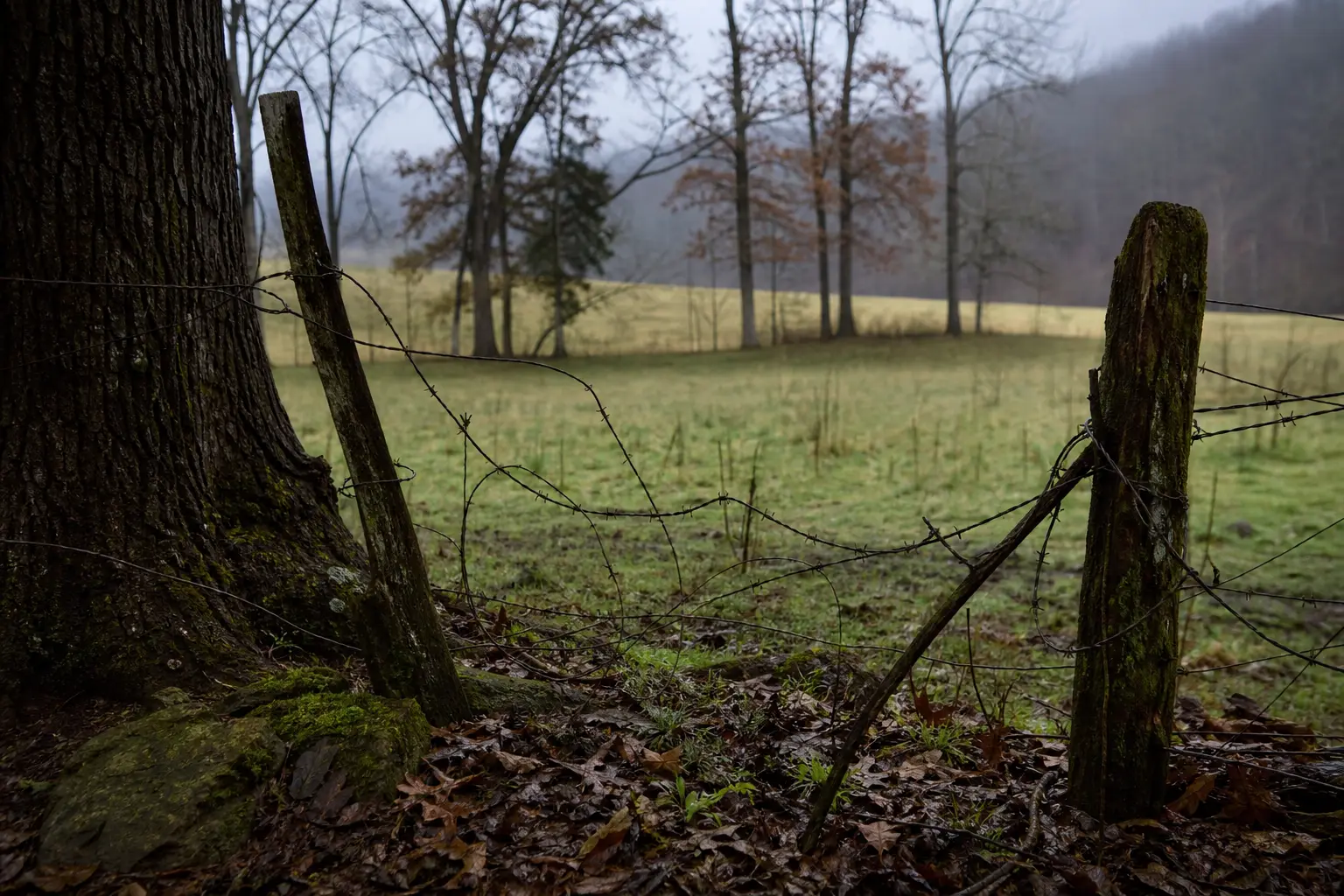
Nobody warns you that the first hog you kill mostly teaches you what you are willing to swallow. I found that out behind a half-fallen barbed wire fence in the Ozark foothills, with a borrowed 30-30 in my hands and the sure, settled feeling that I had finally become a serious hunter. I had taken exactly one whitetail in my life, a forkhorn my uncle had practically gift wrapped for me, and I figured the move from deer to hogs was just a matter of stepping up the confidence. It was not. A sounder of feral hogs will take a man’s confidence, roll it in the mud, and leave it under a dead sycamore where he has to go find it again.
The whole thing started because my neighbor Dale kept mentioning the hogs like they were a tax. His corn field looked like a herd of small motorcycles had held a rally through it every night. “Thirty of them,” he’d say, squinting at the flattened stalks. “Maybe forty. They come through around two in the morning and root up everything that ain’t nailed down.” I listened to this for two seasons and did nothing, because in my mind hogs were a nuisance, something you dealt with the way you deal with a leaky gutter, which is to say mostly by walking past it and hoping it resolves itself. The gutter does not resolve itself. The hogs do not either.
Dale eventually made it simple. He held up his phone, showed me a night video of his field moving like a living carpet, and said two words that flipped something in me. “You want them?” I heard a different question underneath it, the one men ask when they have already decided you are not going to carry your weight, and I answered the way a moron always answers. I said yes two weeks before I knew what a wild hog actually is.
The Lesson Arrives on Four Legs
What I knew about feral hogs you could fit in a thimble and still have room for dust. I knew they were pigs. I knew they were fast. I knew somebody on the internet once called them four hundred pounds of bacon with an attitude. That last part I turned into a personality. I was going to walk into Dale’s bottom, anchor a big boar on the first morning light, and become the guy who solved the hog problem. My uncle loaned me the 30-30 and a box of rounds, and I practiced on a paper plate until the plate looked like a snowflake, which I mistook for readiness. Paper plates do not breathe. Paper plates do not watch you first.
The first three mornings I saw nothing but my own breath and a gray field waking up. I told myself that was normal, that this was what real hunting felt like, sitting still while the world slowly remembered it was cold. On the fourth morning I got careless, the way you do when the boredom starts feeling like a verdict. I stood up to stretch at first light, rifle hanging loose in one hand, and there he was.
There is a sound a big boar makes when he has already seen you and decided you are not a threat yet. It is not a grunt. It is a low, wet, unimpressed kind of noise, like a man clearing his throat about a bill he has no intention of paying. He was maybe forty yards out, black as a shadow that had gotten too solid, and his shoulders rolled under his hide the way a boxer rolls his neck before a fight. I raised the rifle. The safety was still on because I am a careful man right up until it matters. I thumbed it off. The boar did not run. He just watched me decide, and he gave me exactly the half second my confidence had not paid for.
What the First Shot Does Not Do
I shot, and I hit him, and I knew I hit him because he took it like a door taking a knock. He did not fold. He did not even flinch the way you expect. He made that same wet noise, now with an edge on it, wheeled, and was gone into the brush before I could work the lever that I suddenly could not remember how to work. I stood there holding a rifle and shaking, not from the cold. This was the first thing the hog taught me, the one nobody puts in the brochure: a big boar shot wrong will absorb a bullet and run off carrying it, and the running is not the problem. The problem is what you have to do next.
Tracking a wounded hog in the Ozark thickets is not like trailing a deer. A deer leaves you a polite blood trail and tends to bed down and die with some dignity. A hog will use the terrain like it grew there, which it did, and it will choose the nastiest, blackest, most thorn bitten draw on the property and pull you into it on purpose. I found him, eventually, by the smell and the broken sticks and the way the brush had been torn open by something that had decided its exit route. He was down at the bottom of a wash, still alive, and he was watching me come down the slope.
The Backhoe and the Honest Math
I will spare you the details of the finishing shot, except to say I will never again mistake a paper plate for an animal and I now understand why men talk about hogs with a certain flatness in their voice. What I did not know that morning, and what changed the way I saw the whole thing, was how little of the story ends when the pig stops moving. A two hundred and forty pound boar in the bottom of a draw in late fall is a logistics problem wearing a hide. You cannot drag it out alone. You cannot gut it where it falls and walk out clean. You have to make a decision about the body, and the decision costs you.
Dale had a backhoe, because Dale had been through this before and he had stopped pretending it was a story. We pulled that boar out with the backhoe bucket and the whole operation took most of a morning and used fuel that I did not think to account for. That was when the honest math showed up, and it humbled me worse than the tracking did. I had spent days telling myself I was going to be the guy who solves the hog problem. It turned out the hog problem had a receipt attached, and the receipt was thirty dollars of diesel, a ruined pair of boots, a morning I was not getting back, and a long quiet drive home thinking about it. Killing one hog in a sounder of thirty is not solving the problem. It is paying interest on it.
The Second Time Is Also the Hard Time
I went back the following weekend, because the only thing worse than what I had just learned was the idea of Dale watching me not come back. This time I went with a man named Ronny who had shot more hogs than years I have been alive, and Ronny did not tell me much, which is how good teachers teach the part you cannot learn from a video. He had a thermal scope and a suppressor and a patience that made my four mornings of sitting look like a child holding his breath. What Ronny did, mostly, was let me understand that I had been hunting hogs the wrong way from the first minute, treating them like big slow deer when they are something closer to a small, angry, extremely well insured army.
We did not sit and wait. We moved, slow and quiet, through the edge of the field where the hogs had been rooting, and Ronny read the ground like most men read a newspaper. “They were here about an hour ago,” he said, pointing at a torn spot I would have walked right past. “Group of twelve, maybe fifteen. One big sow in charge. She’s the one you want.” I had never once thought of a sow as the target. I had walked in chasing the biggest thing with tusks, the same way I chase the biggest thing with antlers, and Ronny just let that sit there until I heard how dumb it was. You do not fix a sounder by shooting the boar. You fix it by breaking the family.
What the Squeal Tells You
We found them just before full dark, a dark moving patch at the far end of the creek bottom, and I made a shot at a sow through the thermal that I should not have made because I had not earned it yet. I hit her and she went down and the world did not go quiet. It went loud. The sound a sounder makes when it scatters is not something you forget, and it is not anything you have heard on television. It is screaming and thumping and the wet heavy sound of thirty bodies deciding at once that nowhere is safe, and in the middle of it Ronny was just standing there calm, watching me realize that a hog is never alone even when you have only got one of them in the glass. That is the thing. You never shoot a hog. You shoot one moment in a bigger argument, and the argument keeps going whether you are standing there or not.
That night, dragging that sow up to the truck with Ronny, I finally understood what Dale had been asking with his two words. He was not asking if I wanted the hogs. He was asking if I understood that wanting them meant wanting the whole ugly, endless, expensive process that comes with them, the one that does not end with a picture and does not make you a hero and does not ever really finish. Hogs are not a deer with weird feet. They are a constant. You do not solve a constant. You hold it in place and try to keep it from eating everything you love, and you find out pretty quick whether you are the kind of man who stays for that.
I still go out to Dale’s place, more than I used to, and I told the next batch of hogs with a respect I did not have that first morning. The razorback never killed me, but he came closer to killing the story I was telling about myself than any animal should be allowed to. I write that down now the way it actually happened, without the hero part, because the men who need the truth are the ones standing at that fence holding a borrowed rifle and that tight, settled feeling that they have finally become serious. They have not. Neither had I. The hogs will be there to take the feeling off your hands, roll it in the mud, and hand it back heavier. You just have to decide whether you are going down into the bottom after it.