The Purchase
I spent four hundred dollars on waders before I had ever stood in moving water with a fly rod in my hand. That is the honest version of how this story starts. The story I told my wife was about breathability and gravel guards and a stockingfoot boot that would change my life. The story I told myself was that a man who owns good waders is already most of the way to being a fisherman.
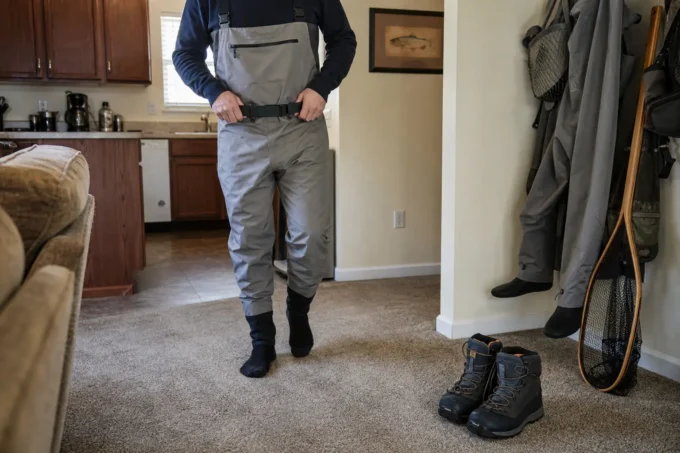
The waders arrived in a box that smelled like new rubber. I put them on in the living room, walked from the couch to the kitchen, and decided I looked like someone who belonged on a trout stream. I ordered a pair of boots with metal studs and felt soles, because I had read somewhere that felt grips wet rock better than rubber, and the studs would keep me upright. I bought a wading belt and practiced cinching it in the mirror. Then I hung everything in the garage like a display and waited for the river to notice me.
The First Time the Water Laughed
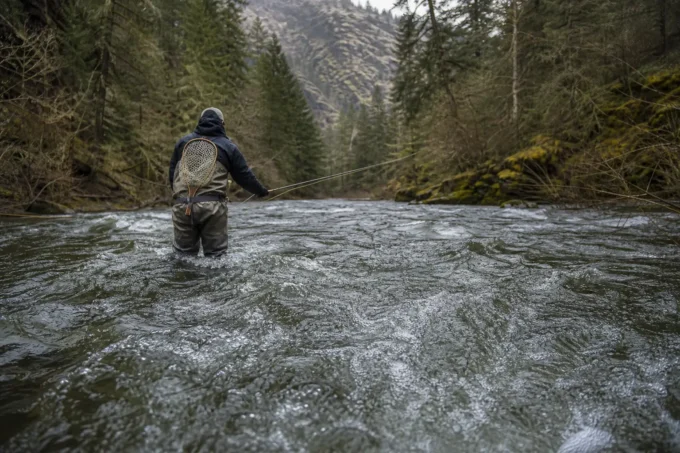
The river noticed me on a Tuesday in early May, and it was not impressed. I had driven two hours to a stretch of water I found on a forum, a place the internet promised was full of wild brown trout and empty of people. I waded out about knee deep, planted my feet like I had seen in videos, and immediately learned that a river pushes harder than it looks on a screen.
Every step I took upstream felt like walking into a wall of moving glass. The current grabbed at my legs and tried to swing them sideways. I leaned forward, which made it worse. I took short choppy steps, which made it worse. Within twenty minutes my calves were burning and I had fallen exactly zero times, which I counted as proof that I was a natural and the gear was working.
That is the thing about waders and a fool. The waders keep you dry, so you start believing you are not in danger. You are standing in two feet of water with a current that could roll you under a log, and all you can think about is how comfortable your feet feel. The gear does its job so well that it erases the only signal that matters, which is that the river is stronger than you and it is not in a hurry to prove it.
The Run That Waited
I found my spot, a smooth seam where fast water slid past a lazy tongue of slow water, and I decided this was my moment. I waded toward the middle, stepping across a line of slick green cobble the size of dinner plates. I was looking at the seam, planning my cast, picturing the trout, doing everything except looking down at where I was putting my feet.
The felt sole got a good bite for one step, then the next stone rolled and my left leg shot out from under me along with the current. I caught it. I did a little stumble, a little dance, and I stayed up. I should have read that stumble for what it was, a warning handed to me for free, but I laughed instead and kept going, because falling and not falling felt like proof I was tough.
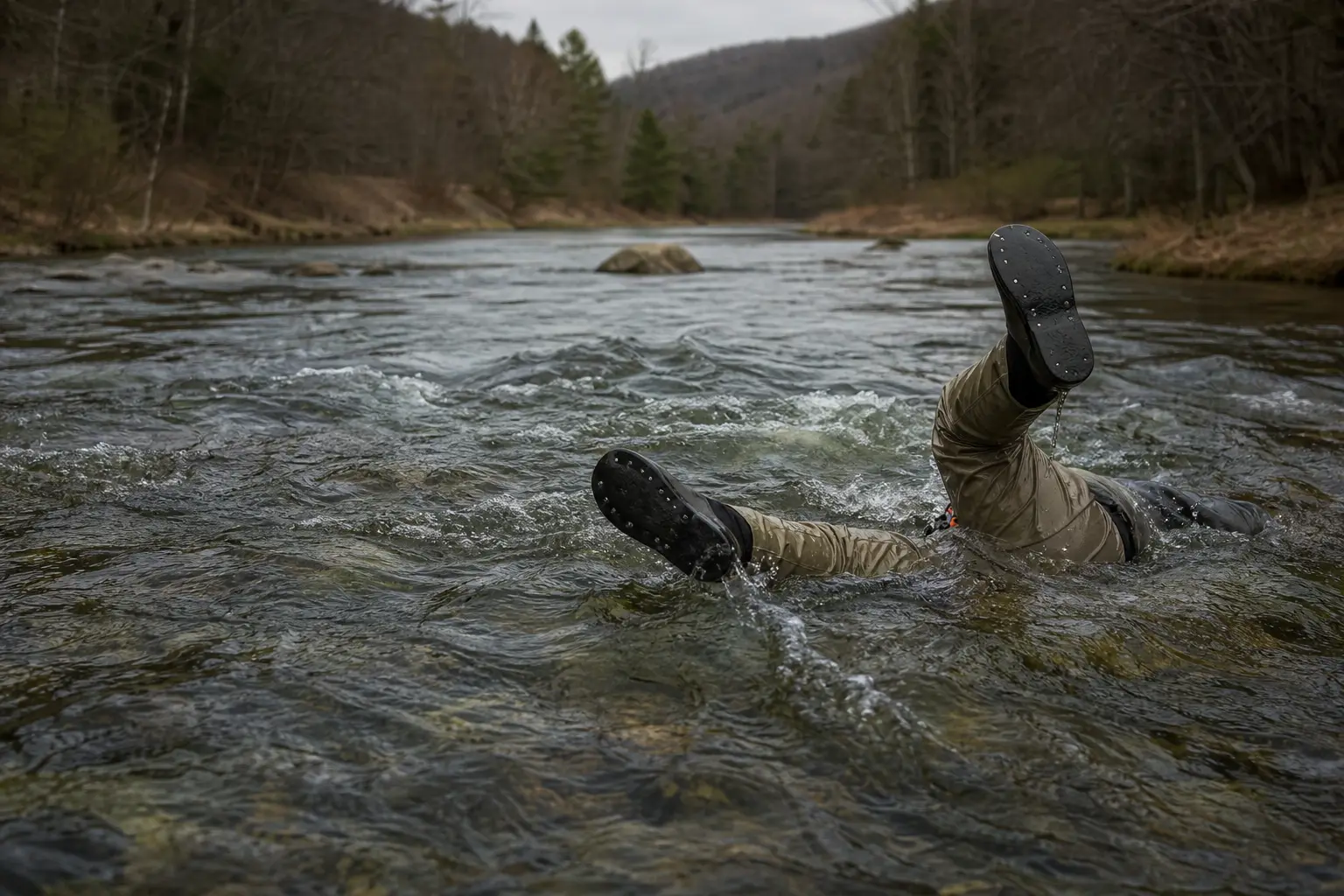
Two steps later the water went from thigh deep to a hole I had not seen, a dark slot where the current went quiet and fast at the same time. My downhill boot slipped off a ledge and I went in sideways. The water poured over the top of my waders and filled them to the hip in about half a second. For a moment I understood something I had read about and then promptly forgotten, which is that a pair of waders full of water weighs more than you do, and the river now owned the lower half of my body.
What the Belt Was For
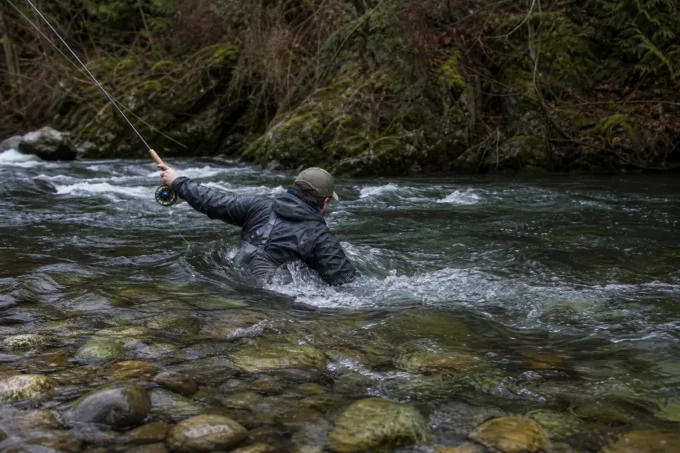
I had cinched the wading belt only because the video told me to, and because I like following directions when they are about gear. That belt is the only reason I am writing this instead of floating. It slowed the water long enough for me to grab a branch and claw my way against the bank, coughing and shaking, my waders so heavy I could barely drag them up the mud.
I sat on the bank for a long time with my knees pulled up, listening to my own breathing and the river going about its business like nothing had happened. And that is the part that stuck with me, how completely unbothered it was. I had nearly gone under in front of an audience of rocks and water and caddis flies, and not one of them cared. The river was not angry at me and it was not trying to teach me anything. It was just being a river, and I had walked into it like I was owed a safe place to stand.
Nobody drowns in a river because the river is mean. They drown because they spend all their attention on the fish they have not caught and none on the water they are standing in. I had spent four hundred dollars to get into the river and then I had spent the whole time looking everywhere except at my own feet.
Learning to Read What Was Under Me
The next time I went out, I went back to the same stretch and I did not bring my rod out of the tube for the first hour. I just stood in ankle deep water and watched. I watched where the surface lifted into little hills over submerged rocks. I watched where the current darkened and went smooth, which usually meant a drop off. I learned that a V of still water pointing downstream marks a boulder, and that a line of bubbles means a rock shelf, and that the fastest water is almost never the deepest.
I started moving like the old men I used to think were slow, sideways and deliberate, one foot planted before the other leaves the bottom. I kept my knees bent and my weight low and my head over my feet, and I stopped trying to cover water like it was a race. The river felt different when I moved that way. It felt readable instead of like an enemy. It stopped being a thing I was fighting and became a thing I had to pay attention to in order to stay alive in it.
My friend Marcus, who grew up fishing a river that ate a man every few years, put it the one way I finally understood. He said you do not stand in a river, you stand on the bottom of it and let the part above you pass. That sounds like a line from a koan but it is the most practical thing anyone ever told me about water.
The Trout I Did Not Deserve
The day I actually caught a trout out of that river, I had already fallen in once that morning. Not the dangerous kind, just a slip that put me on one knee and soaked my sleeve. I laughed, wrung out my arm, and kept fishing, and that casualness, that comfort with the water, somehow mattered more than the four hundred dollars of gear I was wearing.
The take was nothing special, a small brown that hit a dry fly in a back eddy and gave me a few good splashes before I brought him to hand. I looked at him for a long time, a wild thing with spots like fingerprints, and then I let him go and he kicked off and was gone before I stood back up straight. I sat down on a dry rock and realized I was shaking, and it was neither cold nor fear doing it. It was something softer, the awareness that the river had tried to teach me up front and I had needed to nearly drown to hear it.
I still own those waders. The left boot has a small patch where a rock cut it, and the whole kit smells faintly of river mud now, no matter how I rinse it. I like that smell. It is the smell of a thing that stopped being a display in my garage and became something that gets used. Four hundred dollars worth of gear cannot buy you a single fish, and the river told me so in the only language it has. All it can buy you is the chance to stand in the current long enough to learn that you were never the one in charge.
The water does not respect your receipt.