I spent $340 on a St. Croix rod last spring. Watched seventeen hours of YouTube videos about reading river seams. Memorized the hatch chart for my local tailwater. Bought a vest with seventeen pockets and filled every single one of them with something I was pretty sure I needed.
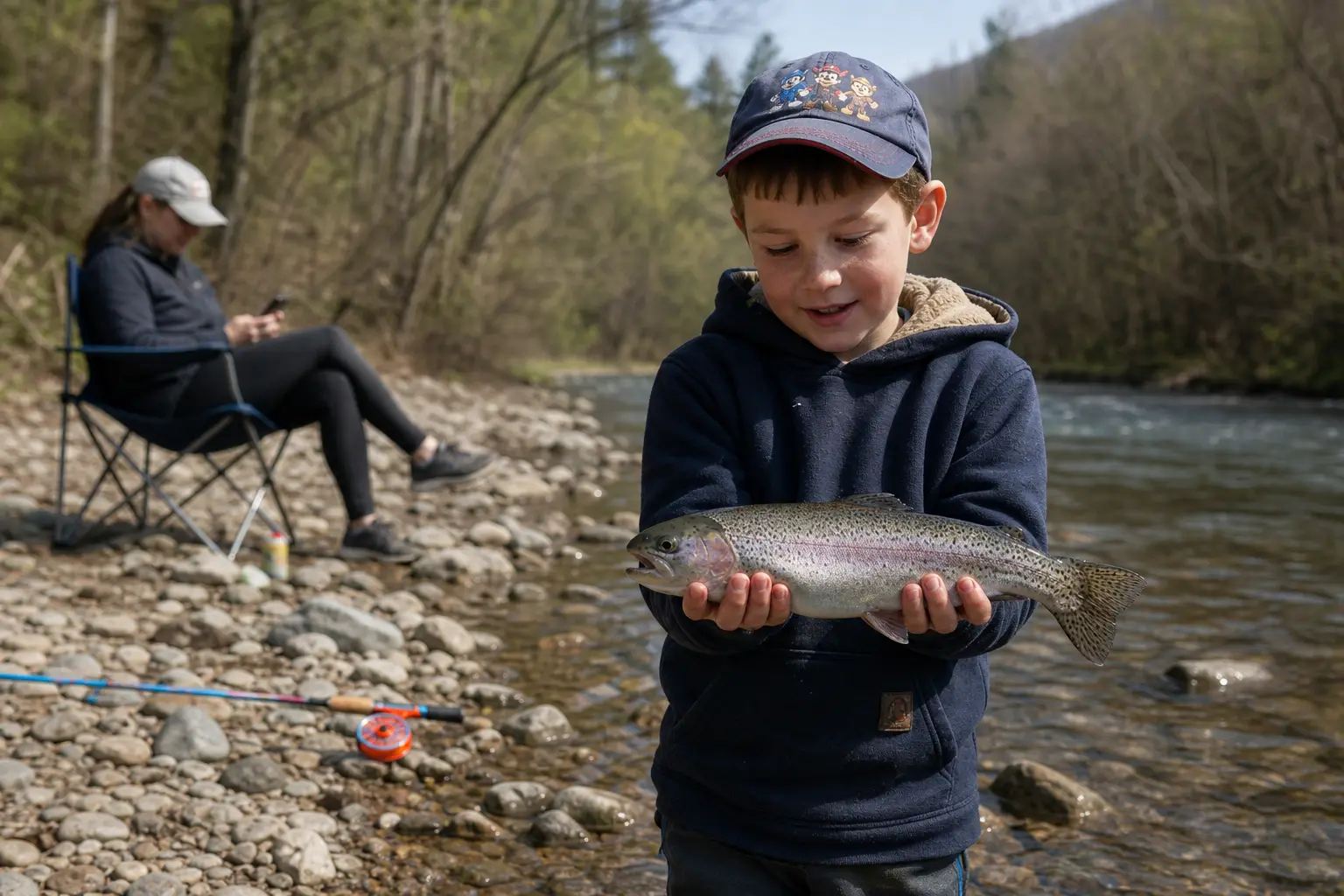
My neighbor’s nine-year-old caught a 22-inch rainbow on a Paw Patrol rod.
He wasn’t even fishing. His mom was sitting on a folding chair scrolling her phone. The kid was dragging a piece of PowerBait through the shallows like he was walking a dog, and a trout the size of my forearm decided that neon-orange dough ball was the best thing it had seen all week.
I found out about it when the kid ran over to my truck holding the fish in both hands like a newborn. I had just gotten back from wading three miles of the same river, where I had thrown every dry fly in my box at rising fish for four hours and caught exactly zero of them.
I congratulated him. I meant it. Then I sat in my truck for about five minutes staring at the steering wheel.
This Keeps Happening
It wasn’t the first time. Two years ago my cousin Mike came to visit from Chicago. Mike had fished exactly once in his life, at a stocked pond at a company picnic. I took him to my best smallmouth spot, the one I don’t even tell my fishing buddies about because it took me three summers of walking the river to find it.
I handed Mike a spinning rod with a tube jig already tied on. Showed him where to cast. Told him to let it sink three seconds and reel slow.
First cast. Three-pound smallmouth.
Not a dink. Not a rock bass that felt heavy for a second. An actual, honest-to-God football of a fish that smashed the tube so hard Mike almost dropped the rod.
I caught one fish that afternoon. It was eight inches long and I didn’t take a picture of it.
Last summer my wife’s friend Sarah wanted to try fly fishing. She had seen A River Runs Through It once. I spent thirty minutes on the lawn teaching her a basic roll cast, which she performed like she was trying to kill a snake with a garden hose. I figured we’d walk the river a bit, she’d get bored, and I’d fish for real after she left.
Her third actual cast landed a dry fly, a size 16 Elk Hair Caddis that I tied myself by the way, about four inches upstream of a cutbank. The drift was terrible. The fly was dragging like a water skier. A brown trout the color of a copper penny shot out from under the bank and ate it anyway.
She held the rod up like it was on fire and the fish stayed on. Fourteen inches, wild brown, released. She handed me the rod and said, “That was fun. Do you want to go get lunch?”
I had been working that river for two years without catching a brown trout out of it.
The Gear Is Not the Problem
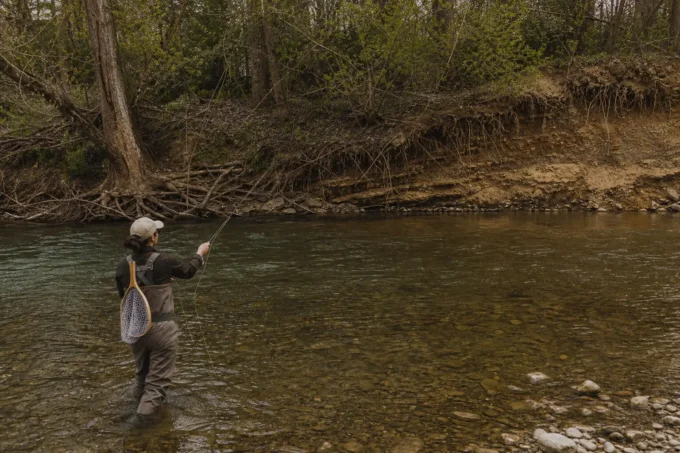
I know guys who own fly rods that cost more than my first car. Their vests look like military surplus. They have spools of tippet organized by diameter in little plastic boxes, leaders sorted by length, fly boxes arranged by insect stage. They can name every mayfly species on the river and tell you which one is hatching based on the air temperature and the phase of the moon.
Half of them get outfished by teenagers with a Zebco 33 and a can of corn.
I should know. I was one of those guys. Still am, most days. The difference is that now I’ve accepted it enough to write about it, which is progress, I guess.
Here’s what I think is actually going on, after spending way too many hours thinking about it while not catching fish.
Beginners and kids have two things that experienced anglers have talked themselves out of. The first is luck, obviously. But luck isn’t random. Beginners put baits in stupid places because they don’t know any better, and sometimes stupid places are exactly where the fish are. The second thing is focus. A kid with a bobber is watching that bobber with the intensity of a hawk because nobody told him he’s supposed to be watching his line, reading the current, checking his drag, adjusting for depth, and mentally cycling through four retrieve patterns all at once.
I’ve spent so many hours on the water that my brain is running about six layers of fishing theory simultaneously while I cast. Mend here. Let it swing there. The water is a little fast for a dry fly, maybe switch to a nymph, or actually a soft hackle in the seam, wait is that a rise in the tailout, do I have the right size on, should I re-tie…
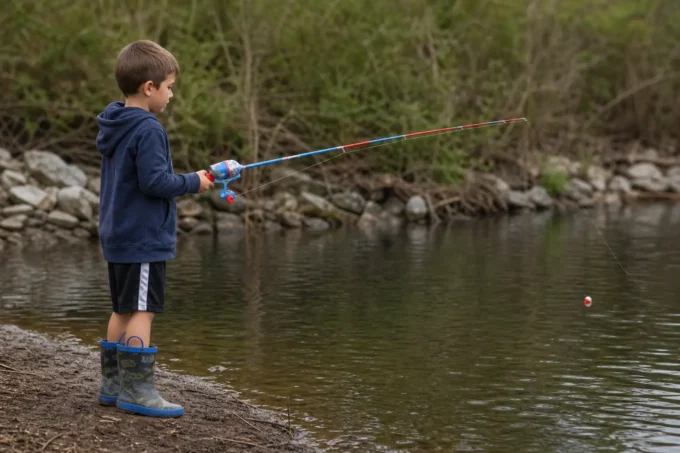
Meanwhile a nine-year-old with a Paw Patrol rod is staring at one thing and one thing only, and when it moves, he sets the hook.
The Day I Figured It Out
It was a Tuesday in June. I had the day off and the river to myself, or so I thought. Water was perfect. Slightly tinted from a rain two days prior, not blown out, flowing at maybe 350 cfs on the gauge. I rigged up a double nymph setup under an indicator and started working a run I knew held fish.
Two hours. Nothing. Not a bump, not a splash, not a refusal I could see. I changed flies four times. Adjusted the indicator depth. Switched from 5x to 6x tippet because maybe the fish were picky. Moved upstream. Moved downstream. Fished a seam. Fished the soft water behind a boulder. Fished the riffle at the head of the pool.
Around noon I sat down on the bank to eat a sandwich and saw a guy walk past with a spinning rod and a five-gallon bucket. He nodded. I nodded. Five minutes later I heard a splash and looked up. He was pulling a rainbow out of the same run I had just spent two hours on.
I watched him catch three more in the next twenty minutes. Worm and a splitshot, under a bobber, drifting through the same water my size 18 Pheasant Tail had floated through forty times without a sniff.
When he walked back past me with his bucket dripping, I asked what he was using. He showed me a container of nightcrawlers from Walmart.
“They been hitting these all morning,” he said.
I had Pheasant Tails. Copper Johns. Hare’s Ears. Prince Nymphs. Three colors of mop fly. A CDC emerger I paid seven dollars for at a fly shop in Montana.
The fish wanted a worm.
That’s the whole thing, right there. I had spent so much energy trying to outsmart the fish that I forgot the most basic rule of fishing: give them what they want, not what you want them to want. The guy with the bucket wasn’t a better fisherman than me. He just wasn’t making it complicated.
What I Actually Changed (Besides My Attitude)
I still fish a lot. I still have nice gear. I’m not about to trade my St. Croix for a dock demon and a tin of red worms, though on bad days I think about it.
But I made three changes that actually helped.
First, I stopped changing flies every fifteen minutes. Pick something that makes sense for the water and fish it until you’re sure it’s wrong. Not until you’re bored. Not until you see a fish rise thirty yards away and panic. Until you’ve covered the water thoroughly with a presentation that should work. Most fly changes happen because the fisherman is antsy, not because the fish are picky.
Second, I started carrying a spinning rod in the truck again. This felt like a betrayal at first. I had spent years convincing myself that fly fishing was the One True Way and everything else was cheating, which is a stupid opinion that I held mostly because it made me feel superior to the guys with buckets. It also meant I went home with an empty cooler a lot. Now when the fly rod isn’t producing and I can see bait fishermen catching fish, I swallow my pride and thread a worm onto a hook. I still feel a little dirty doing it. I also feel full after dinner.
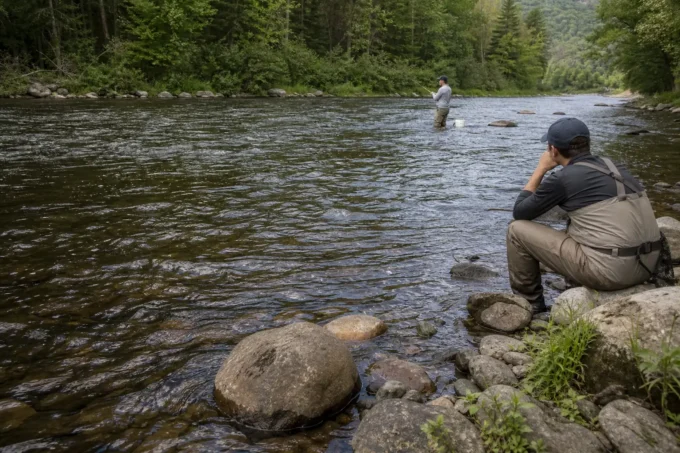
Third, and this is the one that hurts to admit: I started paying more attention to what the fish were actually doing instead of what I wanted them to be doing. Sounds obvious. Isn’t. When you’ve driven two hours and hiked another mile and you’re standing in the river at dawn, you want the fish to be feeding on the surface. You want the hatch to start. You want the big brown to be sitting in the foam line waiting for your fly. But sometimes the fish are sulking on the bottom and they have been since yesterday and they’re going to stay there until the water drops three inches. Standing in the river wishing they’d rise isn’t fishing. It’s standing in a river.
Go find a guy with a bucket. Ask him what he’s using. Then go buy some of that.
The Honest Part
I still get outfished by kids. All the time. Last month I took my nephew to a farm pond and he caught seven bluegill on a piece of hot dog while I was still rigging up my ultralight with a 1/64 oz jig that I was pretty sure would be the magic ticket.
It wasn’t. The hot dog was.
I don’t think I’ll ever be the kind of fisherman who just shows up, relaxes, and lets the fish come to him. My brain doesn’t work that way. I’m always going to overthink it, always going to bring too many flies, always going to change my rig one more time when I should just let it drift.
But I’ve gotten better at recognizing when I’m the problem. Most bad fishing days, the fish aren’t being difficult. I’m just making it harder than it needs to be.
The nine-year-old with the Paw Patrol rod has not internalized any of this, because he doesn’t need to. He caught another one last weekend. I know because his mom sent me a picture.
I responded with a thumbs-up emoji and went back to tying on a size 20 midge that the fish were definitely, absolutely, one hundred percent going to eat this time.
They didn’t.