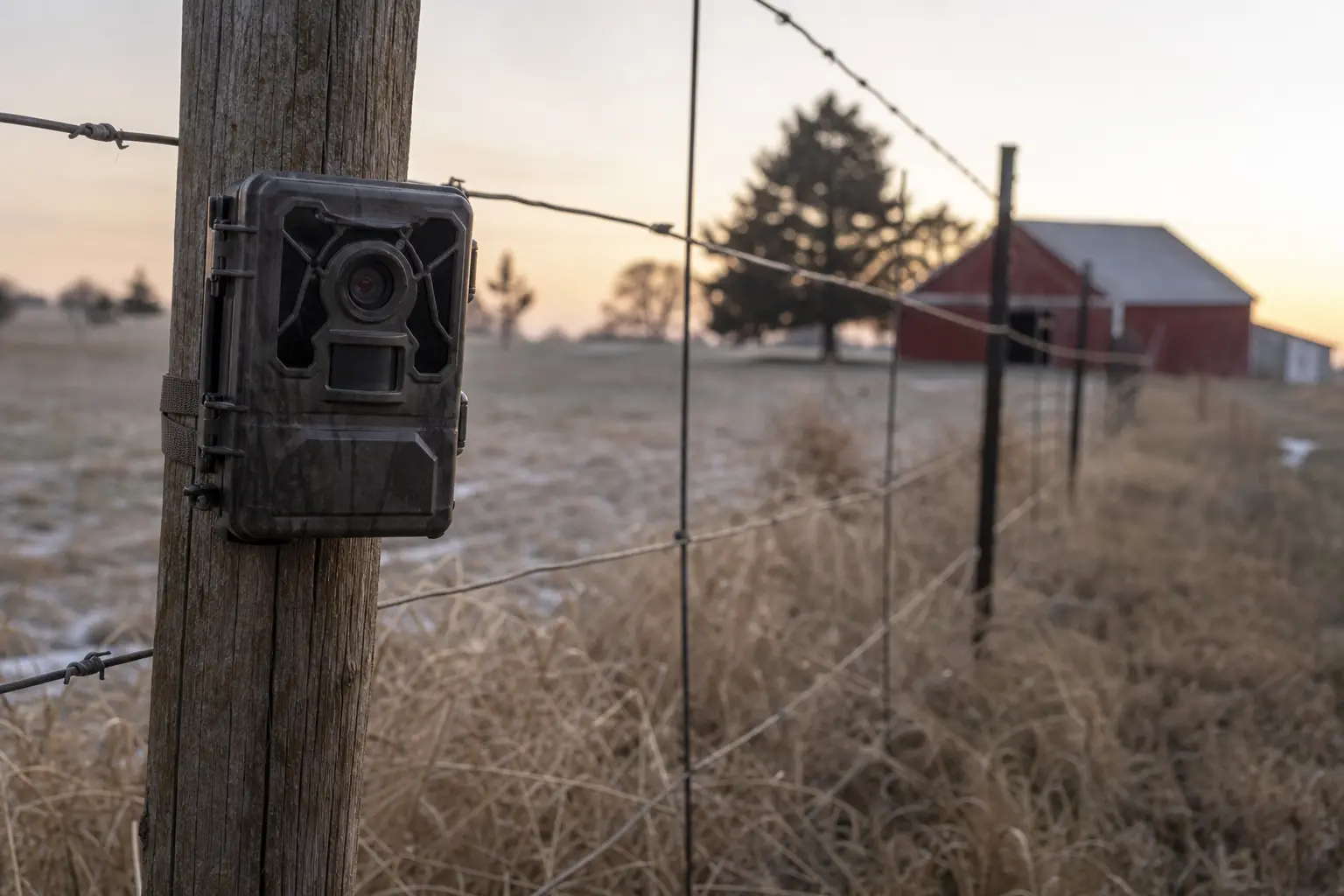
The first time I saw the coyote it was on the trail camera at ten o’clock at night, and I did what I always do. I drank the rest of my coffee, flipped through the rest of the stills, and told myself the thing was just passing through. A coyote walking down the fenceline in the dark is not news. She had somewhere to be. She would be fifty miles gone by sunrise. I told myself this and I believed it, which is the whole problem with me and problems. I am real good at believing the version that means I do not have to go outside in the cold with a gun.
Then she was on the camera at nine. Then eight thirty. Then quarter to eight, in full light, standing at the edge of the chicken pen with her ears forward and her head tipped sideways like she was reading the menu at a diner. That was when the believing got harder, because a coyote who shows up before dark is not passing through. A coyote who shows up before dark has figured out exactly what she wants and has stopped being scared of the house.
I lost my best hen not long after. Not a fox, not a raccoon with a clean kill and a burrow to eat it in. A coyote. She hit at five in the afternoon, in broad daylight, and she took the hen I called Big Red because my daughter named her Big Red and because that hen was the only one in the flock that would eat scratch out of my hand. Twenty-something birds and it had to be that one. The others were a mess of feathers and panic, and one of them was gone, and the trail left in the dirt went straight to the fence line and over. It was not a mystery.
Now I will tell you the honest part, because I am the kind of guy who learns lessons the expensive way and I might as well get some use out of it. I had been watching this coyote for two months. I had the pictures. I had the timestamps getting earlier and earlier, which is the single clearest warning a predator gives you before it graduates from “around” to “in your birds.” And I did nothing except be annoyed about it. I thought the problem would sort itself out. Problems like a coyote on your chickens do not sort themselves out. They escalate, and you pay for it in hen blood, or you deal with it before it gets there, and I want to tell you how to deal with it before it gets there so you do not do what I did.
The Lead-Up Is the Actual Work
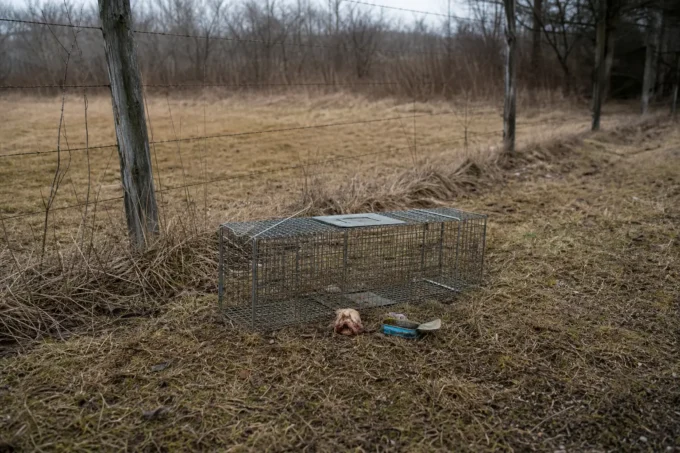
The first thing I got wrong was a cage trap. I borrowed a big double door live trap from a buddy, the kind you catch a raccoon in, because I figured I could bait a coyote the same way. My dogs and a couple stray dogs run this road, so I did not want a body grip trap or a snare that might catch the neighbor’s mutt. I wanted selective. I set the cage trap at the seam in the pen where she had been getting in, baited it with a half rotted chicken head and a smear of sardine oil, and then I sat back and waited for my brilliant plan to work.
It did not work. It never works. A coyote is not a raccoon. A raccoon will waddle into a cage trap for a can of cat food because a raccoon has the IQ of a doorstop and the caution to match. A coyote has spent her whole life being shot at, chased, and educated by every other coyote that got caught. A grown coyote will not walk into a box with one open end, not for a chicken head, not in a month of Sundays. An old trapper told me this after the fact, after I had spent two weeks baiting and rebaiting and checking a trap that had caught nothing but my own hand twice and one very insulted barn cat. “You’re never going to lure a coyote into a cage,” he said, and the worst part is it was obvious once he said it.
So the second thing I got wrong was the waiting. This is the part I want to press on you, because it is the part that actually matters and it is the part nobody likes to hear. The way you solve a coyote that is pressing your birds is not mostly about the catch. It is about the lead-up. It is about knowing she is coming, knowing the hour, and being ready to sit on that hour every single evening until she makes a mistake. The trap is secondary. The discipline of being there, quiet, downwind, with a rifle you know, that is the whole skill.
Sitting On Her
After Big Red, I finally did it right. I pulled the cage trap and stopped pretending I was smarter than the animal. I looked hard at the trail camera history and saw what had always been there. She came from the north every time, up the dry creek behind the house, and she hit the pen at the same corner every time, the corner where the bottom wire had sagged. She was not clever and she was not random. She was a routine with fur on it. I just had not been willing to read the routine.
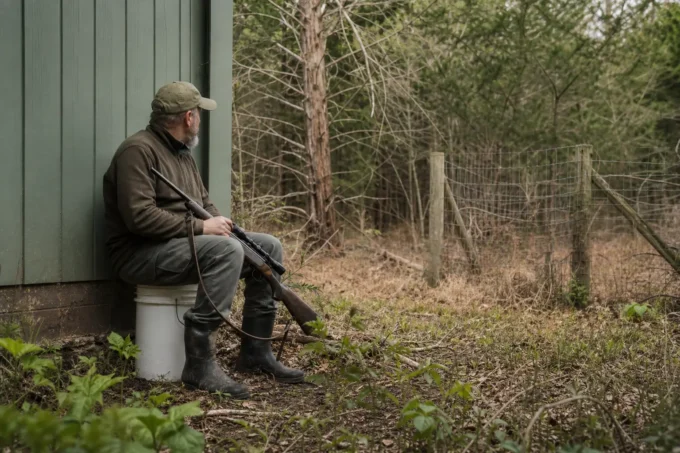
So I set up. The first evening I sat on a plastic bucket behind the garden shed, downwind, with my rifle across my knees and my back against the wall, and I sat there from six thirty until full dark and she never showed. She knew I was there, or the wind shifted, or she simply did not feel like it. That happens. You do not score your first sit. You score the pattern, not the night. The second evening a thunderstorm rolled in and I sat in the truck with the window cracked until my thermos was empty and the water ran down the windshield in sheets. Nothing. The third evening I moved upwind of where I thought she would come, which is exactly the wrong move, and I realized it about the time I smelled myself, and I went home frustrated and stupid.
That is the thing they do not put in the articles. Coyote work is boring, and it is mostly failure, and the failure is usually your own dumb fault. You do it anyway because the alternative is standing over a pile of feathers again and knowing you could have been out here the week before.
The Night It Worked
The fourth night I got it right, and not because I had a clever idea. I got it right because I did the boring things correctly. I checked the wind with a dead leaf and set up on the downwind side for real this time. I sat still for an hour and let the evening settle over me until the cardinals shut up and the mosquitos calibrated onto my neck. I did not check my phone. I did not shift on the bucket. I put the rifle up on a sandbag on top of the fence post I had wedged earlier that afternoon, because sixty yards with a thirty caliber rifle is no hard shot standing, but standing is for a man who gets one chance and I wanted my one chance to be easy.
She came at seven forty, right on schedule, out of the dry creek, and she did not hurry. She walked along the tree line with that loose, rolling coyote trot, stopping every few steps to look around, and she came on down toward the sagged corner of the pen like she owned it, because for two months she had basically done exactly that. I watched her through the scope and I did not shoot at the first clear look, and I did not shoot at the second, because she kept moving and I have yanked a shot on a walking dog before and it makes a man feel real small to wound and miss. I waited until she stopped, broadside, head down where she had found a stray piece of scratch under the wire.
The shot felt like nothing. Just the crack and the little jolt and then the world going quiet the way it does. She dropped where she stood. Downwind, sixty yards, broadside, stopped. That is not a brag. That is just the boring stuff working the one time I actually did it right. I walked her down and I sat with her for a minute in the grass, and I was not proud. I was relieved, and a little tired, and honestly a little mad at myself for letting it get to a dead hen before I made myself do the work.

What I Actually Learned
Here is what I want you to take from this, and I will keep it short because I have already gone long on it. One, a coyote does not just start hitting your chickens out of nowhere. There is always a lead-up, and the lead-up is always there on the trail camera if you are willing to look at the timestamps instead of just the pretty pictures. Earlier every week means bolder every week, and bolder every week means do not wait until a hen dies to act.
Two, a cage trap will not catch a coyote. Save yourself the two weeks and the insulted barn cat. If you have dogs around and need to be selective, you either sit with a rifle, or you set a cable restraint and check it twice a day, but check your local laws first because snaring rules change from state to state and county to county, and I am not your game warden.
Three, and this is the one that cost me a hen to learn, the skill is not the shot. The skill is the lead-up. The skill is being downwind and still and patient and disciplined enough to sit four empty nights in a row and show up on the fifth. Anybody can shoot a coyote standing still at sixty yards. Almost nobody wants to sit through the three nights of nothing that come first, and that is the difference between the guys who keep their birds and the guys who keep finding feathers.
I buried Big Red under the apple tree in the corner of the yard, the one my daughter used to climb, and I threw a handful of scratch in the hole out of some habit I did not know I had. The flock is fine now, and the camera still has a coyote on it most nights, a different one, passing through up the dry creek in the dark, going somewhere it has to be. That one I leave alone. That one is a coyote walking down a fenceline, and that is not news. The one that showed up before dark with its head tipped at the pen, that one was a decision I waited too long to make. Do not wait like I did.