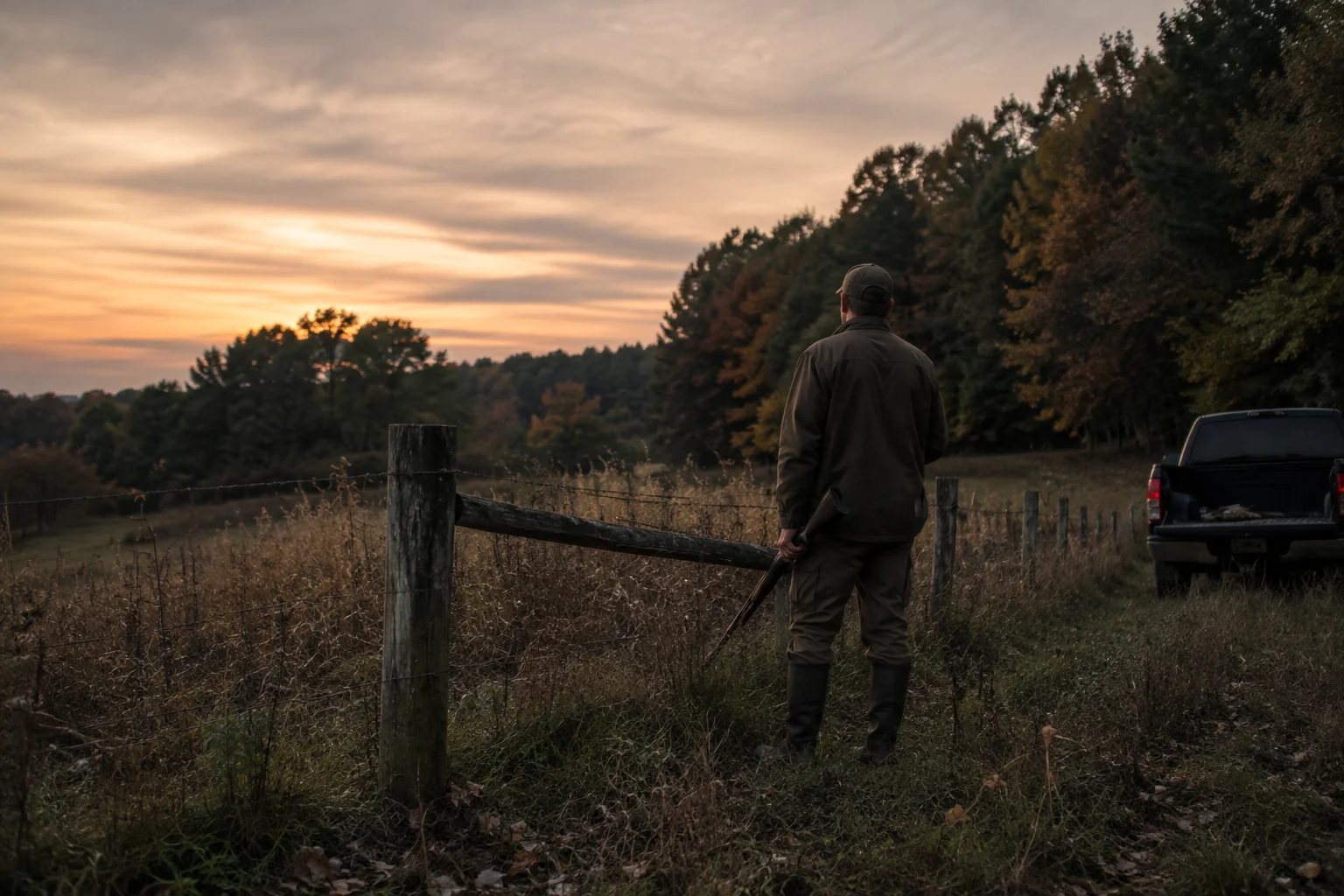
My buddy Travis and I were splitting a case of beer on his tailgate last spring, talking about where we’d go if money ever stopped mattering. I said Africa. A big old bull buffalo, maybe a kudu. Something with horns you’d hang over a fireplace and lie about for the next thirty years.
Travis shook his head. “I wouldn’t shoot an elephant,” he said. “Or anything with empathy.” He said it like it was obvious, like there was a bright clean line running through the middle of every animal on earth, and he knew exactly which side his bullets were allowed to land on.
I laughed at first, because Travis also once drove forty minutes back to a gas station to return a lighter he’d accidentally pocketed. He’s got a conscience the size of a grain silo. But the question stuck to me like a sticker of burrs. Where do I actually draw the line? The honest answer, I figured out, is that I never really drew one. I just kind of inherited one and then spent twenty years pretending I’d thought about it.
The line I inherited without thinking about it
My old man hunted deer because his old man hunted deer. That was the whole system. Whitetail in November, squirrels in the fall, ducks when the river had water. We didn’t hunt bear because nobody in our family ate bear. We didn’t have an opinion on it, not a real one. It just wasn’t done at our table, so it wasn’t done, period.
That’s how most lines get drawn, I think. Not with a conversation. With a dinner plate. If it showed up in your mother’s kitchen, it was a game animal. If it didn’t, it was somebody else’s animal, and you didn’t have to have a position on it at all.
So for the longest time my “ethics” were just a list of things my family happened to shoot. That’ll carry you a long ways and it’ll never once force you to open your mouth and explain yourself. But it’s not the same as a line. A line you can defend. A rule I can hand to my own kid and say, this is where I stop, and here’s why.
The first animal I killed that I wouldn’t eat
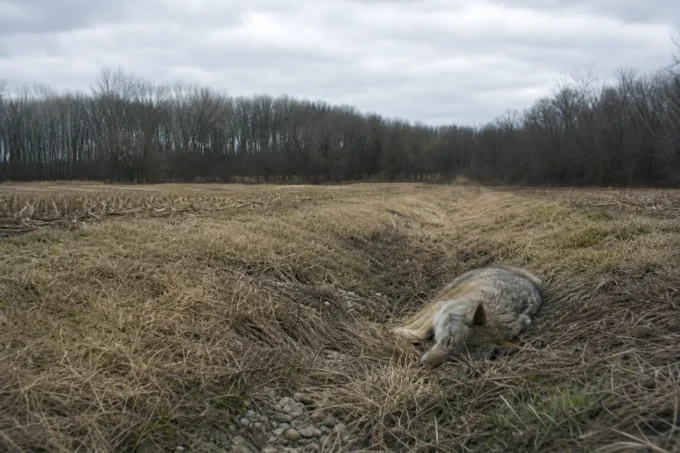
It was a coyote. I was nineteen, home from my first year of trade school, and my uncle pointed at a yote trotting along the far treeline and said “take him.” So I did. Clean shot, about 140 yards, and he dropped like I’d switched him off. I walked out there and stood over him and felt nothing warm at all. Just a job finished.
And then I had to do something with him, and I didn’t have an answer. I wasn’t going to skin him, I had no use for the pelt, and I sure wasn’t going to eat him. So I dragged him to the ditch and left him, and the whole drive home I could not shake the feeling that I’d shot something for no reason at all.
Looking back that’s the real line, and I keep tripping over it. Kill it, use it, or leave it alone. If you can’t answer “what is this animal for,” you’re not hunting. You’re just shooting. There’s a difference, and it took me a dead coyote in a ditch to feel it instead of reason it out.
Predator control is a real answer, sometimes
Now before somebody climbs my back about coyotes, I ain’t saying it was wrong to shoot him. A few years later I watched a pair of them gut my best laying hen and leave the rest, and I’d have paid money for a good shot that morning. Predator control on your own ground, protecting livestock, protecting fawns, that’s a legitimate job. Some men make part of their living at it.
But there’s a wide gap between “this coyote is a problem on my fence line” and “there’s an animal, shoot it.” One of those you can explain to a stranger. The other you cannot. The ditch coyote taught me the difference, because I couldn’t explain him to myself.

Why I still won’t hunt an elephant
Travis is probably right about elephants, even if his phrasing is a little churchy for a tailgate. The honest truth is I don’t know enough about them. I don’t know what a harvested elephant becomes, who eats it, who it feeds, what the money does for the people who live there. Some of those African hunts put real dollars into conservation and anti-poaching, real schools and real wells. I’ve read enough to know it ain’t a cartoon. But I’ve never stood there, and I’ve never done the work on the ground, so I keep my mouth shut and my checkbook closed. I won’t hunt something I haven’t earned an opinion on. That’s a line I can defend.
The rule I can actually hand to my kid
After all that talking and one too many beers, I wrote it down so I’d stop lying to myself about having already figured it out. It’s not fancy. Here’s the whole of it.
I will eat what I kill, or I will make sure somebody else eats it, or I will be killing a specific pest for a specific reason I can name out loud. Anything outside those three, I don’t pull the trigger. That’s it. Trophies are fine if the meat gets used and the tag’s legal and the reason’s honest, but the reason has to come first, not the mount.
I don’t think that makes me better than anybody. It’s just the first line I’ve ever drawn that I didn’t inherit by accident, and there’s something steady about being able to say it without shrugging.
Where the line gets hard
The trouble with a rule is the gray edges eat at you. Feral hogs. I’ll shoot them by the pickup load and not lose a minute of sleep, because they’re invasive and they’ll chew a bottom field down to the mud and I know fifty people who’ll take the meat. But ask me to shoot a hog I can’t place, and I’ll pass and let somebody else take him. The meat’s the thing. It always comes back to the meat.
Same with songbirds, hawks, anything with feathers I can’t put in a pan. A man who shoots a bluebird for no reason, I don’t want his company in the woods or anywhere else. That’s not a line to me, that’s just not being a piece of garbage.
And there’s the stuff I hold other people to looser than myself. I don’t care if a man flies to Alaska and shoots a caribou and ships the whole thing home to his kid’s freezer. I don’t care if a man keeps a skull from an elk he killed, provided the shoulders went somewhere. What I can’t get with is the guy who mounts the head and rolls the rest into the ditch. We all know one. That’s not hunting either. That’s a haircut with a gun.
What I finally told Travis
We were still out there when it got dark enough that the moths were circling the porch light back by the house. I said, “I think my line is the meat.” And Travis looked at me and said, “Took you half a case to get there.” He wasn’t wrong.
But here’s the part that settled in afterward and didn’t leave. A line you can name is a line you’ll keep. A line you inherited is just a habit wearing a nicer shirt. I’d been hunting for twenty years on the dinner-plate rule and never once stopped to spell out where I stop. The minute I wrote it down, half the gray corners straightened themselves out, because I finally had something to measure them against besides a shrug.
So go ahead. Ask yourself the same thing Travis asked me, and don’t let yourself off with “I just don’t.” If you can’t say why, you haven’t drawn a line. You’ve just been pointing the rifle where your family pointed it and calling that a position. It’ll do for a while. But the first time you’re standing over something you can’t explain, out past the last fence with the light going, you’ll wish you’d done the work at a tailgate with a cold beer instead of standing over a dead animal with nothing to say.