The Call That Ran Him Off
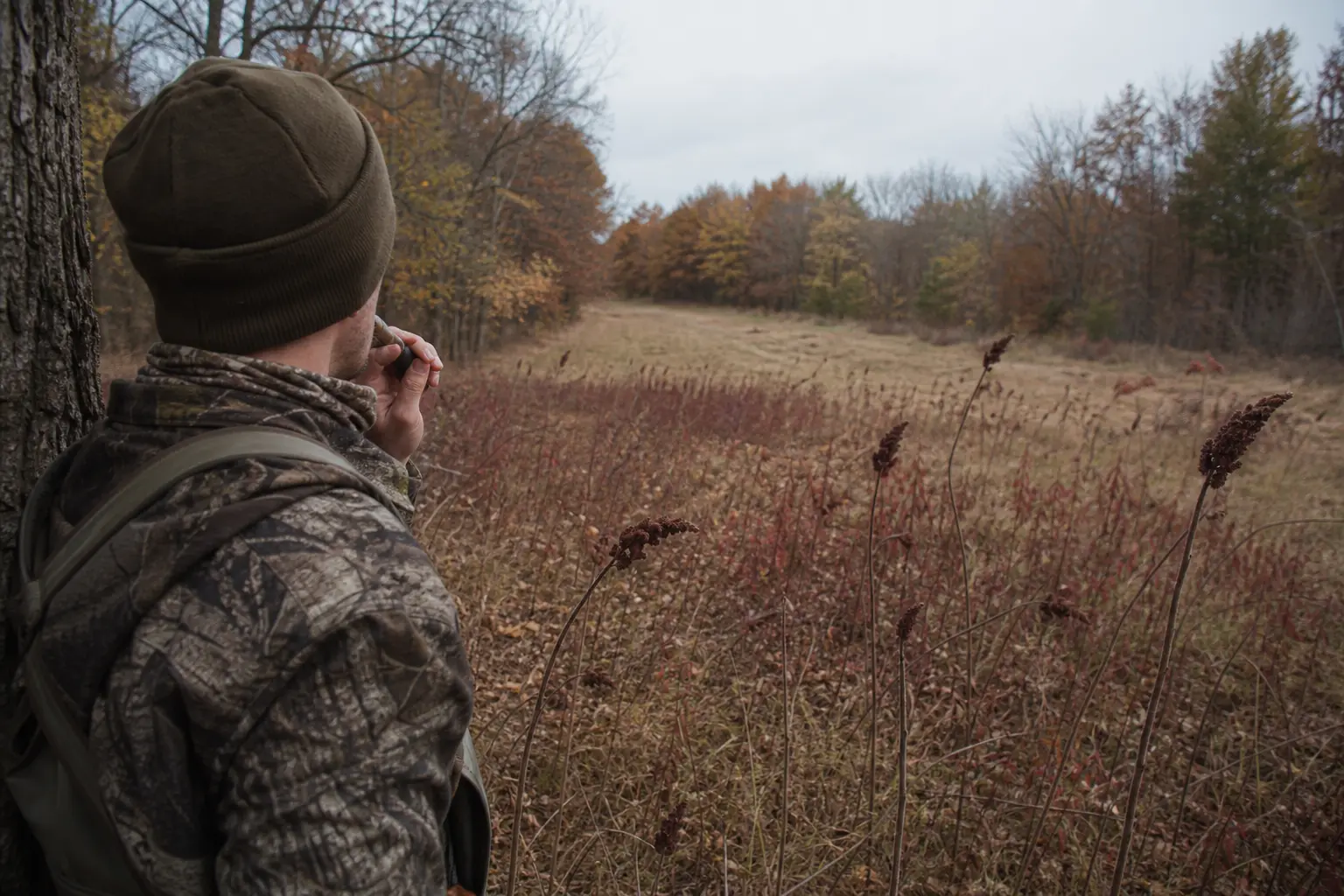
I spotted the buck at ninety yards, threading through a line of sumac on his way to the acorn flat I had scouted all August. He was a solid eight point, maybe better, the kind of deer I had told myself I would stay patient for. I watched him for about eleven seconds before I decided he was moving too slow and I needed to help him along.
That was the whole mistake, right there. I had a new grunt call hanging around my neck, the same one I had watched a bunch of guys blow on the internet, and I had been waiting two seasons for an excuse to use it. I raised it and gave him a long, loud grunt. Then another. Then, because he paused and I got scared he would turn the wrong way, a third one, harder than the first two.
He stopped, stared straight through my tree for what felt like forever, and then turned and walked the other direction like I had insulted his mother.
More Is Not Better
Here is the thing I did not understand that morning. A grunt call is not a dog whistle. It is a short, low, bored little noise a buck makes when he is walking along minding his own business, or when he is pushing a doe and letting the whole woods know it. It is not a dinner bell you ring until somebody shows up.
When I blew that thing three times in a row, hard, I told every deer in the draw that there was a strange, anxious buck standing exactly where I was sitting. A real buck does not blow his call like a man trying to start a lawnmower. He grunts once, maybe twice, and then he shuts up and lets the sound do the work. I was the stranger at the party who will not stop talking, and the buck read me in about four seconds.
Why He Walked Away
I sat there for an hour replaying it. At first I blamed the call. It was a cheap one, twenty bucks at the sporting goods store, and I decided the reed was bad and the tone was wrong and the whole thing was a piece of junk. But that was a lie I told myself so I would not have to look at the real problem.
The real problem was that I got greedy with a tool I had never actually practiced. I could not tell you what a grunt was supposed to sound like, not really. I had never once stood in the yard and blown the thing and listened. I had just watched men in videos do it and assumed that meant I knew how.
And when the buck paused, that was the moment I should have shut my mouth. A deer that stops and looks is already thinking about coming in. He was not leaving because the call was bad. He was leaving because I would not let the silence do its job. I panicked, reached for the only button I had, and pressed it until I pushed him off.
What I Figured Out the Hard Way
I killed a doe on that same flat two weeks later without touching the call once. She came in quiet, browsing her way toward me, and I just sat there and let her walk. That is the part nobody films for you. The quiet part. The waiting part. The part where you do nothing on purpose.
After that I started practicing with the call in the truck, on the walk in, on the porch. Short and low. One grunt. Two at most. Then I would count to sixty in my head and not make another sound. It felt wrong every single time. My whole body wanted me to blow it again, because doing something feels safer than doing nothing.
That is the trap. The call feels like control. It is not. It is just noise you are making because you are scared the deer will leave and you will have to sit there with yourself for another hour.
Let the Buck Do the Talking
The next November I watched an eight point come out of the same sumac line, almost the same walk, almost the same light. He was headed nowhere in particular, nose down, relaxed. I let him get to sixty yards before I touched the call. One soft grunt, two seconds, and then I pulled my hands away and left them in my lap.
He stopped. Raised his head. Looked my way.
Then he turned and started walking straight at me, slow and easy, stopping every few steps to test the air. I had to look away from him to keep from grinning. Twenty-two yards, quartering away, and I finally put an arrow through him clean.
The call did not change. The buck did not change. The only thing that changed was that I finally learned when to shut up and let the silence finish the job. A grunt call will bring a buck in, but only if the man holding it can stand to wait longer than fifteen seconds.