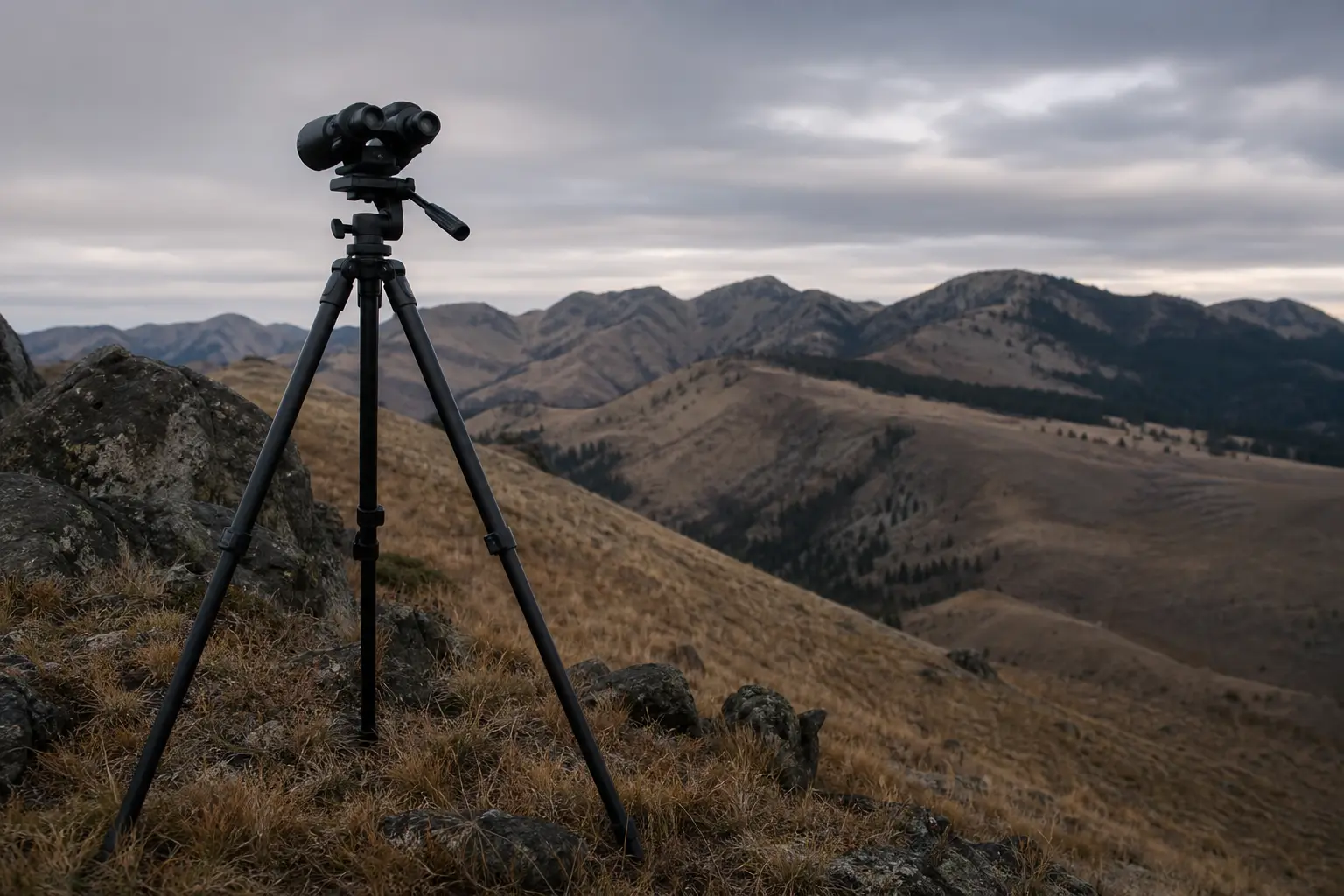
I paid $79 for my first hunting tripod. That should tell you everything you need to know about how this story ends.
It was one of those Amazon specials — aluminum legs, a plastic pan head that felt “good enough” in the living room, and a carry weight that made me feel smart. Thirty-two ounces. I weighed it twice just to feel superior. Look at me, I thought. Not one of those idiots dragging a five-pound slab of carbon fiber up a mountain.
Two days later I was on a ridge in Idaho, 8,700 feet, wind cutting through my jacket, watching a mule deer buck at what I guessed was 400 yards. I had hiked in about three miles with 2,400 feet of elevation gain. I was tired, my knees hurt, and I was starting to realize I’d made a series of bad decisions that all converged at this exact moment.
The Tripod Problem You Don’t See Coming
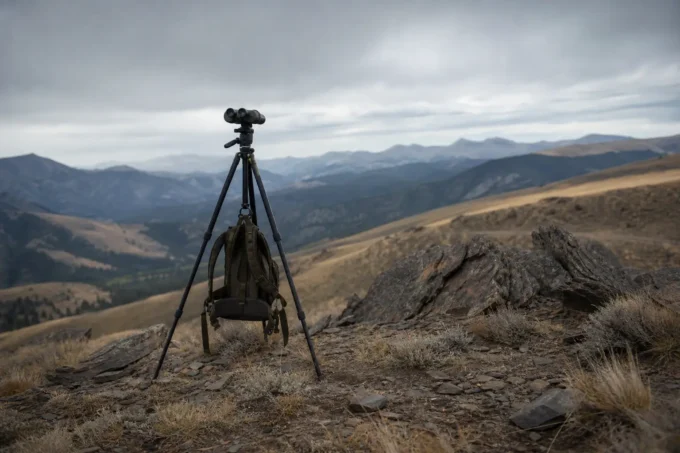
I set up the tripod on the ridge. Legs out, pan head locked, binos on top. Looked through them and saw… vibration. Not like an earthquake. Just a constant, low-level blur that made it impossible to count tines at distance. The wind was maybe 12 miles an hour — nothing crazy for Idaho — but that cheap aluminum was acting like a tuning fork. Every gust turned my glassing session into a watercolor painting.
I tried hanging my pack from the center hook. Better, but not much. I tried lowering the legs. Still buzzy. I tried holding the binos with my hands while they sat on the tripod, which completely defeated the purpose and made me feel like a guy who brought a hammer to a screwdriver fight.
The buck bedded down about 20 minutes later. I spent the next two hours sitting on that ridge, alternately glassing off my knees and cursing under my breath. I never got a clean read on whether he was legal. I also never got a shot. I hiked out in the dark, ate cold Mountain House in my tent, and stared at that tripod like it had personally insulted my mother.
The Part Where I Got Dumber
Here’s the thing. I didn’t learn. I used that same tripod for another season. I told myself I’d “upgrade next year” and then found reasons not to. A new rifle sling seemed more fun. A handheld GPS unit I used exactly twice. A fancy knife I didn’t need because I already had three knives that worked fine.
I spent money on everything except the one piece of gear that was actively screwing me every time I went above treeline.
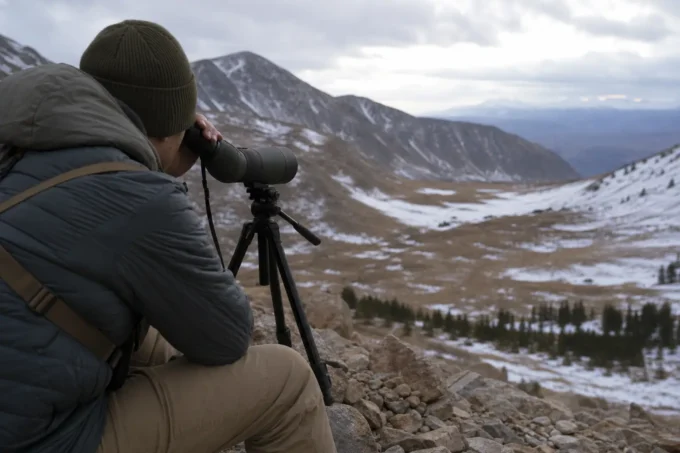
The breaking point came on an elk hunt two years later. I was glassing a basin at first light, tripod wobbling in the morning breeze, and I watched a herd bull step out at about 600 yards. I could see him — kind of. I could tell he was big — sort of. But I couldn’t tell you how many points he had, couldn’t judge his spread, couldn’t make a call on whether to close the distance or move on. I spent 45 minutes frozen on that spot, squinting through shaky glass, while that bull fed across the basin and disappeared into timber.
I hiked over there anyway. Found his tracks. Found his bed. Did not find him.
That was the drive home where I finally admitted something I’d been avoiding for years: a cheap tripod isn’t a tripod. It’s a yoga class for your optics.
What I Actually Needed
After that hunt I called a buddy who guides in Montana. Told him the whole sad story. He laughed for about fifteen seconds, then said: “You’ve been carrying three pounds you don’t trust. I carry four pounds I do.”
He was running a carbon fiber setup — not one of the insane thousand-dollar rigs, just a solid mid-range tripod from a company that actually builds tripods, not an optics brand that slaps their logo on someone else’s legs. Ball head. Arca-Swiss plate. The whole thing weighed about four pounds but it was four pounds that didn’t vibrate in the wind.
I bought something similar. Not top of the line. Not bottom. Just… competent. The kind of tripod where you set it up and forget it exists, which is exactly what you want. You shouldn’t be thinking about your tripod. You should be thinking about the animal.
The Math That Finally Clicked
Let me break this down the way I wish someone had broken it down for me five years ago.
A decent tripod costs about $250 to $400. A cheap one costs $80. The difference is $170 to $320. That sounds like a lot until you do the actual math on what a spoiled hunt costs. Gas to Idaho and back: $180. Non-resident deer tag: $400. Food, time off work, wear on the truck, the beer you drink in the motel parking lot feeling sorry for yourself: don’t add that up, it’ll make you sick.
The tripod was less than 10% of my total hunt cost and it was the thing that actually prevented me from doing the one thing I was there to do: see deer clearly enough to make a decision.
I’m not saying you need a $1,200 carbon fiber tripod with a Swiss-made ball head that costs more than your first rifle. I’m saying you need something that doesn’t actively fight you. If your tripod vibrates in the wind, can’t lock position without drifting, or makes you hold your binos with your hands anyway, you don’t have a tripod. You have a liability you carried uphill.
What I’d Tell Myself Five Years Ago
One: buy from a tripod company. Optics brands make glass. Some of them make good tripods. Most of them just put their name on something and double the price. Tripod companies — the ones that also sell to photographers — they actually know what they’re doing.
Two: spend enough that it hurts a little. If you feel good about the price in the checkout cart, you’re probably buying something you’ll regret on the mountain. The right number is the one where you hesitate before clicking buy, then forget about the money three hunts later when the thing just works.
Three: accept that weight isn’t the only metric. I was obsessed with ounces. Ounces mattered more to me than stability, which is like choosing a rifle based on how it looks in the safe. The lightest tripod in the world is useless if you can’t see through it. I’d rather carry an extra pound and actually see what I’m looking at.
Four: practice with it before you need it. Set it up in the dark. Set it up on uneven ground. Set it up with cold hands. You will do all three of those things when it matters, and you don’t want the first time to be when there’s fur in the glass.
Bottom Line
I missed opportunities on two good animals because I was too stubborn to admit my tripod sucked. That’s on me. The tripod didn’t owe me anything — it cost $79 and performed like it cost $79. I was the one pretending otherwise.
If you’re heading into western country this season and your tripod situation is “I’ll figure it out,” do yourself a favor and figure it out now. In your backyard. Before you’re on a ridge at 8,700 feet watching a buck you can’t quite see and can’t quite shoot.
Because that feeling — sitting there in the wind, knowing you’re losing light, knowing the animal is right there but you can’t make the call — that feeling is worse than any credit card bill. I promise.