The Deer That Looked Fine
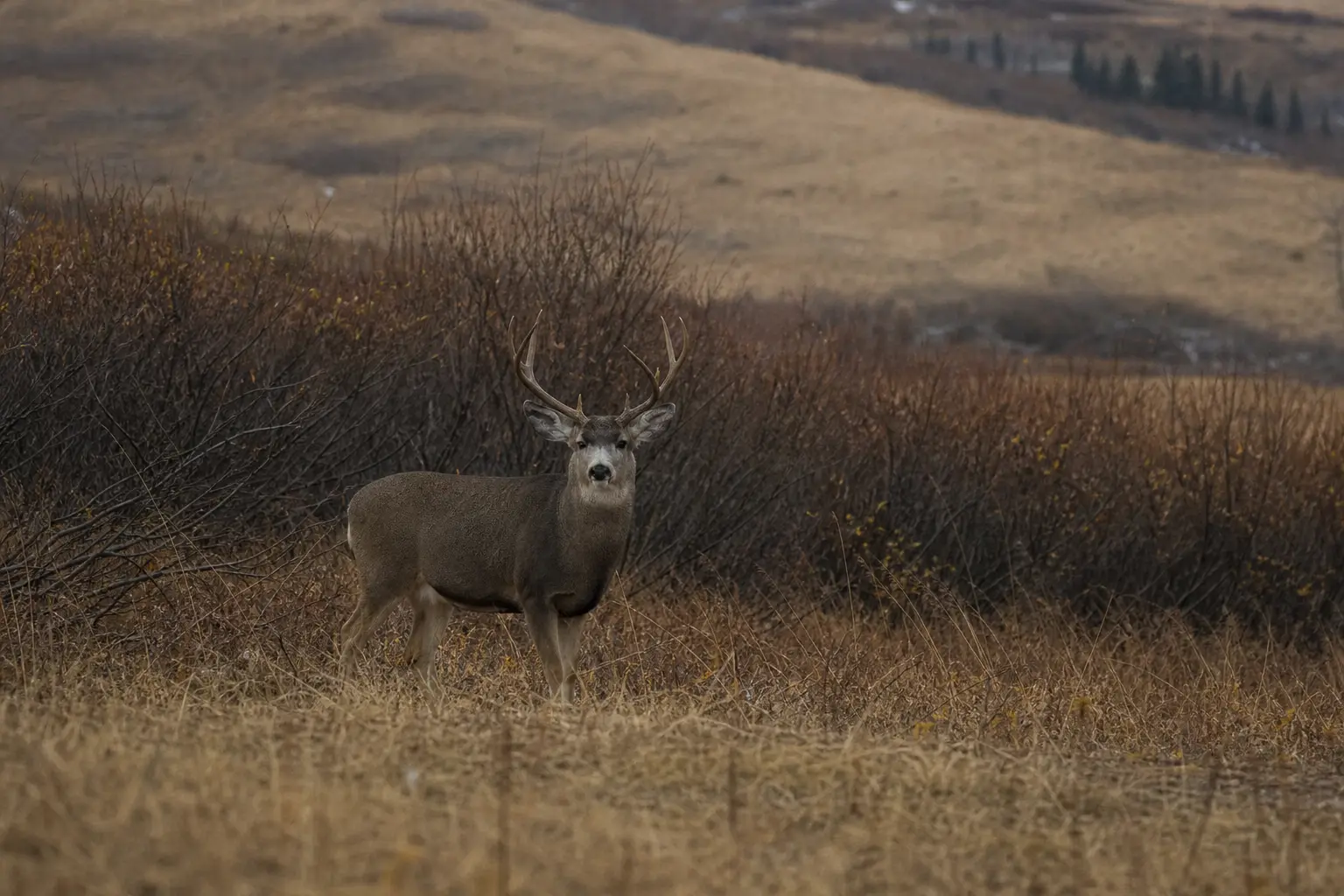
The buck looked like every other buck I have killed. Broad chest, decent rack, bright eye. He came out of the tag alders at last light, walked like he owned the draw, and folded clean at seventy yards. Nothing about him said sick. Nothing ever does, which was exactly the problem I refused to see for a long time.
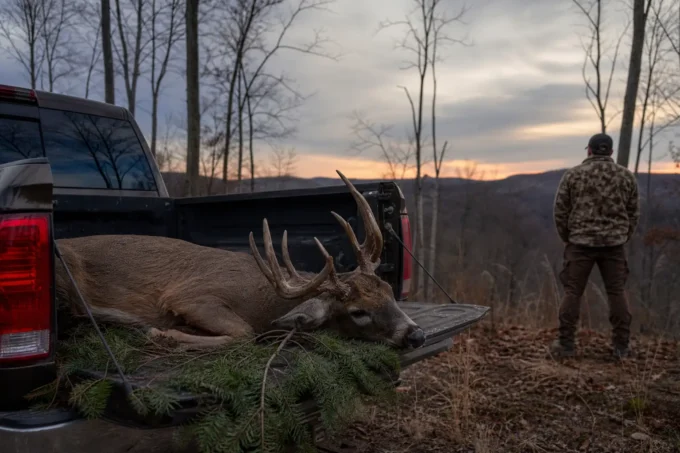
At camp that night the old man watched me notch my tag and said, “You gonna bother with the test?” He meant the CWD sample. He said it the way you ask about a receipt you probably threw away. I shrugged. The head was in the bed of the truck, the light was gone, the test meant a drive to a drop site and a phone number I did not want to dial. “Waste of time,” he added, warming to it. “Those biologist types want to shut down hunting. Give them one positive deer and they’ll close the county.”
I believed him. Not because I had checked a single fact, but because it let me skip a chore. That is the whole secret of bad conservation decisions. A man will believe anything that gets him to dinner faster.
The Man Who Trusts a Rumor
Here is what I knew about chronic wasting disease back then: almost nothing. I knew it was a prion thing, the deer version of that brain disease cows used to carry, and I knew the word “wasting” sounded bad. I knew you aren’t supposed to eat the brain or the spine. That was the entire file in my head. It fit in a sentence and a half, and that thin file was somehow enough to make me an expert on why the game department wanted to “shut down hunting.”
The rumor spread easier than the facts because the rumor wanted less from me. A CWD test wants a lymph node, a clean knife, a couple of minutes, and the belief that the animal I just killed might be carrying something I can’t see. The rumor wanted none of that. The rumor told me the people asking for the sample were the enemy, and being told your laziness is actually wisdom is the most comfortable feeling a grown man can have around a campfire.
I ate that buck. It tasted fine. That is the cruel part of a prion disease. It does not make the meat bitter or the animal stumble on camera so you can feel good for noticing. It just waits, silent, while a man pats himself on the back for not falling for “their” scare tactics.
The County They Watched Go Quiet
Two seasons later I drew a tag in a unit I did not know well, so I actually read the regulations for once. There, in the fine print nobody at camp had ever quoted, was a line I had skimmed over for years: a mandatory check station for the whole unit because a cluster of positive deer had turned up nearby. Mandatory. You could not legally leave with your deer until a biologist took the head sample.
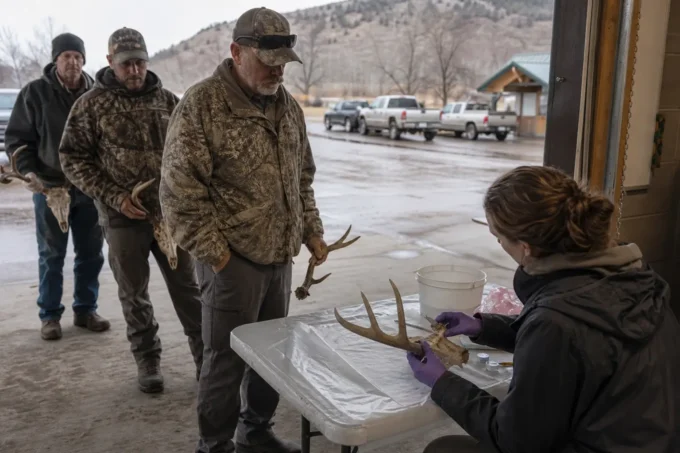
I stood in line behind four other hunters, all of us holding antlers and pretending we weren’t uncomfortable. The biologist was a tired woman with a clipboard and a scalpel. She worked fast, no small talk. When she got to me she found the lymph nodes in about four seconds, dropped the sample in a vial, wrote a number, and thanked me. Five minutes, total. I had spent longer deciding which boots to wear.
The guy behind me was the old man’s type. “You gonna shut us down if it comes back hot?” he asked, trying for a joke. She looked up from her clipboard and answered flat as a road sign. “No. We’re going to try to keep your grandkids from watching the herd rot. The closure question is a lot of paperwork and politics, and you’d be amazed how little help we get from hunters on that paperwork.”
Nobody laughed. She didn’t look like she expected anyone to.
The Work Nobody Wants to Be Seen Doing
That fall changed how I understood a word I had been throwing around for years. I called myself a conservationist because I bought a license and followed the seasons. What I actually meant was that I paid my fee and obeyed the rules and expected the good parts to happen automatically, the same way I expected the truck to start because I put gas in it once.
The real work is not the death of an animal, it is the accounting around it. The vial, the number, the drop site, the freezer full of samples, the person who collates the map and figures out how the disease is moving before it becomes a headline. That work is boring, it is invisible, and it asks a hunter to do one thing most of us were never trained to do: admit that the wood we love is not magically fine, and that keeping it fine has a cost somebody actually pays.
Somebody, it turns out, was the tired woman with the scalpel. And the reason she was tired was that half the hunters in the field were treating her like a tax collector while she did the exact labor that kept their tags worth having.
The Fine Print I Kept Skipping
I started reading the little paragraphs after that. I learned the CWD sample doesn’t tell you anything about the deer you already ate; it tells the department where the disease has reached so they can act before it is everywhere. I learned the brain and spinal column are the parts you never cook into sausage, and that a prion survives ordinary heat, so no amount of “well done” saves you if you get careless. I learned that the states that ignored it early are now the states with whole units on mandatory testing and hunters arguing about whether the whole thing is a government lie.
That last part stung, because I had been one of the ones arguing. Not loudly, not in public, just privately, in the truck and at camp, repeating a rumor that let me off the hook. I had been the easiest kind of obstacle: a believer in a shortcut who thought his gut was a source.
A gut is not a source. A rumor is not research. And a man with a rifle who refuses the boring parts of stewardship is not protecting the woods from the government. He is just delivering the next generation’s problem, one skipped vial at a time.
The Quiet Thing You Owe
The next season I shot a doe and I did not groan about the test. I found the drop site, filled the form, wrote the number down. Ten minutes. The doe hung in the barn and the sample sat in a cooler and the whole thing cost me about as much effort as returning a shirt. I felt no great virtue in it. I felt, honestly, a little embarrassed about how long I had avoided something this small while telling myself I was the kind of man who cared about the country.
Conservation is heavy on moments exactly like that. It is almost never a big heroic stand. It is a hundred tiny decisions that nobody claps for, made by tired people and the hunters who finally decide not to be a drain on them. The buck that looked fine, the rumor that sounded true, the check station line, the vial, the map nobody reads until it is too late. That is the whole machinery, and it runs on whether we pitch in or stand on the side calling the mechanics liars.
The woods will not send you a thank you card. The deer do not care if you believe the scientists or not. The disease does not care either, which is the thing that should have worried me the most. It moves through a herd with no opinion about my ego, no respect for my campfire theories, no mercy for the man who skipped the chore because dinner was waiting and somebody else would surely handle it.
Somebody else was handling it. She was tired, and she was right there the whole time with the scalpel and the clipboard. I just spent three years pretending she was the problem so I wouldn’t have to pick up a phone.