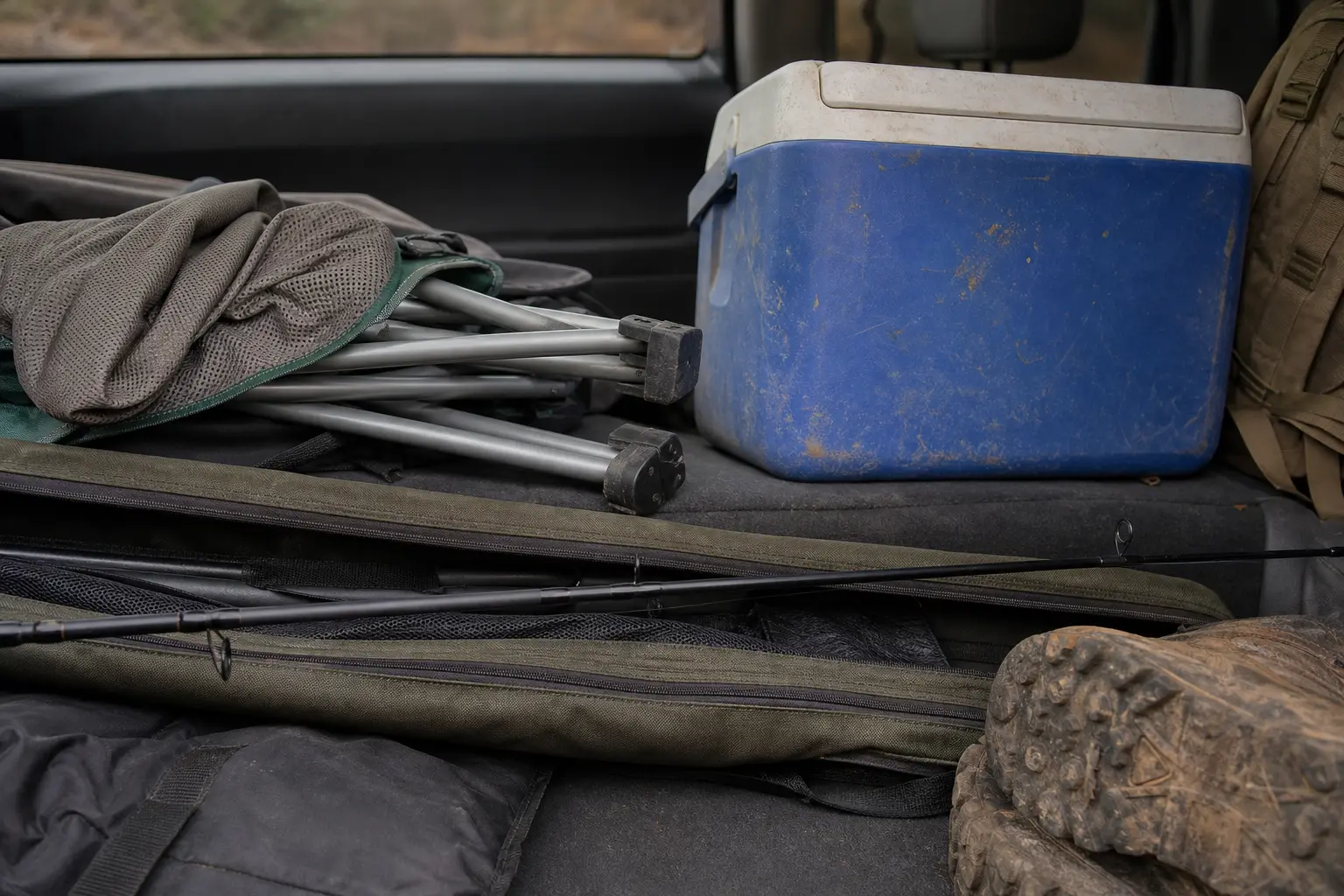
Over the last dozen years I have snapped the tip off more rods than I care to count. Not on fish. Not fighting anything impressive. In my car. Under a cooler. Behind a spare tire. Under a bag of waders that shifted on a sharp turn and came down on the exposed section of a two piece like a cinder block.
The worst one was a St. Croix I saved up for. Four days after I bought it, I tossed it in the back seat on top of a folding camp chair, drove an hour, opened the door, and watched the chair leg catch the tip and fold it clean in half. I looked at that broken rod the way you look at a dog that ate your wallet. Sad, and a little disappointed in both of us.
And here is the part that makes me sound like an idiot, which I have earned: it took me a full decade to figure out the rods were not the problem.
The Wrong Thing to Blame
Every time a rod broke, I told myself the same story. Rods are fragile. Graphite is brittle. That’s just the price of the hobby. I’d mutter something about how they don’t make them like they used to, drive to the shop, and buy a new one. I never once asked why I kept destroying the same forty-dollar tip on different rods from different brands in different cars.
The answer was sitting in my back seat the whole time, loose, rolling around, getting stepped on.
When you break a rod by stepping on it while you unpack a tackle box, your instinct is to call it bad luck. It’s not bad luck. It’s bad cargo management. A spinning rod is a graphite tube. Graphite does not care how carefully you cast it. It only cares whether something heavy lands on it. And in my truck, something heavy landed on it constantly, because I treated a three hundred dollar fishing rod like a bag of groceries.
Soft Cases Are a Lie
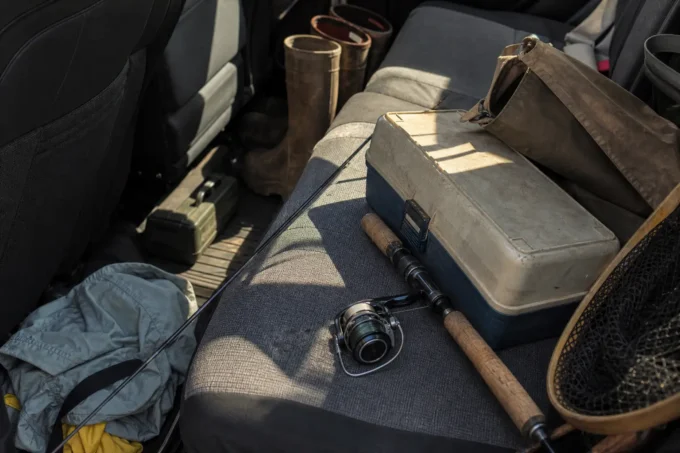
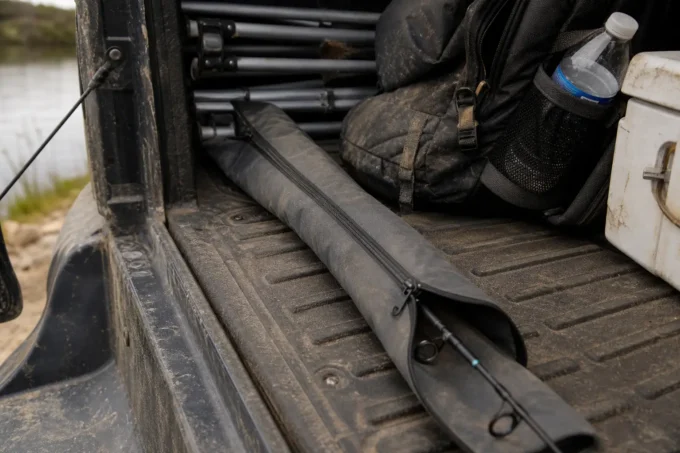
I did have cases. Everybody has cases. A soft fabric sleeve with a zipper that comes free with a combo or costs nine bucks at the big box store. I’d slide the rod in, pat it once, and feel responsible.
That fabric sleeve is not protection. It is a dust cover. It stops scratches. It does not stop a spinning rod case, a water bottle, a tackle backpack, or the corner of a twelve pack from crushing a guide against the graphite. The guide takes the hit, the graphite takes the torque, and two weeks later the tip is gone before you even notice the micro fracture.
I learned this the expensive way. I had a soft sleeve rod snap on the drive to the ramp, in the sleeve, tucked “safely” under a folded camp table. The sleeve did exactly what it was designed to do, which was nothing. The rod broke anyway. I fished that day with a backup ugly stick because I had no choice, and caught nothing, and stewed about it for four hours.
What Finally Clicked
The thing that changed my mind was not a purchase. It was a conversation with an old timer at the boat launch who watched me wrestle a broken rod back into its sleeve and said something I have not forgotten.
“You keep buying the rod, but you keep carrying it like the box is somebody else’s problem.”
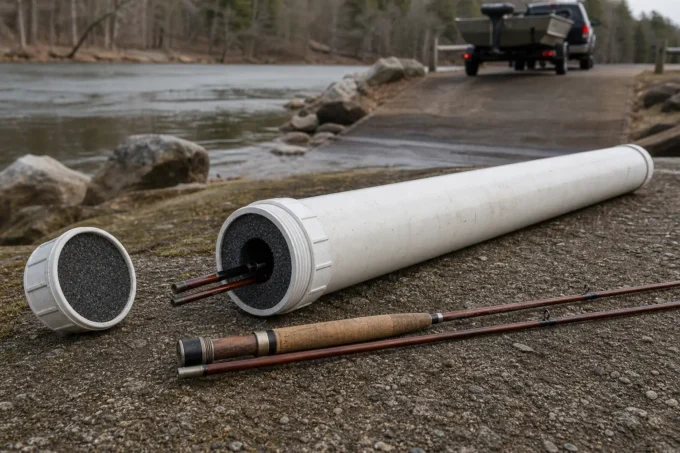
He fished the same creek for forty years with two rods older than my truck. They were not in a sleeve. They were in a hard case, a piece of PVC with foam ends that looked like it had survived a war. That’s the whole trick. Not the rod. The box.
A hard case does not have to be expensive or fancy. It has to be rigid enough that the graphite never touches a point load. PVC pipe with glued foam caps costs about fifteen dollars and will outlast every rod you own. Store bought hard cases work too, but half of them cost more than the rod they protect because they cram in pockets and trays you do not need.
I measured my two piece rods at right around forty one inches, gave myself an inch of room, cut a piece of schedule forty PVC a hair longer, lined both ends with foam, and glued a cap on one side. The other end got a threaded cap so I could get the rod out. Total cost, maybe twenty bucks with the epoxy. It has not lost a single rod since I built it.
The Lesson That Cost More Than the Rods
Here is what stings the most when I look back. The fix was never about money. It was about me refusing to admit that the problem sat in my own cargo area. I would rather believe rods are inherently fragile than accept that I was lazy about how I transported them. Buying a new rod every year was easier than building a box once. I paid for my laziness in broken tips, and I paid a lot.
The math makes me feel stupid every time I run it. Ten years, maybe a rod a year, plus the guides I crushed, plus the reels I dinged when the whole thing rattled loose on a gravel road. All of that could have been avoided with a length of pipe from the hardware store and forty minutes on a Saturday.
Gear is not fragile until you treat it like it is indestructible. Graphite rods land on the beach, get high sticked under boat seats, and get crushed in trunks because we assume the cheap sleeve is enough. It is not. If you carry rods in a vehicle, even occasionally, get a hard case or build one. Do not learn this the way I did, one shattered St. Croix at a time.
Now when I load up, every rod goes in a hard tube, the tube goes in the bed, and I drive without glancing at the back seat every half mile waiting for the crunch. It took a decade and a pile of broken tips to figure out something my grandpa knew when he was twelve. The rod is only as safe as the box you are too impatient to build.