The First Stand Without Him
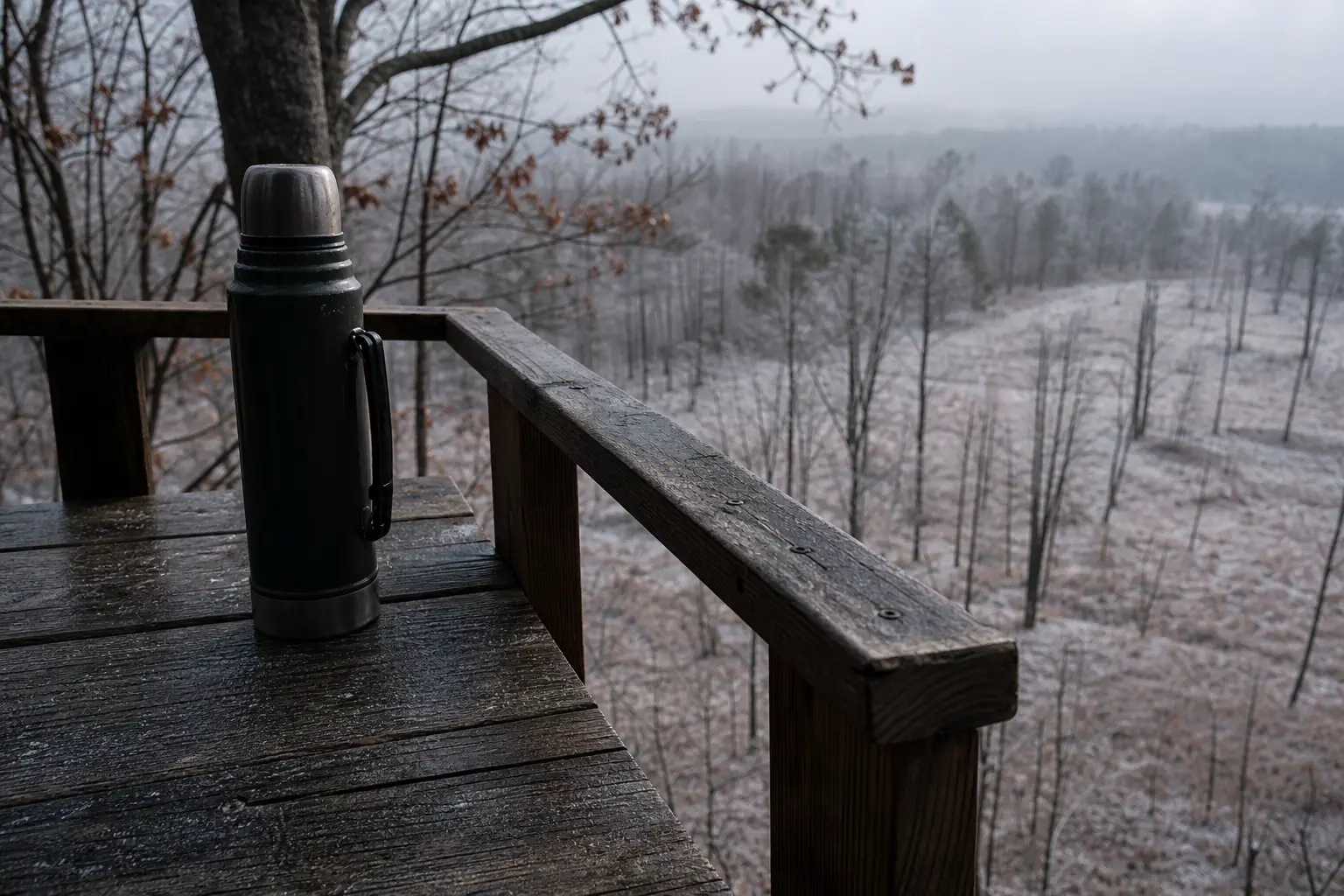
The first year I climbed into the stand alone, I carried my father’s thermos. Not because I wanted coffee. The coffee in that thing had gone cold three seasons earlier and I never washed it out. I carried it because it was his, and because carrying it felt like carrying a little of him up the ladder with me, and because I was too stupid to admit that a man cannot climb a tree with a ghost.
He taught me to hunt when I was nine. Not the way anybody teaches anything now, with a video and a checklist and a harness verified by a lawyer. He taught me the way his father taught him, which mostly meant watch and shut up and don’t stand on the twigs. A deer stand was a place you sat beside a grown man for six hours in the cold, saying nothing, learning that the woods will eventually tell you everything if you stop asking it questions. I learned the smell of a wet October morning before I learned long division. I learned that you do not flick your safety off until you are sure, and that “sure” is a smaller word than most men think.
Then the stroke took the left side of him, and then the left side took the rest, slower than anyone says. One fall he was climbing ladders ahead of me. The next fall he was watching me pack the truck from a kitchen chair, telling me to take his old gloves, they are warmer than mine, and I took them so he would stop fussing, and I did not tell him that his hands were smaller than mine now and the gloves did not fit.
The Stand We Built Together
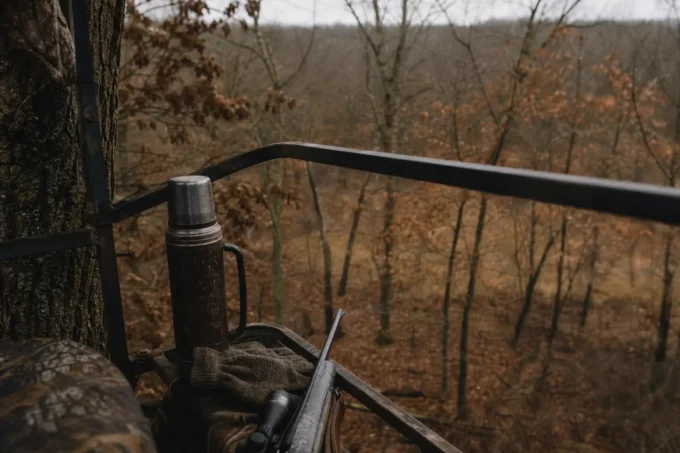
The stand on the north ridge was the one we built together the spring I turned fourteen. Two pressure boards, a handful of lag bolts, a plywood platform he made me sand with a hand block until my fingers cramped because “a splinter in the dark will teach you more about patience than anything I can say.” We finished it at dusk and sat there with our legs dangling and split a warm root beer he said a man who built his own stand earned whatever kind of soda he wanted. That stand was the center of my whole childhood, which is another way of saying it was the center of his.
The first season alone, I could not decidewhether to hunt it or not. Half of me thought it would be a comfort, sitting where we sat, hearing the same wood creak the same way. Half of me knew better. I went anyway, because men will climb toward the thing that hurts them and call it honor, and nobody tells you in time that it is just grief wearing a safety harness.
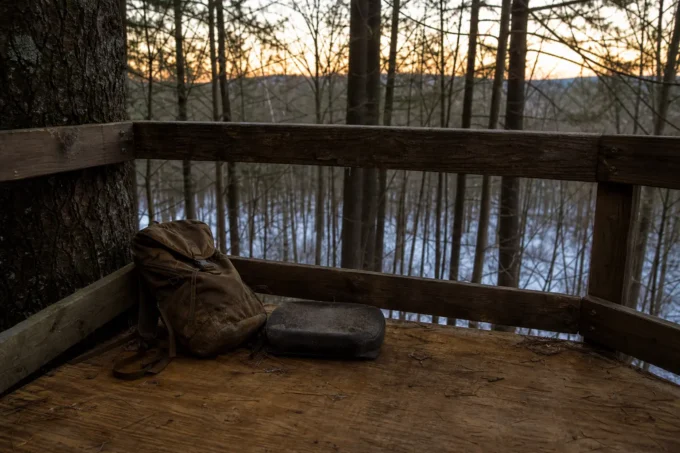
It was a clear morning, cold enough that my breath carried past the rail like a small private weather system. The woods were white and still. And I sat in the middle of the platform, leaving six empty inches on either side of me like I was saving his seat, and I realized I had been doing that all my life without noticing it. The empty seat was louder than anything I have ever sat beside.
What You Don’t Hear Until You’re Alone
There is a sound a deer stand makes when two people sit in it, and it is mostly the sound of two people trying to be quiet. A shift of boot, a slow breath, a whisper of jacket on plywood. I knew that sound was gone. What I did not expect was how loud my own quiet was in its place. Every squirrel sounded like it had a complaint filed against me. My own heartbeat started to feel like something I should apologize to the trees for.
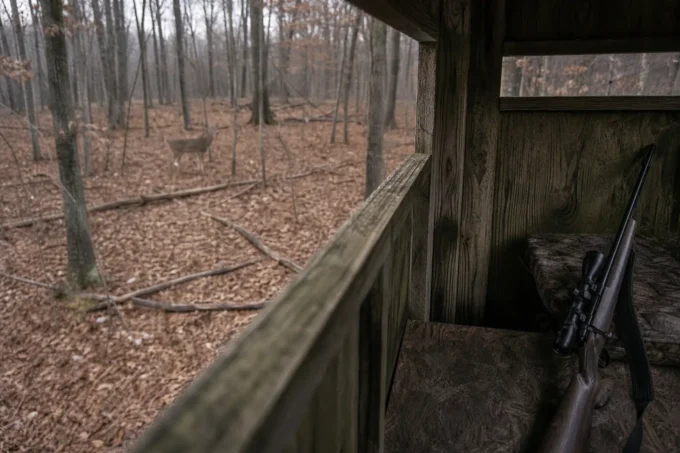
I saw deer that morning. A doe came down the ridge line and stood broadside at forty yards, the gift of a shot, the kind he would have elbowed me over. And I sat there with my rifle across my knees and did not raise it, because I could not decide which was worse, taking the deer without him there to tell me it was a clean shot, or letting it walk and having to go home and explain to a kitchen chair why the woods came up empty.
I let it walk. Then I sat for another hour and argued with myself until I called myself every name he never called me, and I packed up in the half-dark and the thermos rattled in my pack and I drove home without the radio on, which was its own kind of company.
The Thing I Kept Getting Wrong
I told myself I was honoring him by hunting his favorite stand. That was a lie, and I knew it was a lie, and I kept telling it the way you keep touching a bruise. The truth is I was using a tree to avoid going near a chair. It is easier to sit in the cold with a rifle than to sit at a kitchen table across from a man who taught you every motion your hands know and watch him forget which hand opens the jar. The woods let you feel big feelings at a safe distance. The kitchen does not.
So I went again. And again. The whole season I climbed that ladder, and every time I left six inches free on either side, and every time the deer came and I let them walk or I missed shots I would have made in my sleep a year earlier, because my hands were doing fine and my head was somewhere else, and a man whose head is somewhere else has no business holding a rifle in a place with a heartbeat on the other end of the barrel.
It was not skill that failed me. It was a refusal. I wanted the stand to give me back the thing the stroke took, and a deer stand does not give anything back. It just holds you up off the ground while you figure out that nobody is coming up the ladder behind you, and that is the whole lesson, and I kept hunting long past the point where the lesson had finished teaching.
Learning to Sit in the Middle
The second season was different, and I cannot tell you exactly what changed, because it wasn’t a decision so much as a slow unclenching. One cold morning I climbed up, sat down, and stopped leaving room. I sat in the middle of the platform with my boots where they wanted to be, and I drank coffee out of his thermos and it was terrible and warm and I finished the whole cup.
That was the morning I took a fat eight-point, the cleanest shot I ever made, the kind he would have described for a week to anyone who stood still long enough. It folded where it stood. I did the work in the pale light, and I talked to him the whole time, the way men talk to a man who isn’t there but should be, and I said thank you to the deer and thank you to the parts of the ridge that held me up all those years.
Carrying it out, I understood something that had been sitting in front of me since the stroke and I had been too stubborn to notice. He did not teach me to hunt so I would hunt beside him forever. He taught me so I would know how when he could not be there. The empty seat was never a wound. It was the shape of a handed-down thing, and I had been measuring my grief against it instead of sitting my weight down into it and getting on with the work.
What a Stand Actually Is
A deer stand is just a couple boards and some lag bolts and a platform that creaks. That is the whole inventory. What a child sits in is something else entirely, and you do not get to keep that version, and you waste a lot of cold mornings before you learn you were never supposed to.
Now when I climb that north ridge stand I sit in the middle, and I pour coffee into that dirty thermos, and I let the woods get quiet the way it does, and I wait. The deer still come. My hands still know every motion. And the seat beside me is not empty anymore. It’s just a seat, holding a little of him the way a thermos holds the heat for a while after the coffee is gone.