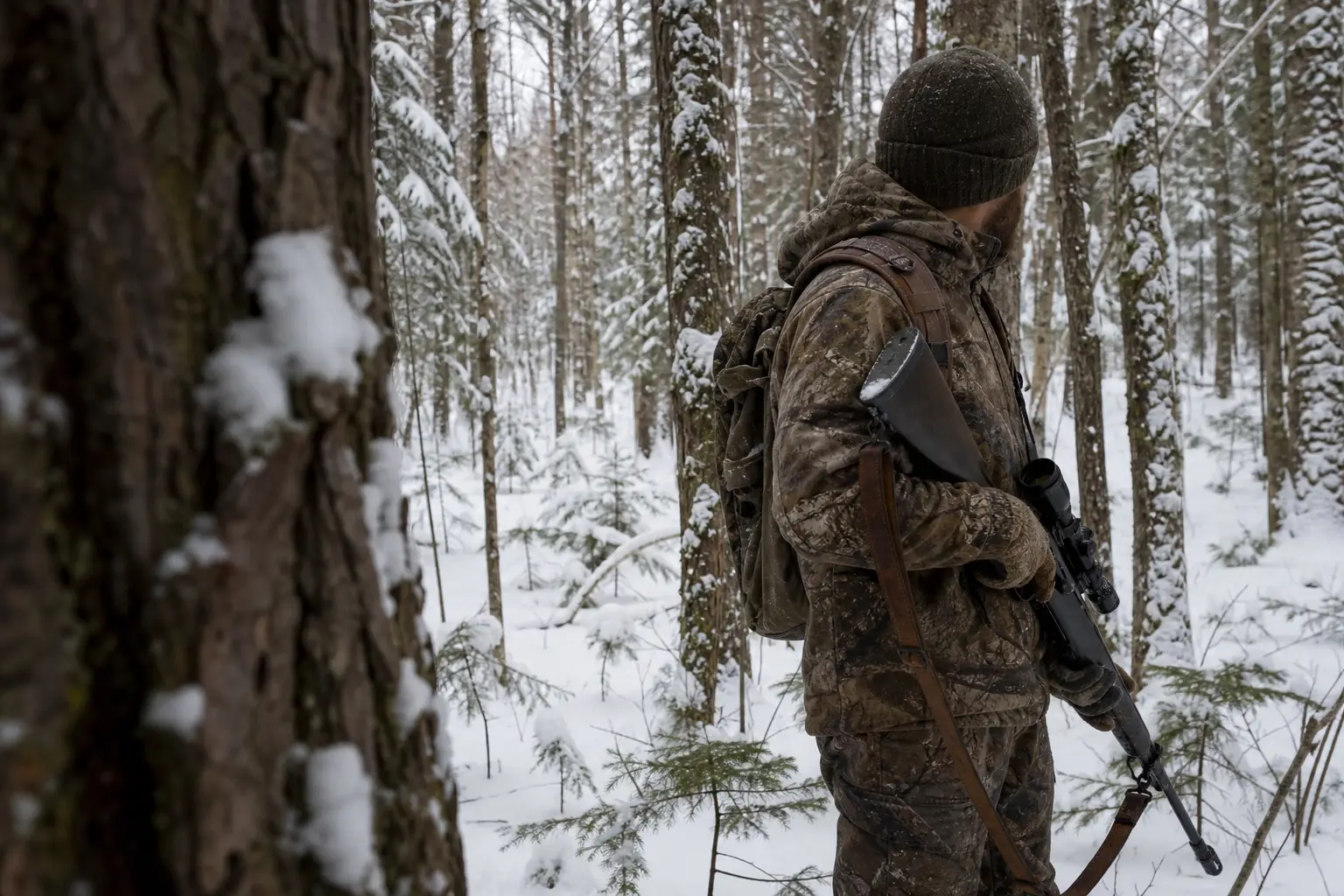
I was 26 the first time I tried still hunting. Not the kind where you walk to a stand and sit there for six hours — actual still hunting, where you move through the woods on foot, slow enough that the deer don’t know you exist until you’re close enough to smell their morning breath. My buddy Jake had been doing it for years in the big woods of northern Michigan. He made it sound like some kind of art form. I figured I’d pick it up in a weekend.
I didn’t.
The First Morning: A Walking Disaster
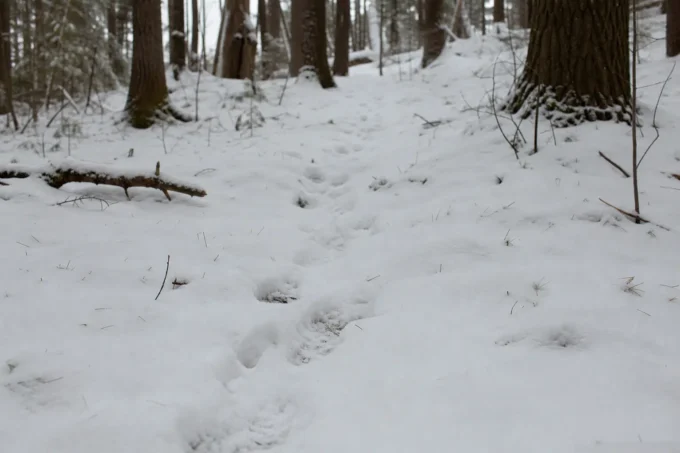
November, 20 degrees, fresh snow. Perfect conditions, Jake said. Soft footing, tracks to follow, deer moving mid-morning. I had my .30-06, a 3-9 scope cranked to 6x for some reason I can’t explain, and exactly zero patience.
We split up about half a mile in. Jake pointed toward a stand of hemlocks and whispered, “Take your time. If you think you’re going slow, cut that in half.” I nodded like I understood.
I lasted maybe fifteen minutes before I started walking like a guy looking for his car keys. Step, step, step, step. Each footfall crunched through the snow crust like someone stepping on a bag of potato chips. I glanced at the hemlocks. Nothing. Walked faster. Nothing. Started wondering if Jake had sent me to the dumb side of the ridge just to get rid of me.
Then I heard it — that sound you never get used to. The snort. Then the crashing. Two deer I never even saw. Gone.
I stood there for a minute, breathing hard, my scope still on 6x like a moron. When Jake met me back at the truck, he didn’t say much. Just looked at my tracks in the snow and said, “You were basically jogging.”
Learning the Hard Way
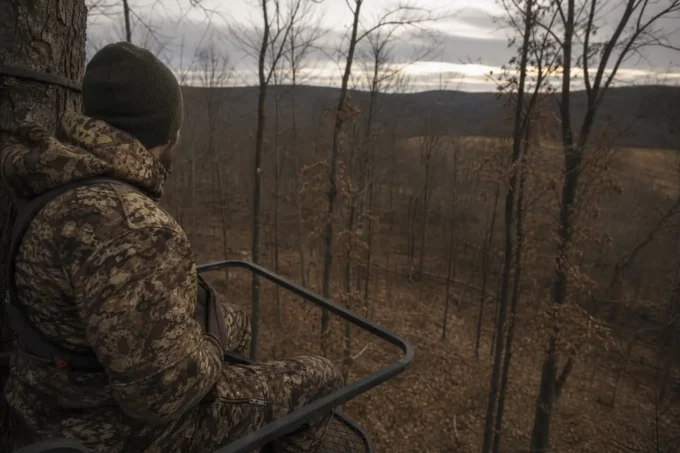
I hated still hunting after that. I wrote it off as bullshit that only worked for guys who’d been in the woods since birth. I went back to treestands. I sat. I froze my ass off. I scrolled my phone under a camo blanket. It was familiar. It felt like hunting because you were “out there,” right?
But something Jake said stuck with me. “The deer know where every stand is by November.”
I knew he was right. I’d been in that stand for three seasons. The deer moved, just never in shooting light. So the next fall, I asked Jake if I could tag along again. He said yes, probably because watching me fail was entertaining.
The Difference Between Moving and Hunting
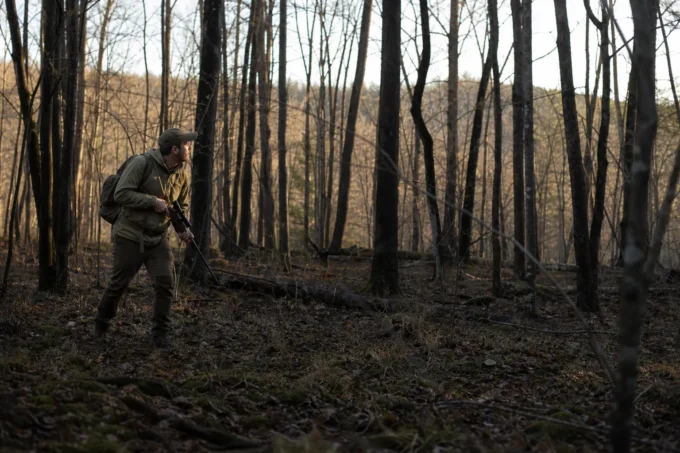
This time I watched him. Really watched. We started into the wind at first light, and within fifty yards I realized I was watching a completely different activity than what I’d been doing.
He’d take two steps, then stop. Not a quick pause — a full stop, thirty seconds, sometimes a full minute. His eyes never stopped moving. He’d tilt his head, listening. Then two more steps. He looked like a heron stalking minnows in shallow water.
He also never looked at the ground while walking. He’d glance down to place his foot, but his head came right back up. I realized I’d spent my entire first attempt staring at my boots, terrified of snapping a twig. The deer could’ve been waving at me and I would’ve missed it.
And his scope was on 3x. Always 3x. “Wider field of view,” he said. “By the time you find them on 9x, they’re already gone.”
The Moment It Clicked
About two hours in, Jake stopped and pointed with his chin. I squinted. Nothing. He pointed again, barely moving his hand. I raised my binoculars — something I’d finally remembered to bring — and there it was. A doe, bedded down in a patch of ferns not forty yards away. She was looking right at us, ears forward, but she wasn’t spooked. She was just watching.
I have no idea how long we stood there. Long enough that my legs started shaking and my nose was running and I didn’t dare lift a hand to wipe it. Eventually she decided we were just two very slow, very ugly deer and went back to chewing her cud. Jake backed us out, one step at a time, and when we were far enough away he just grinned.
“That’s still hunting,” he said. “Didn’t shoot anything, but you saw her, didn’t you?”
I had. For the first time in four seasons, I’d seen a deer from the ground, on foot, close enough to count eyelashes. And it felt completely different from watching one from a treestand. It felt like I’d snuck into their living room and they almost didn’t care.
My Own First Kill on Foot
The following weekend I went out alone. Jake was working, and honestly I preferred it that way — less pressure to perform. I picked a ridgeline with a good wind, left the truck before shooting light, and started creeping.
Two steps. Stop. Glass. Listen. Two steps. Stop. Glass. Listen.
I caught myself speeding up about five times and forced myself to stop. It was agonizing. My brain kept screaming that I wasn’t covering enough ground, that I was wasting daylight, that any deer within a mile had already heard me and left. That voice in your head is the hardest part of still hunting, by the way. Not the walking, not the cold, not the glassing. The part that tells you you’re doing it wrong and you should just hurry up and walk to the next ridge.
Ignore that voice. It’s an idiot.
Around 9 AM I came around the edge of an old blowdown and saw a fork-horn maybe sixty yards out, nosing through the snow under an oak. He hadn’t heard me. He hadn’t smelled me. I couldn’t believe it. I stood there frozen for what felt like a full minute, just watching him, completely unaware. Then I very slowly — and I mean very slowly — shouldered the rifle.
Scope on 3x. Safety off. Crosshairs on the crease behind his shoulder. He lifted his head once, looked in my general direction, and went back to rooting. I squeezed.
He dropped in his tracks. The shot echoed through the hardwoods and then everything went quiet again, just the wind and my heartbeat pounding in my ears.
What the Old Guys Don’t Tell You
I’m not a still hunting expert. I’ve done it maybe fifteen times, and I’ve killed two deer that way. The success rate is terrible compared to sitting in a stand over a food plot. But here’s the thing — I don’t care.
Still hunting changed the way I see the woods. When you’re moving that slowly, when you’re actually looking instead of just waiting, you notice everything. The way squirrels flick their tails when something’s moving through the brush. How a blue jay will scream at a coyote but stay quiet for a deer. The fact that deer beds aren’t random — they’re always positioned so the wind hits their back and their eyes cover the approach. I’d walked past a hundred deer beds in my life and never once recognized what I was looking at.
I also learned that my gear setup was wrong. I’d been dragging a heavy rifle with a big scope through the woods for years, and I’d never once needed magnification past 4x while actually hunting. The 3-9 lives on 3x now. I swapped to a lighter sling. I carry binoculars on a chest harness, not buried in my pack where I’m too lazy to dig them out. None of this cost me money — I just started using what I had differently.
Try It
If you’re a stand hunter who’s bored or frustrated — if you’re tired of watching the same empty clearing for four hours — try still hunting exactly once. Go slow. No, slower than that. Half of that, even. Walk two steps and stop. Glass everything, including the stuff you already looked at. Keep your scope on its lowest setting. If you bump a deer without seeing it, that’s fine — it means you’re close. Next time you might see it first.
It’s not about filling tags. It’s about learning to move through the woods like you belong there instead of like you’re visiting. That’s a skill that takes years, and I’m still garbage at it most days. But the days it works? There’s nothing like it.
Jake doesn’t come out with me anymore. He moved to Montana a few years back. But every time I’m creeping through the big woods, two steps and a stop, I can hear him in my head: “Cut that in half.”